Best Bolt.new Alternatives
Compare verified Bolt.new alternatives by workflow, code ownership, deployment, pricing model, limitations, and buyer fit.
Direct answer
The strongest Bolt.new alternatives are Lovable for a guided full-stack web-app workflow, Replit Agent for agentic building inside a broader cloud development environment, v0 for React and Next.js-oriented application work, and Base44 for an integrated prompt-to-app platform with built-in application services. None is universally better than Bolt. The right replacement depends on whether you prioritize ease of prompting, development control, framework fit, backend services, code portability, collaboration, or predictable governance.
We selected these tools from current official product, documentation, and pricing sources checked on August 24, 2026. We excluded Firebase Studio because Google states that new workspace creation is disabled and that Firebase Studio is scheduled to shut down on March 22, 2027. We did not conduct hands-on app builds, so recommendations are based on documented fit rather than performance claims.
Bolt.new alternatives at a glance
| Alternative | Best fit | Documented distinction | Main caution |
|---|---|---|---|
| Lovable | Teams wanting guided full-stack web-app creation and GitHub sync | Natural-language building, Lovable Cloud, Supabase option, publishing, two-way GitHub workflow | Credit consumption and production review still require control |
| Replit Agent | Developers and mixed teams wanting an agent inside a cloud IDE | Agent modes, workspaces, deployments, databases, collaboration, usage controls | Effort-based billing and broad platform scope add complexity |
| v0 | React and Next.js teams focused on polished interfaces and full-stack Vercel workflows | Next.js-oriented generation, backend endpoints, integrations, Vercel deployment | Best fit is narrower when the stack is not aligned with its defaults |
| Base44 | Buyers wanting an integrated prompt-to-full-stack app path | UI, data, authentication, backend logic, integrations, hosting, and credits in one platform | Credit types, plan boundaries, and portability need careful review |
How we selected the alternatives
We required each candidate to have a current official product presence, documented app-building capability, a path to a running application, and enough first-party material to assess fit and limitations. We compared:
- intended user and development model;
- generated application scope;
- code access and portability;
- backend, data, and authentication options;
- deployment and hosting path;
- collaboration and administration;
- pricing or usage model;
- material lifecycle or availability risk.
This is a shortlist, not an exhaustive market ranking. Product claims belong to their official sources; statements about fit are editorial inferences from those facts.
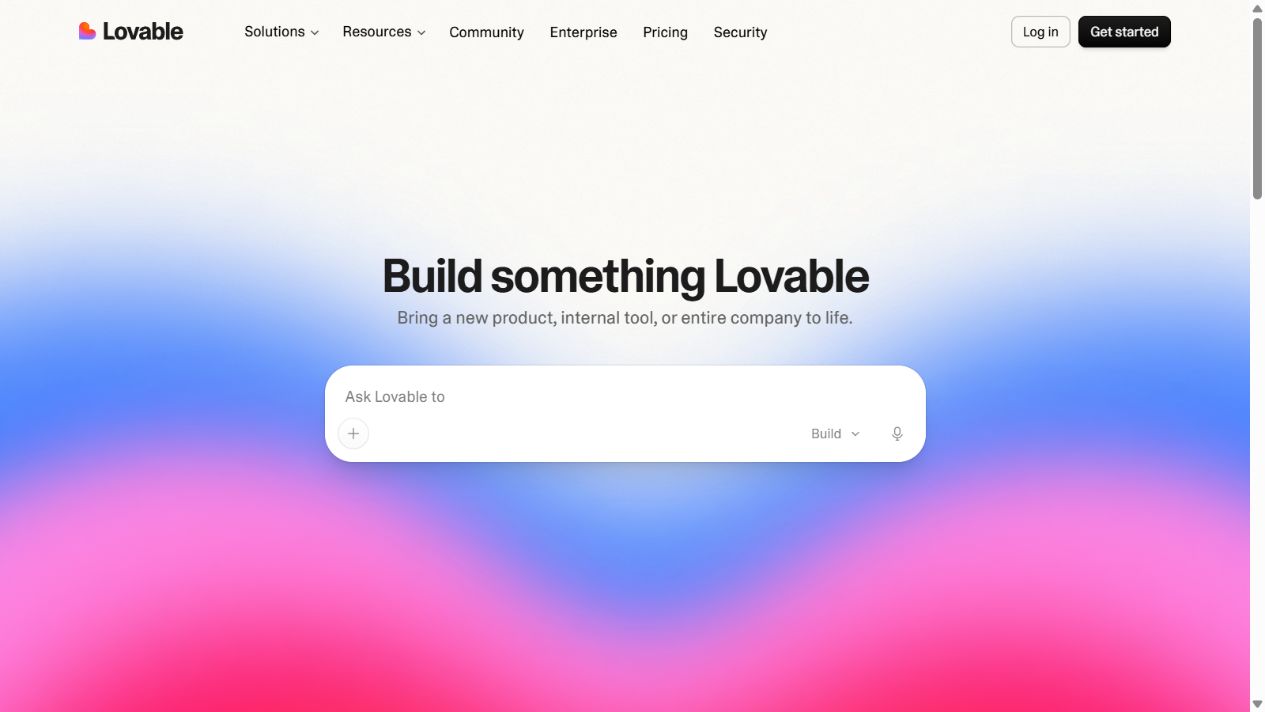
1. Lovable: best for guided full-stack web-app creation
Lovable describes itself as a full-stack AI development platform for building, iterating on, and deploying web applications through natural language. Its documentation covers Lovable Cloud, a Supabase integration option, publishing, custom domains, and two-way synchronization with GitHub.
That makes Lovable a strong alternative when a team wants a visually accessible prompt workflow while retaining a documented route to its own repository. The GitHub integration is particularly relevant for handoff: official documentation says users can back up code, collaborate through branches and pull requests, work locally, and deploy elsewhere.
Lovable’s pricing uses credits across building and cloud-related activity. The official pricing page explains that credit consumption varies by task and plan. Buyers should pilot realistic changes rather than estimating cost from message count alone.
Choose Lovable when: a web-app team values a guided creation experience, built-in publishing, and GitHub continuity.
Check before choosing: framework constraints, credit behavior, private-project controls, cloud limits, data handling, and whether the exported project fits the engineering team’s standards.
2. Replit Agent: best for an agent inside a broader development environment
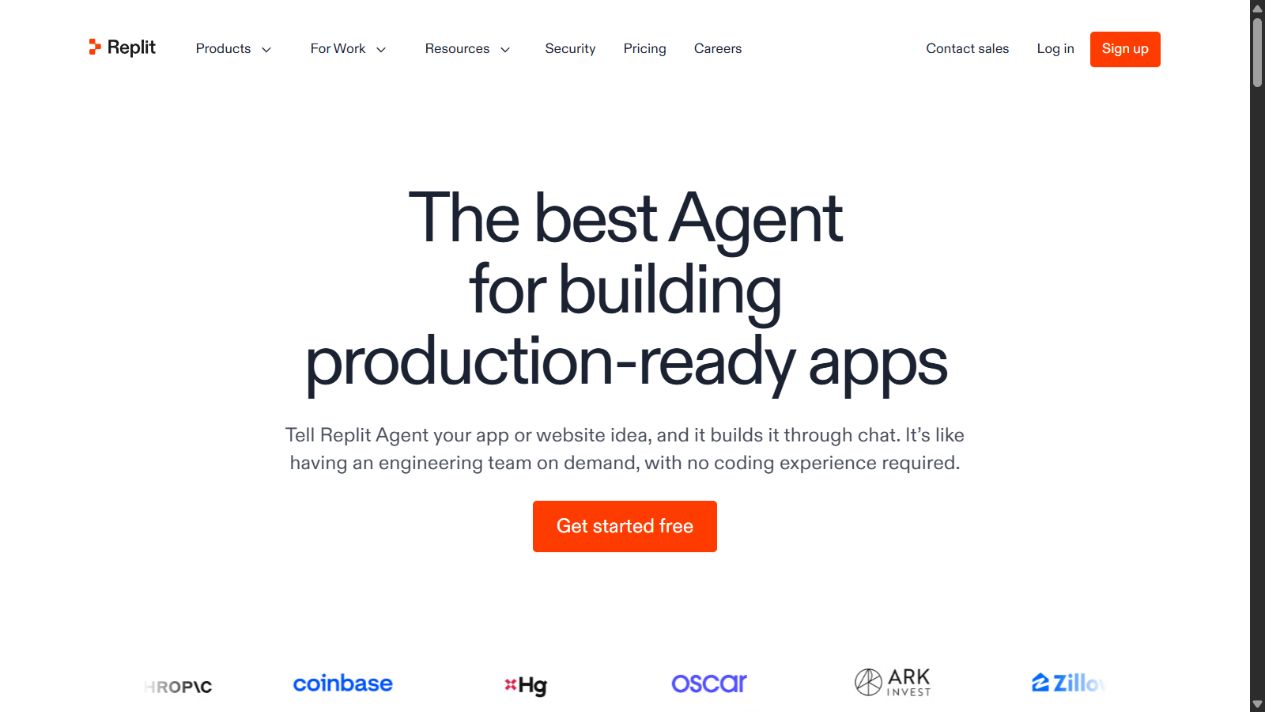
Replit Agent sits inside Replit’s cloud development platform. Official pages describe chat-led application building, workspaces, visual editing, deployment, collaboration, databases, and multiple Agent modes that balance cost and capability.
This breadth makes Replit a strong option for developers and mixed teams that want more than a single prompt-to-site flow. The surrounding environment can support ongoing code work, not just initial generation. Replit’s documentation also describes checkpoints, planning capabilities, and usage controls.
The trade-off is economic and operational complexity. Official billing documentation uses effort-based pricing for Agent work and applies credits across AI and cloud services. Complex requests can cost more than simple edits, and third-party services used through Agent may create additional usage. Teams should set budgets and inspect usage at the checkpoint and account level.
Choose Replit Agent when: the project benefits from an AI builder embedded in a persistent development workspace with deployment and collaboration.
Check before choosing: required Agent mode, monthly credits, collaboration seats, private deployment needs, data retention, hosting, and the team’s ability to maintain the code.
3. v0: best for React, Next.js, and Vercel-oriented teams
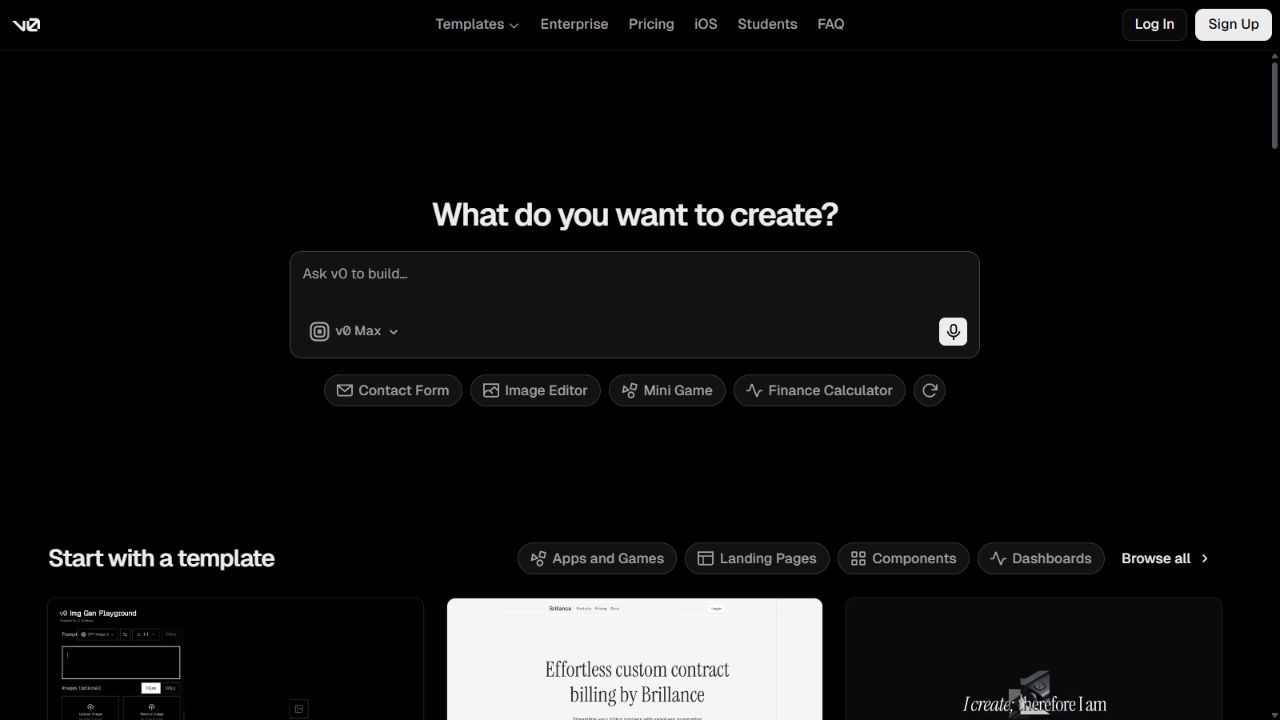
v0’s official documentation describes full-stack application creation, with Next.js as its default and most reliable path. It can create backend endpoints through App Router conventions and connect to services such as databases, queues, storage, and AI models through integrations.
This makes v0 a credible Bolt alternative when interface quality and the Vercel ecosystem are central to the decision. A React or Next.js team can use it to generate components, landing pages, dashboards, and increasingly complete applications while remaining close to a familiar code and deployment model.
The same focus can be a limitation. Buyers using a different primary framework, cloud, or governance model should test whether v0’s defaults create useful acceleration or unwanted migration pressure. Validate backend behavior, authentication, data rules, and integration ownership rather than judging only the generated interface.
Choose v0 when: the team already works with React, Next.js, or Vercel and wants AI-assisted interface and full-stack generation aligned with that ecosystem.
Check before choosing: framework portability, plan and credit terms, deployment ownership, external-service costs, and whether generated code passes the team’s review and accessibility standards.
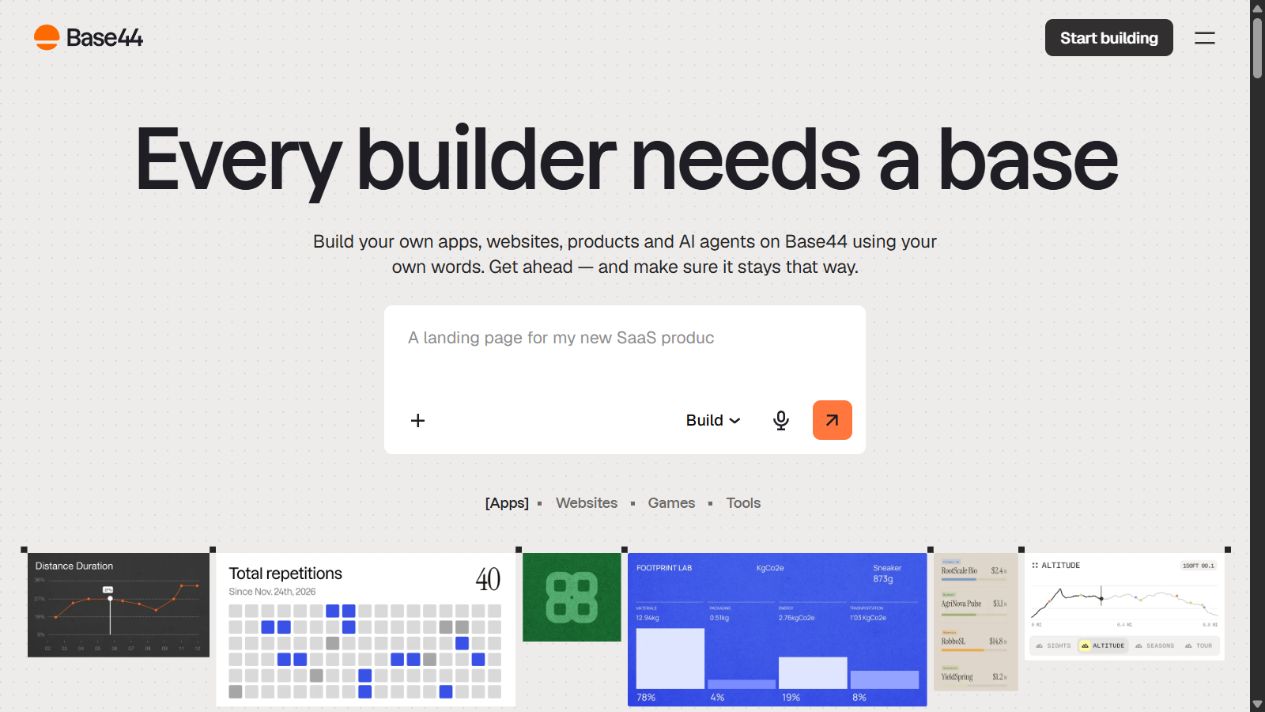
4. Base44: best for an integrated app-and-backend workflow
Base44’s official app-builder page describes generation of screens, data, backend logic, authentication, permissions, integrations, and deployment. Its pricing and support documentation use separate message and integration credits, with capabilities expanding across paid plans.
Base44 is a relevant alternative when a buyer wants the interface and supporting application services in one product. Official material lists authentication, database functionality, hosting, analytics, code edits on applicable plans, custom domains, GitHub integration, and backend functions.
The integrated approach needs careful diligence. Confirm which capabilities are available on the selected plan, how message and integration credits are consumed, who owns the data and code, and how a project moves to another environment. Third-party services can bill separately.
Choose Base44 when: a founder or operational team wants an integrated path from description to a functional web application with built-in services.
Check before choosing: plan-specific code access, backend functions, GitHub support, domain controls, credit consumption, external-service charges, security, and exportability.
Which Bolt.new alternative should you choose?
Choose by constraint rather than by the longest feature list.
- Choose Lovable if guided web-app creation and a documented GitHub handoff are priorities.
- Choose Replit Agent if the team wants agentic building inside a broader development workspace.
- Choose v0 if React, Next.js, and Vercel alignment is an advantage rather than a constraint.
- Choose Base44 if built-in application services and an integrated no-code-oriented path matter most.
- Stay with Bolt if its browser generation, code, preview, and Bolt Cloud workflow already fits the team and a pilot shows acceptable cost and maintainability.
Do not choose from a marketing demonstration. Give each finalist the same project brief and synthetic dataset. Measure time to the first complete workflow, percentage of output retained, defects, accessibility, token or credit use, manual repair, deployment effort, and export quality.
A fair two-tool pilot
Limit the final test to two candidates. Give both the same written brief, starting assets, synthetic data, user roles, acceptance criteria, and time allowance. Require one complete workflow rather than a collection of attractive screens.
The project should include a form, validation, persistent data, two permission levels, an error state, responsive behavior, and one external integration that is safe to test. Ask each platform to make the same later change, such as adding an approval state without altering existing permissions. This reveals how well the generated project survives iteration.
Use a scorecard with evidence:
| Criterion | Evidence to retain |
|---|---|
| Requirement fidelity | Passed and failed acceptance criteria |
| Code quality | Developer review notes and retained-code percentage |
| Security | Authorization, secrets, validation, and dependency findings |
| Accessibility | Keyboard, focus, labels, contrast, and screen-reader checks |
| Iteration | Regressions introduced by the controlled change |
| Cost | Credits or tokens, subscription, services, and review hours |
| Deployment | Staging steps, logs, rollback, domains, and ownership |
| Portability | Repository export and successful independent build |
Do not average away a critical failure. A tool that wins on speed but fails authorization or export requirements is not the right choice for that project. Record the plan, environment, test date, and any manual corrections so the result can be reproduced.
The winning tool should reduce total effort while leaving the organization with understandable code, controlled data, an operable deployment, and a credible exit path. If neither passes, keep the prototype and choose a conventional engineering route.
Migration considerations
Before moving an existing Bolt project, inventory the repository, framework, dependencies, environment variables, database, authentication, domains, hosting, external APIs, and current deployment process. Make a backup and use a non-production branch.
Confirm whether the destination imports the project directly or requires recreation. Test one end-to-end workflow, including data and permissions, before transferring traffic. Preserve the old deployment until the new environment passes functional, security, accessibility, performance, and rollback checks.
Credit systems and hosting models differ, so historical Bolt usage does not directly predict the cost of another tool. Run a representative month and include human review in the comparison.
Alternatives we excluded
We excluded products when their official positioning did not provide a comparable prompt-to-running-app workflow or when lifecycle risk made a new recommendation inappropriate. Most notably, Firebase Studio is not included because Google’s current documentation says new workspace creation and signup are disabled, migration is required, and shutdown is scheduled for March 22, 2027.
General AI assistants and code editors may still help software work, but they are not automatically direct alternatives to an integrated app builder. Compare them only when the team is prepared to supply the missing runtime, deployment, and operational workflow.
Final recommendation
Lovable, Replit Agent, v0, and Base44 are the most defensible Bolt.new alternatives in this shortlist, but each optimizes a different development context. Shortlist two based on ecosystem and governance fit, test the same representative workflow, and make the decision from retained output, risk, cost, and maintainability. If safe official evidence or a realistic pilot is unavailable, postpone the recommendation rather than guessing.
FAQs
What is the best Bolt.new alternative for non-developers?
Lovable and Base44 are strong candidates for prompt-led workflows. Production applications still require suitable technical, security, and operational review.
Which alternative is best for developers?
Replit Agent is the broadest development-environment option in this shortlist, while v0 is particularly relevant to React and Next.js teams.
Which alternatives support GitHub?
Lovable documents two-way GitHub synchronization, and Base44 lists GitHub integration on applicable plans. Verify current requirements before deciding.
Are these tools production-ready?
Their official pages support production-oriented workflows, but no generated project should be treated as production-ready without review and testing for the specific use case.
Is Firebase Studio a good Bolt alternative?
Not for a new long-term selection. Google says new workspaces are disabled and Firebase Studio will shut down on March 22, 2027.
Official sources
Frequently asked questions
What is the best Bolt.new alternative for non-developers?
Lovable and Base44 are strong candidates for prompt-led building, but the right choice depends on backend needs, code ownership, governance, and the technical review available.
Which Bolt.new alternative is best for developers?
Replit Agent is the strongest candidate here for teams that want an agent inside a broader cloud development environment; v0 is especially relevant to React and Next.js work.
Which alternative offers GitHub integration?
Official Lovable and Base44 documentation describes GitHub connectivity, while Replit and v0 provide their own code and deployment workflows. Verify current plan requirements.
Are these tools safe for production applications?
No tool should be assumed safe solely because it can publish an app. Production use requires code, security, data, accessibility, reliability, and operational review.
Did The SaaS Education test these alternatives?
No. This shortlist uses official sources checked on August 24, 2026 and does not claim hands-on testing.