Best CRM Software for Agencies
Compare agency CRM options for new business, client relationships, delivery handoffs and renewals, with a practical shortlist and evaluation checklist.
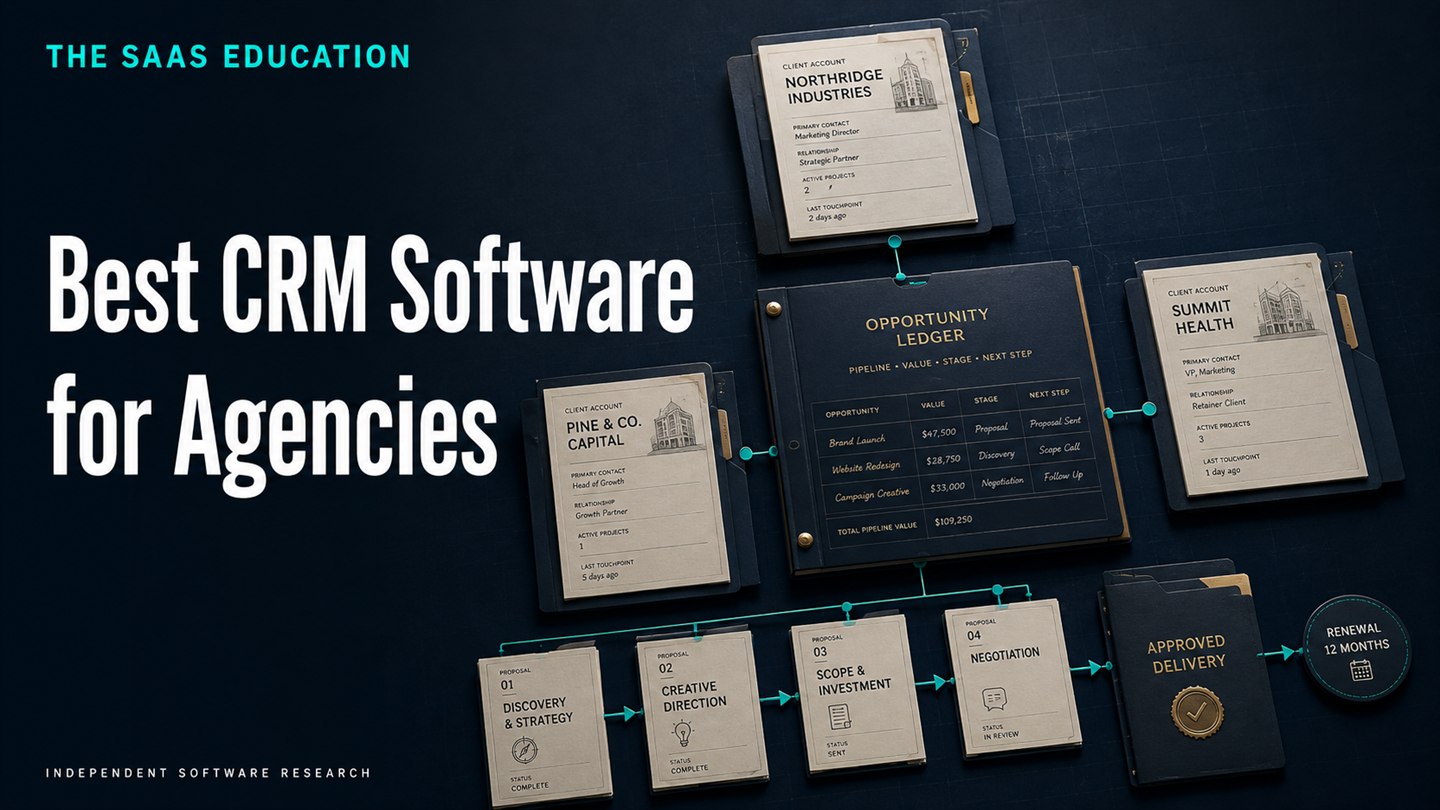
Direct answer
HubSpot is a strong shortlist candidate for agencies connecting marketing and sales around customer records. Pipedrive suits agencies whose main problem is inconsistent new-business follow-up. HighLevel deserves consideration when the agency operates marketing systems for clients. Attio is worth evaluating for an adaptable relationship model, while Zoho CRM belongs on the shortlist for configurable sales processes.
The best choice depends on which business you are trying to manage: your agency or your clients’ businesses. These are not interchangeable requirements. A studio tracking proposals does not necessarily need the same platform as a lead-generation agency managing campaigns in separate client environments.
This guide uses official product sources checked on September 4, 2026. We have not run a hands-on performance benchmark or purchased every configuration. Our recommendations are conditional fits, and the evaluation exercises are proposed tests for your team. Confirm current pricing and plan boundaries before committing.
Agency CRM shortlist
| Product | Strongest reason to shortlist | Main evaluation question |
|---|---|---|
| HubSpot | Connected customer platform | Which paid capabilities does the actual workflow require? |
| Pipedrive | Focused new-business pipeline | Can the team maintain useful next actions without unnecessary administration? |
| HighLevel | Client marketing operations | Are separate client environments, usage and ownership handled correctly? |
| Attio | Adaptable relationship structure | Can the agency maintain the model it configures? |
| Zoho CRM | Configurable sales processes | Does the chosen edition support the required process and integrations? |
These are five different starting points, not a ranking based on invented numerical scores. The right shortlist should become smaller after you define the workflow. A feature-rich platform that solves the wrong problem is not a better investment than a narrower product the team can use reliably.
First decide what agency CRM means
There are three common needs behind the search. The first is new business: contacts, referrals, discovery calls, proposals, negotiations and follow-ups. The second is account management: relationship history, renewals, expansion opportunities and important client stakeholders. The third is operating systems on behalf of clients, such as their lead handling or marketing communications.
An agency may need all three, but they should not be mixed without a deliberate structure. Your own prospect list should not become indistinguishable from a client’s customer database. Likewise, an internal note about commercial negotiation should not appear in an external client environment.
Write one sentence describing the primary job before opening a trial. For example: we need every active proposal to have an owner, a next action and a realistic decision date. That is a testable requirement. We need an all-in-one platform is not specific enough to guide a purchase.
For a broader introduction to evaluation criteria, use our CRM software evaluation guide . This article focuses specifically on agency relationships and handoffs rather than repeating a general CRM feature checklist.
1. HubSpot: for a connected customer platform
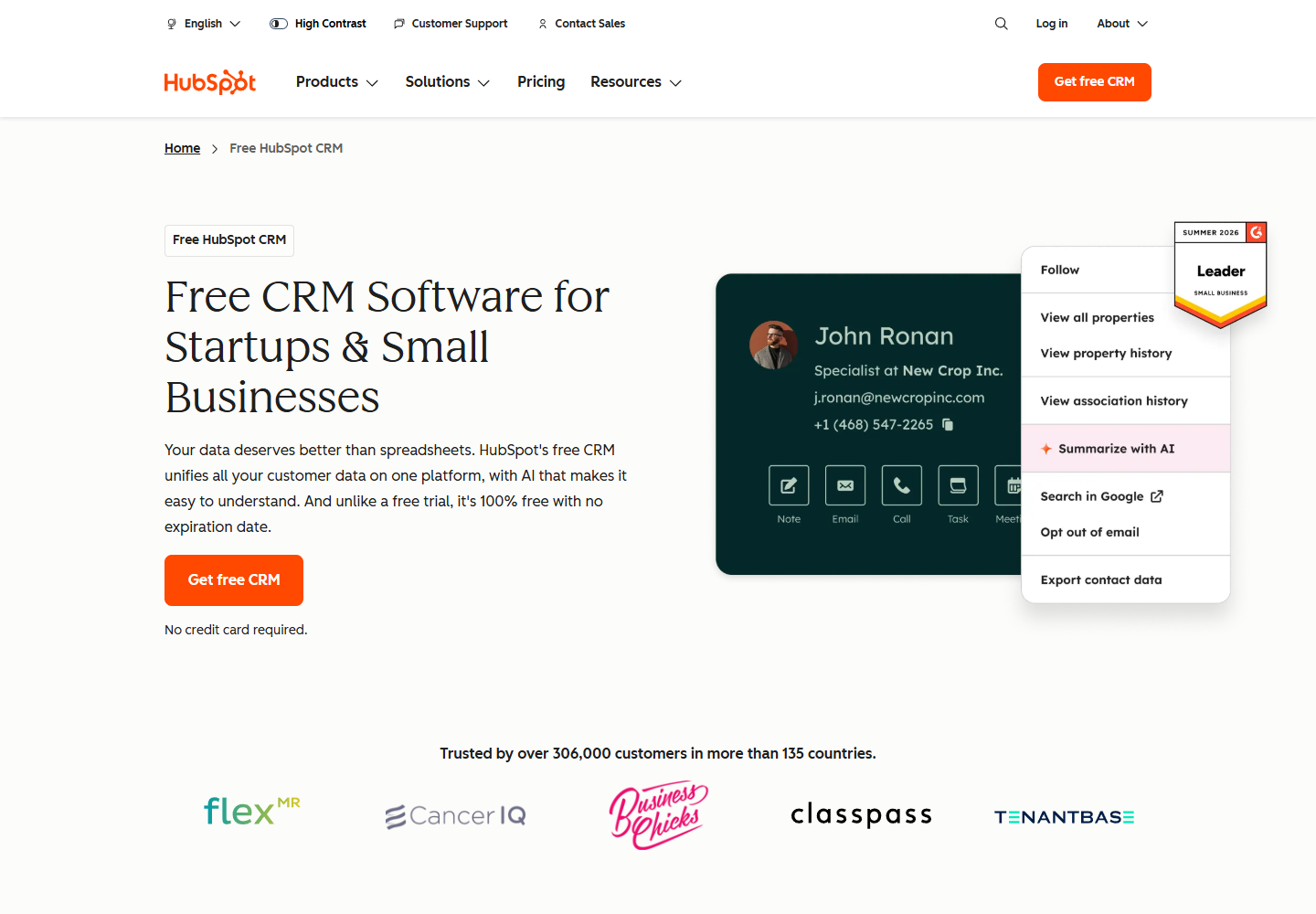
Official HubSpot CRM product homepage, captured August 24, 2026. Check current package entitlements before purchase.
HubSpot’s official CRM page describes contacts, communication history, deals, activities, pipelines and reporting, with connections to a broader customer platform. That makes it a candidate when an agency wants a shared commercial record rather than separate spreadsheets for marketing leads and sales opportunities. Source: HubSpot CRM .
The agency-specific attraction is continuity. An inquiry should arrive with enough context for the person handling discovery, and the resulting opportunity should retain that history. The value comes from making that chain dependable, not from collecting every possible field.
Choose it when: your agency wants marketing and sales to share a customer record and has someone responsible for maintaining the process. A connected platform can be useful when several people touch the same relationship and need a consistent account of what happened.
Check before buying: identify which capabilities belong to the exact edition and products being quoted. A free entry point does not establish that your automation, reporting or governance requirements are free. Ask for the configuration that supports your real workflow rather than comparing an entry-level price with an advanced demonstration.
Agency pilot: follow one permitted sample inquiry through qualification, proposal and a delivery handoff. Ask the delivery lead whether the commercial context is understandable without contacting the salesperson. This tests the agency’s configuration, not just whether the CRM contains a deal board.
2. Pipedrive: for new-business pipeline discipline
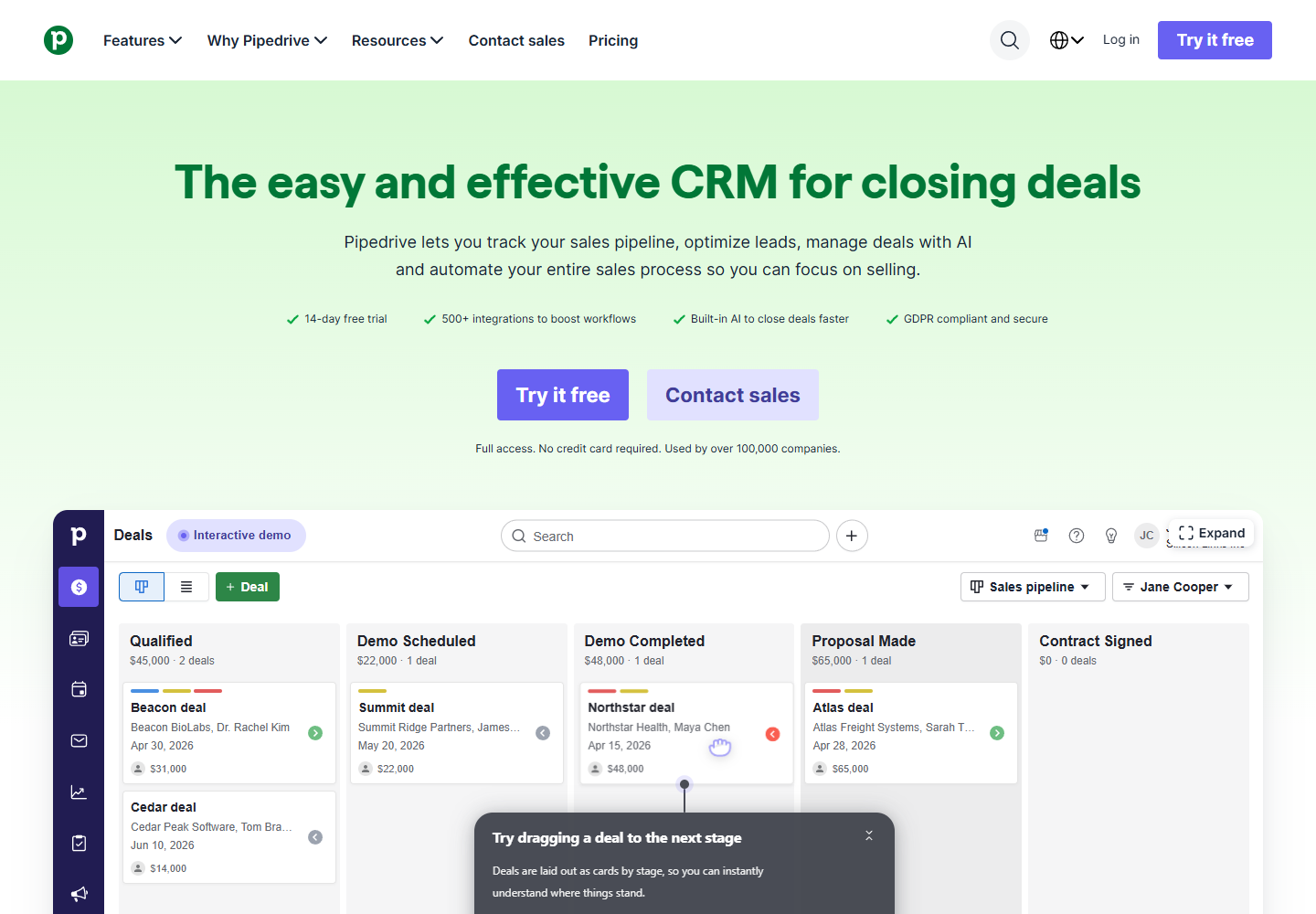
Official Pipedrive homepage, captured August 24, 2026. The pictured pipeline is the vendor’s demonstration, not our test account.
Pipedrive positions itself as a sales-pipeline CRM, with activities, follow-up support, reports and integrations. It is a sensible candidate when an agency’s immediate problem is losing track of prospects or allowing proposals to sit without a next step. Source: Pipedrive .
A focused pipeline can be useful for a founder who still sells while managing delivery. The objective is a short, credible list of commercial commitments: who owns the opportunity, what happens next and when the buyer expects to decide. The system should make neglected follow-up visible.
Choose it when: the primary need is a clear agency sales process rather than running client marketing environments. Start with meaningful stages and avoid creating a separate pipeline for every minor service variation.
Check before buying: confirm the integrations and post-sale workflow you actually need. A sales CRM should not be assumed to replace resource planning, delivery approvals or project accounting. Determine where the opportunity stops and where the delivery record begins.
Agency pilot: review a sample of stalled proposals. Can the responsible person quickly distinguish no response, unresolved scope, budget uncertainty and an agreed future decision? If all four appear as the same generic stage, the process needs refinement regardless of which CRM you select.
3. HighLevel: for operating client marketing systems
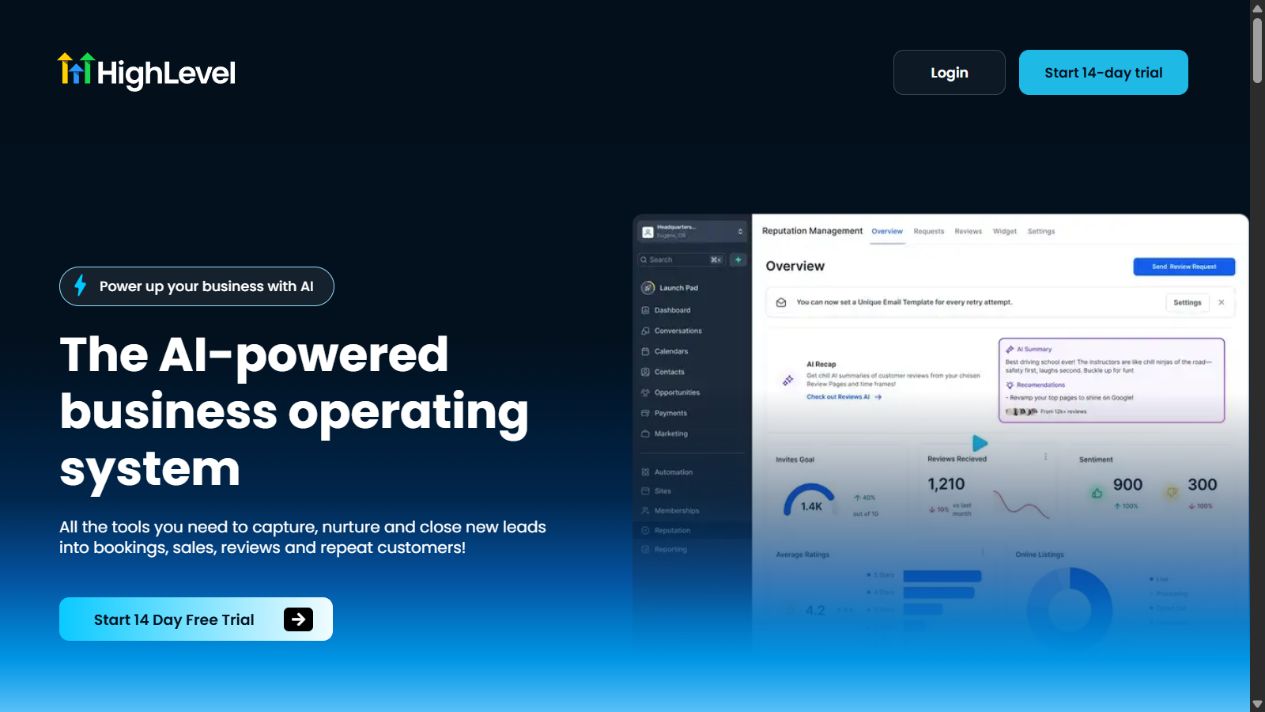
Official HighLevel homepage, captured September 4, 2026. Confirm client-account allowances and usage terms for the selected package.
HighLevel’s official site explicitly targets agencies and presents packages with client sub-accounts. This makes it a different kind of candidate from a CRM used only to manage the agency’s own new business. Source: HighLevel .
The important question is whether you are selling services that require ongoing operation of a client’s system. In that case, separate environments, responsibility for configuration and a clear exit process can matter as much as the agency’s internal sales board.
Choose it when: client marketing operations are part of the service model and the team is prepared to administer those environments. Do not buy that operating model merely because a broad platform appears to contain more features.
Check before buying: the sub-account allowance, communication usage, additional services, support responsibilities and handover arrangements. A label describing unlimited sub-accounts does not mean every associated service or usage category is unlimited. Confirm the complete commercial terms for the intended configuration.
Agency pilot: create a non-production example with fictitious client information. Test who can see each environment, who receives notifications and what would be handed over when the engagement ends. A successful sales demo is not evidence that your own permission settings and account procedures are correct.
4. Attio: for an adaptable relationship model
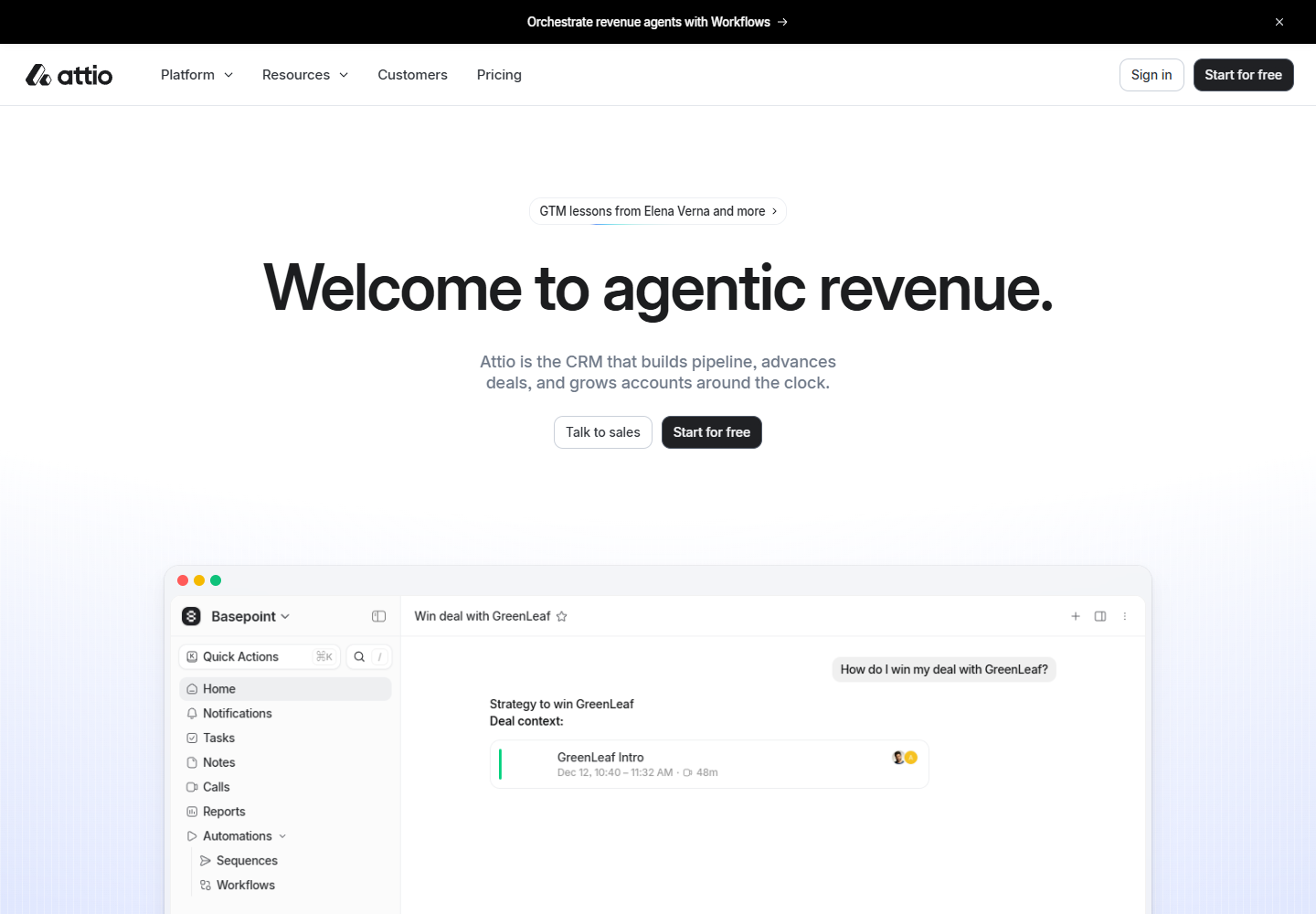
Official Attio homepage, captured August 24, 2026. Marketing demonstrations do not establish performance in your agency’s configuration.
Attio presents a CRM with a data model, workflows, reporting and relationship-oriented revenue features. It is worth considering when an agency’s relationships do not fit comfortably into a simple list of contacts and one opportunity per company. Source: Attio .
Agencies often deal with people who move between client organizations, referral partners connected to multiple accounts and several commercial opportunities under one relationship. The appeal of a flexible model is representing those distinctions clearly. The risk is creating a complicated structure nobody can maintain.
Choose it when: you can describe the relationships that matter and have an owner for the configuration. Flexibility is most valuable when it solves a named problem, not when it becomes permission to create fields indefinitely.
Check before buying: verify the required model, automation and permission capabilities in the chosen plan. Product positioning does not establish the exact entitlement. Ask the vendor to demonstrate your proposed structure rather than accepting a generic revenue example.
For a concrete boundary, the Attio plan table checked September 4 lists no access permissions on Free, basic permissions on Plus and advanced permissions on Pro and Enterprise. It also sets different object allowances. An agency separating sensitive account information should evaluate those controls before assuming the free workspace fits its team. These are listed entitlements, not a test of a configured workspace’s security.
Agency pilot: map one account with two stakeholders, a referral relationship, a completed project and a possible renewal. A colleague who did not build the model should be able to understand it. If interpretation depends on the administrator explaining every field, simplify before migration.
5. Zoho CRM: for configurable sales processes
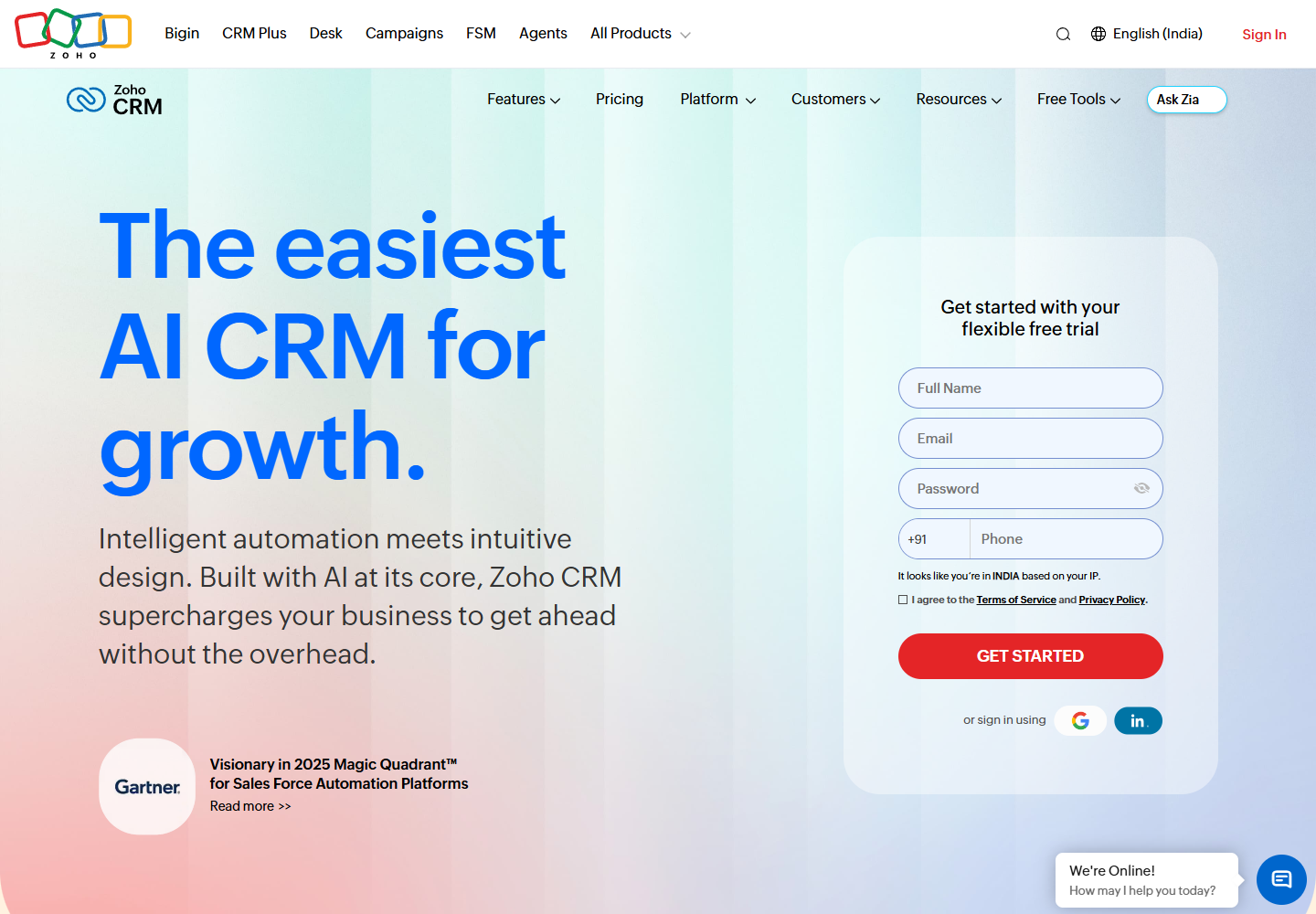
Official Zoho CRM product homepage, captured August 24, 2026, in its localized Indian presentation. Regional offers can differ.
Zoho CRM’s official product page presents multiple pipelines, automation and configurable capabilities. It belongs on the shortlist when an agency wants to formalize its commercial process and is willing to evaluate edition-specific requirements carefully. Source: Zoho CRM .
The useful agency question is how much structure the team needs. An agency with consistent qualification and approval rules may benefit from formalizing them. An agency still changing its service model every week should avoid making the software encode decisions that have not been settled.
Choose it when: the process is sufficiently clear to configure and someone can maintain the rules. Start with the minimum information required to make a decision, then add complexity only when a real workflow needs it.
Check before buying: edition boundaries, integration behavior, administration effort and regional pricing. The page retrieved for this review displayed localized currency, so we do not present it as a universal price. Compare written quotes for the same requirements and billing assumptions.
Agency pilot: take a proposal that requires an internal commercial approval. Verify who can approve it, how the status is recorded and what happens if the approver is unavailable. A rule that works only when one administrator is present is not a durable process.
What we would not select by default
We would not choose a platform simply because it includes AI, a large integration count or a long template library. Those features may be useful, but they do not answer whether the agency can maintain reliable client information.
We would also avoid treating project management as an incidental CRM checkbox. A delivery team may need dependencies, resource allocation, reviews and time records. A sales opportunity has different semantics. Combining the two can work only if the actual requirements are met and the records remain understandable.
Finally, do not assume an agency-focused label guarantees suitability. Some products emphasize software resale or client campaigns; others emphasize the agency’s own pipeline. Both can be legitimate, but a comparison that ignores the distinction gives the reader a misleading universal winner.
Design the account and opportunity model first
An account is the organization with which you have a relationship. An opportunity is a possible commercial engagement. A contact is a person involved in that relationship. Keeping those concepts separate prevents one client with several projects from becoming several disconnected copies of the same company.
Decide how renewals and expansions will be represented. A retainer renewal should not silently overwrite the history of the original sale. At the same time, creating a new deal for every monthly invoice can make the pipeline meaningless. Choose a convention that reflects actual commercial decisions.
Write definitions in plain language. For example, proposal sent means the approved proposal has reached the buyer, not that someone started drafting it. Qualified means the agency has enough information to decide whether to pursue the work. These definitions improve reporting more than decorative dashboards.
Do not import the entire historical database before testing the model. A small sample containing duplicates, former clients, multiple contacts and a renewal will reveal problems earlier and with less cleanup work.
Make the sales-to-delivery handoff explicit
A won deal is not a complete delivery brief. The delivery owner needs the agreed scope, exclusions, commercial assumptions, relevant contacts, timing and unresolved risks. Without that context, the agency may begin work based on a different understanding from the one used to sell it.
Create a handoff checklist that a named person accepts. Separate agreed commitments from internal ideas discussed during the pitch. If a deadline is tentative, label it that way. If the client has not supplied required information, record the dependency before scheduling the work.
The CRM can remain the commercial source of truth while the project system manages execution. Link the records rather than copying every update manually into both places. For each synchronized field, decide which system is authoritative and what happens when values disagree.
Test the exception path as well as the successful path. What happens when the scope changes after the deal is won? Who updates the commercial record, who approves additional work and how does the delivery team learn about the change?
Treat client separation as a real requirement
An agency may store its own sales information and operate systems containing client information. These records can have different owners and access expectations. A person assigned to one client should not receive another client’s messages simply because both use the same platform.
Use fictitious data to test permissions before importing real records. Check ordinary staff access, administrator access, exports, notifications and any shared reports. A view filtered to one client is not automatically proof of a complete access boundary.
Document who controls the account and what happens when the relationship ends. The answer should cover access removal, exports, operational continuity and responsibilities. Do not leave this discussion until a disputed offboarding request arrives.
This is an implementation requirement, not a claim that any shortlisted product is insecure. Even a capable permission system can be configured incorrectly. Verify the configuration your agency will actually use.
Build a realistic cost model
Headline prices are insufficient because agencies vary in users, client environments, contacts, communication activity and required integrations. Compare the same operating scenario across vendors. Otherwise, the cheapest column may simply omit work included elsewhere.
List recurring platform charges separately from implementation costs. Include setup, migration, training and the time required to maintain workflows. Add any essential third-party services and clarify which charges increase when the agency gains clients.
Model a normal month and a busier month. A proposal-driven studio may mainly scale by internal users, while a client-operations business may scale through environments and communication volume. These patterns should influence the quote you request.
Ask which capabilities would force an upgrade. A low starting price is less useful if the agency’s first essential approval or report requires a different edition. Obtain written confirmation of the required configuration before committing to a long billing term.
A practical two-week pilot
The following is a suggested pilot, not a test we performed. Use a small set of permitted or fictitious records and the real people who will use the CRM. Limit the scope so the team can distinguish a product problem from unfinished configuration.
During the first few days, import the sample, define stages and assign owners. Check that duplicate contacts and multiple opportunities under one company behave as intended. Record questions rather than solving every one with another custom field.
Next, run routine work: a referral arrives, a discovery call happens, a proposal needs approval and a buyer postpones a decision. Ask users to perform those tasks without the administrator narrating each click. Track where they hesitate or fall back to a spreadsheet.
Then test a won deal, a renewal and an offboarding scenario. Verify the handoff, notification recipients and export. End with a short review of what failed, what required configuration and what remains an external dependency. Do not confuse an unfinished setup with a tested requirement.
Pilot acceptance criteria
| Requirement | Useful evidence |
|---|---|
| Every active opportunity has a next step | Review a sample without asking the owner to explain it |
| Contacts remain connected to the correct account | Inspect multiple stakeholders and a duplicate case |
| Won work reaches delivery with context | Delivery owner accepts the handoff record |
| Client information stays appropriately separated | Test ordinary user roles using fictitious accounts |
| Reports support decisions | Reconcile a sample total to underlying opportunities |
| The team can retrieve its information | Open a trial export and inspect essential fields |
| Administration is manageable | Record recurring maintenance tasks and their owner |
Use these criteria to narrow the shortlist. If a requirement is essential and cannot be demonstrated, leave it unresolved rather than awarding partial confidence because the interface looks polished. An honest unknown is more useful than an optimistic checkmark.
Migration and adoption
Start by cleaning the sample data and preserving a source copy. Agree naming rules and ownership before the full import. A migration that faithfully reproduces duplicates and ambiguous stages has moved the problem rather than solved it.
Train around tasks, not menus. Show how to log the next action, find a client’s history and hand over a won engagement. Explain which information is mandatory and why. Users are more likely to maintain fields that support a visible decision.
Set a review date after launch. Remove unused fields, investigate incomplete records and check whether people still keep parallel lists. The objective is reliable shared information, not an impressive initial configuration.
For the detailed transition checklist, read our CRM migration guide . Keep a rollback option until imports, permissions and essential integrations have been verified.
Final recommendation
Choose the CRM around the agency’s operating model. Shortlist HubSpot or Pipedrive for internal commercial work, HighLevel for client marketing operations, and Attio or Zoho CRM when configuration requirements justify the effort. Run a bounded pilot, verify the full cost and make ownership explicit. The best system is the one that keeps client relationships understandable as work moves from a prospect to a delivered engagement and a renewal.
Frequently asked questions
What is the best CRM for an agency?
There is no universal winner. Shortlist HubSpot for a connected customer platform, Pipedrive for a focused new-business pipeline, HighLevel for client marketing operations, Attio for adaptable relationship modeling and Zoho CRM for configurable sales processes.
Do agencies need client sub-accounts?
Only when the operating model requires separate client environments. Tracking an agency's own prospects does not by itself require client sub-accounts. Running communications and marketing systems for clients creates different separation and ownership requirements.
Can a CRM replace project management software?
Not automatically. Sales opportunities and delivery tasks have different meanings. Verify resource planning, approvals, dependencies, time tracking and financial requirements before consolidating them.
Should every client be a separate deal?
A client account and a commercial opportunity are different records. A client may have several projects or renewals. Define those relationships before importing data.
How should agencies evaluate CRM pricing?
Model the required configuration, including users, client environments, contacts, usage, integrations, onboarding and administration. Compare recurring and implementation costs rather than headline starting prices.
What should happen when a deal is won?
A delivery owner should accept a reviewed handoff containing scope, commercial terms, contacts, timing and unresolved assumptions. A changed deal stage alone is not a complete handoff.
How can an agency avoid a difficult migration?
Clean a sample of records, agree account and opportunity definitions, test imports and exports, preserve history and verify permissions before moving the full database.