Best Customer Support Software for Agencies
Compare customer support software for agencies managing multiple clients, brands, SLAs, routing and reports, with practical selection and rollout checks.
Direct answer
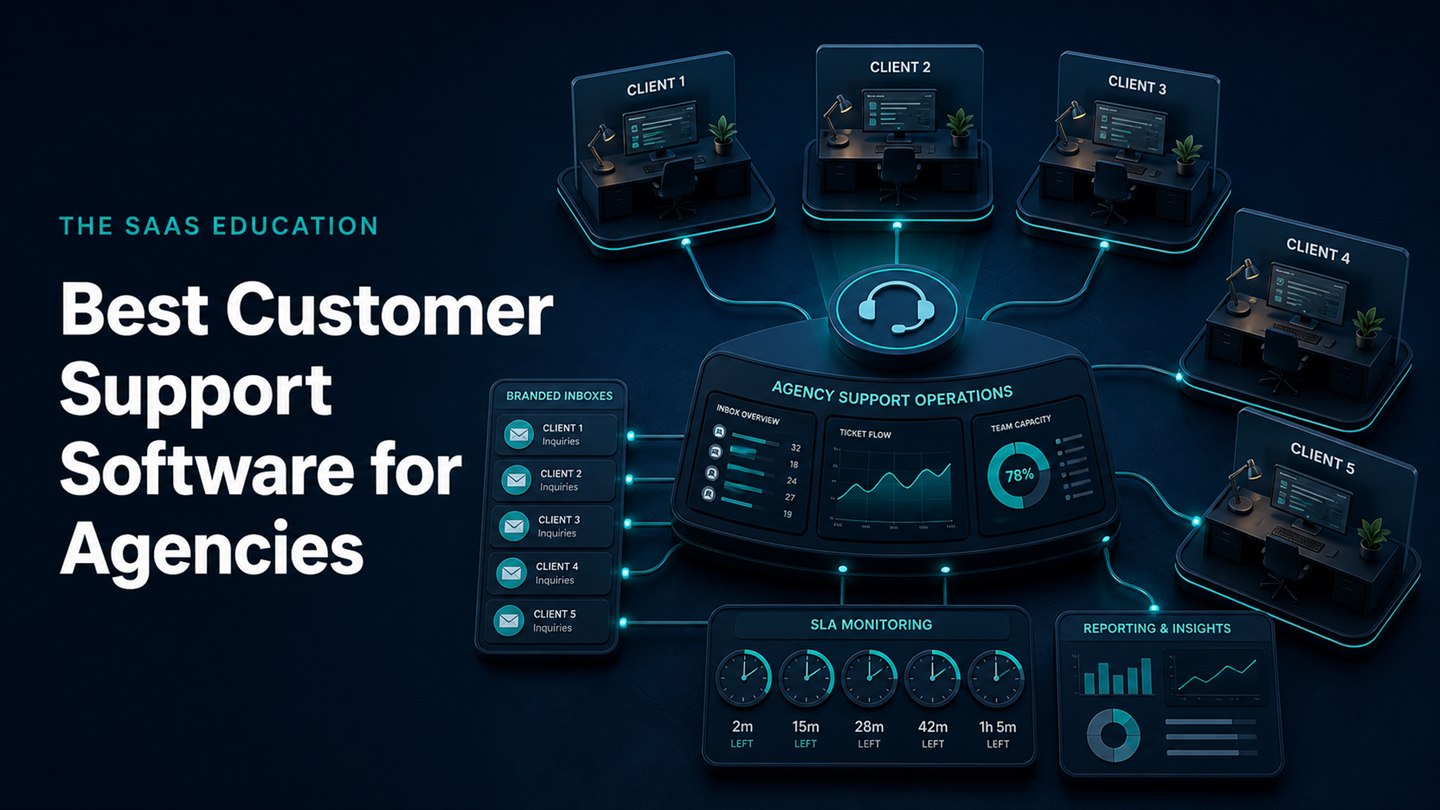
Zendesk is a strong starting point for agencies that need structured multibrand ticket operations. Freshdesk suits teams that value separated workspaces and configurable service levels. Zoho Desk is worth evaluating for department-led branded help centers. Intercom fits messaging-led multibrand support, while Gorgias is the most specialized option here for ecommerce agencies managing connected stores.
There is no universal winner because “agency support” describes several businesses. A managed support provider handling enterprise queues has different requirements from a digital agency answering questions for five online stores. The critical differences are client ownership, data separation, agent access, contractual response targets, reporting and offboarding—not the length of a generic feature list.
This guide uses live search discovery and official vendor documentation checked September 5, 2026. We did not conduct a hands-on benchmark, send production tickets, test migrations or verify report accuracy. Numerical prices are omitted because current plans, allowances and purchase configurations were not fully verified. Use the shortlist to choose a controlled trial, not as a substitute for due diligence.
Shortlist at a glance
| Agency requirement | Starting point | Main boundary to verify |
|---|---|---|
| Mature multibrand ticket operations and SLA reporting | Zendesk | Brand membership, group routing and plan entitlements |
| Operationally separated client teams or business units | Freshdesk | Workspace overhead, cross-workspace reporting and legal ownership |
| Department-specific channels and branded help centers | Zoho Desk | Department limits, user-base model and offboarding effects |
| Messaging, help centers and automation across brands | Intercom | Brand timing in workflows, historical reporting and workspace separation |
| Support for multiple ecommerce stores | Gorgias | Store compatibility, volume model and whether separation meets client contracts |
| Complete client legal and billing separation | Separate accounts may be preferable | Administration, consolidated staffing and migration between owners |
| A low-risk first rollout | One synthetic client pair | Prove routing, permissions, reporting and revocation before real data |
These recommendations are conditional. “Multibrand” may describe customer-facing appearance, ticket classification or a group of capabilities. It does not automatically mean that one client’s agents cannot see another client’s data. Verify every layer independently.
How we selected the tools
Search results for customer support software for agencies commonly prioritize multiple brands, per-client service levels, white-label experiences, reporting and cost at agent scale. We treated those pages as discovery inputs, not proof of product performance or current pricing.
Candidates remained on the shortlist only when official documentation supported a distinct agency use case. We looked for four kinds of evidence: a way to identify or separate client operations, configurable response targets, reports that can be segmented meaningfully, and a workable model for shared agents or specialized teams.
We excluded products whose agency fit could be supported only by an affiliate list or a broad homepage claim. We also avoided padding the list to ten. Five documented operating models are more useful than a longer list of tools that repeat generic inbox features.
No ranking score is assigned. A score would require comparable hands-on tasks, controlled configurations and current commercial terms. Instead, each section states the job a product may fit, the official evidence behind that fit and the failure modes an agency should test.
Define the agency operating model first
Start by deciding what the agency actually sells. If the service is staffed customer support, the help desk is a production system tied to contracts and staffing. If support is an add-on to web development, the agency may need only a clean handoff and limited temporary access. If the agency supports ecommerce stores, order context and store-level reporting can outweigh general enterprise workflow depth.
Write down who owns the customer relationship, account, domain, sender identities, help-center content and exported history. A shared agency-owned account can simplify staffing but complicate offboarding. A client-owned account can make transfer easier but may fragment reporting and increase administration.
Next, define the isolation requirement. Visual separation is not enough when contracts prohibit cross-client access. Specify whether agents, supervisors, automation administrators and report viewers may see multiple clients. Test those roles directly with synthetic records.
Finally, define the service target. An SLA is useful only when its clock, business hours, priorities and exclusions match the contract. Avoid promising a client response target based on a dashboard you have not configured and reconciled.
1. Zendesk: strong for structured multibrand operations
Zendesk’s official multibrand documentation describes brands as customer-facing identities connected to contact points such as email, help centers and messaging. Brand is also stored on tickets and can participate in views, triggers, automations and reporting.
That makes Zendesk a strong candidate for an agency operating one structured support environment across several client identities. Agents can work inside a common system while tickets retain a brand dimension for routing and analysis.
The important limitation is that a brand label does not itself enforce isolation. Zendesk’s agent-restriction guide explains a configuration using groups, restricted agent access and triggers. Agencies should test ticket reassignment, search, views and administrator visibility rather than assuming brand membership closes every path.
Zendesk also documents SLA policies that can be surfaced in views, automations and reports. Its explanation notes that some metrics are measured per SLA instance rather than simply per ticket. That distinction matters when an agency converts dashboard percentages into a client report.
Choose Zendesk when: the agency needs mature ticket operations, several customer-facing identities, structured routing and SLA reporting in one environment.
Verify before committing: the number of brands and SLA capabilities in the proposed plan, agent restrictions, separate help-center requirements, report definitions, export scope and the client offboarding process.
Trial task: create two fictional brands, two restricted agent groups and different support schedules. Send tickets through each client address, attempt cross-client search, trigger an escalation and reconcile the report against the raw test tickets.
2. Freshdesk: strong for separated operational workspaces
Freshdesk documents multiple ways to distinguish work. Its SLA guide says policies can use conditions such as company, group, product, source and priority. That can support different contractual targets without requiring every client to use the same response clock.
The more agency-relevant option is Freshdesk Workspaces . Official documentation describes separate agents, groups, business hours, portals, email addresses, SLA policies and automations. It also discusses cross-workspace administrators and reports.
Workspaces can suit an agency that needs stronger operational separation than a brand field but still wants one overarching environment. A dedicated client team can have its own routing and schedule while authorized managers maintain broader visibility.
Freshdesk also states the tradeoff clearly: workspaces add administration and may not be appropriate when separate billing or legal ownership requires separate accounts. That is an important boundary for agencies. Operational separation inside one vendor account is not necessarily contractual separation between businesses.
Official dashboard documentation covers ticket volume, SLA compliance, response and resolution performance. Availability depends on the plan, so the agency should request a demonstration using the exact edition under consideration.
Choose Freshdesk when: the agency has client pods or business units that need separate workflows, schedules and agent assignments, with selected management across them.
Verify before committing: workspace entitlements, contact visibility, global versus local rules, report filters, administrator scope and whether the future client can receive ownership of one workspace independently.
Trial task: build two workspaces with conflicting business hours and automation rules. Confirm that tickets, macros and agents stay in the intended workspace, then generate both client-specific and combined operational reports.
3. Zoho Desk: strong for department-led branded help centers
Zoho Desk uses departments as an operational boundary. Its department documentation describes department-specific agents, mailboxes, chat, forms, social channels, automation, service agreements and business hours.
The official multibrand help-center guide maps branded Help Centers to departments. It describes both a common user base and a unique user base. This can fit agencies that need each client to present its own portal while operating through a structured department model.
The user-base decision deserves early attention. A common identity can reduce customer friction across related brands, but unrelated agency clients may require distinct registration and access. Zoho warns that disabling a unique-user multibrand setup can delete branded Help Centers and affect end users unless they are migrated. Offboarding must therefore be designed before launch.
Zoho’s SLA dashboard documentation describes violated tickets, violation instances and residual time across departments. Agencies should confirm which measures correspond to client contracts and how the report handles reopened or reassigned work.
Choose Zoho Desk when: department-specific operations and branded customer portals are central, especially for teams already comfortable with Zoho administration.
Verify before committing: department and Help Center limits, common versus unique users, domain mapping, agent scope, reporting exports and what happens to identities and content during client separation.
Trial task: create two test departments and Help Centers with different sender identities, users and service targets. Attempt access from each customer profile, inspect agent permissions and simulate a client export and shutdown.
4. Intercom: strong for messaging-led multibrand support
Intercom’s multibrand guide describes two approaches. Separate workspaces can isolate contacts, permissions and support requests, while one workspace can apply multiple brands across Messenger, email, Help Centers and its AI-agent presentation.
The single-workspace approach can suit an agency whose agents work across clients and whose service centers on conversational support. Brand attributes can support inbox search, views, workflow conditions and reporting. This creates efficiency, but the documented limitations matter.
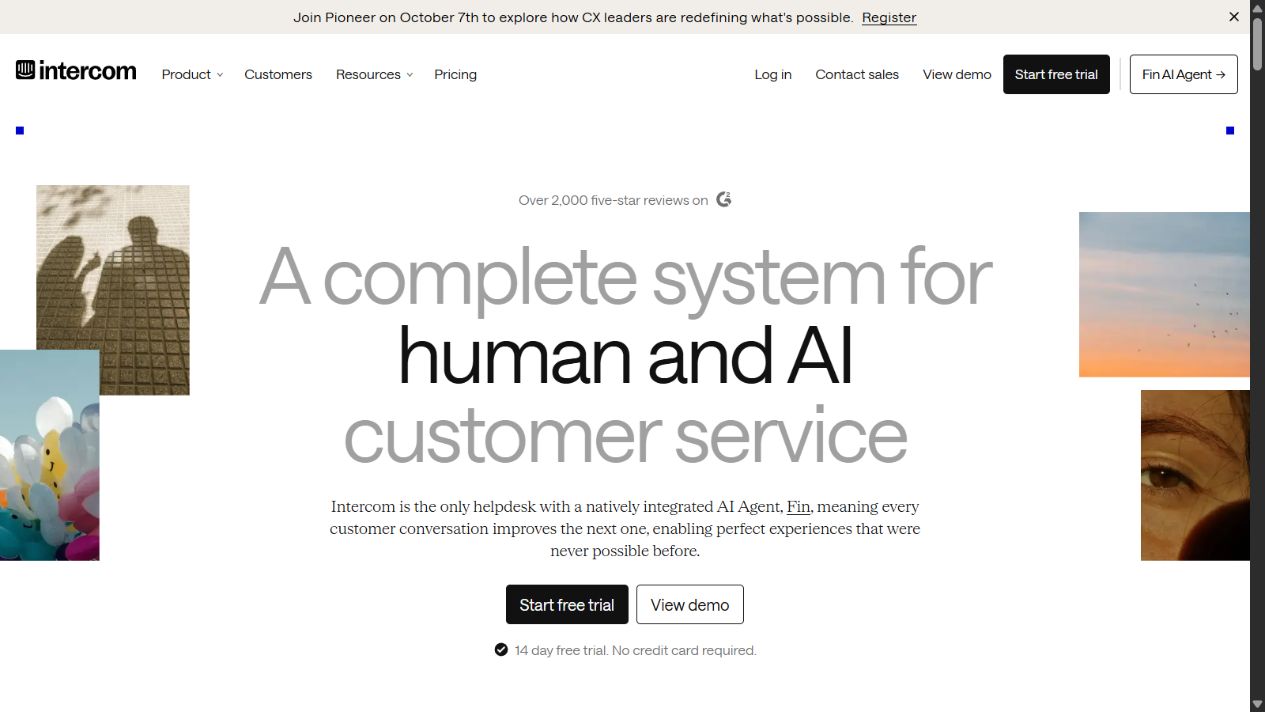
Intercom states that a brand may not be defined before a conversation starts, which affects certain workflow targeting. It also notes that historical brand values are not automatically rewritten when attributes change. An agency should not promise perfectly segmented historical reports without testing these behaviors.
Intercom’s SLA documentation covers workflow-applied targets and reports for first response, next response, closing and ticket resolution. That can connect conversational channels to contractual monitoring, provided the agency validates pause behavior and metric definitions.
Choose Intercom when: client work emphasizes Messenger, email, help-center and automated conversational support, and a shared team benefits from one multibrand workspace.
Verify before committing: which brand features are included, when brand attributes become available to workflows, report history, AI configuration boundaries, sender identity and whether a separate paid workspace is required for contractual isolation.
Trial task: route conversations from two fictional domains into one workspace, validate brand-specific appearance and sender behavior, test pre-conversation automation, then change a brand attribute and inspect current and historical reports.
5. Gorgias: focused option for ecommerce agencies
Gorgias is the most specialized candidate in this shortlist. Its official multiple-store documentation describes managing connected ecommerce stores from one location, viewing store channel configuration, creating store-filtered inbox views and filtering analytics by store.
It also documents custom business hours for support channels connected to different stores. These capabilities map directly to an ecommerce agency that operates support for several shops or regional storefronts.
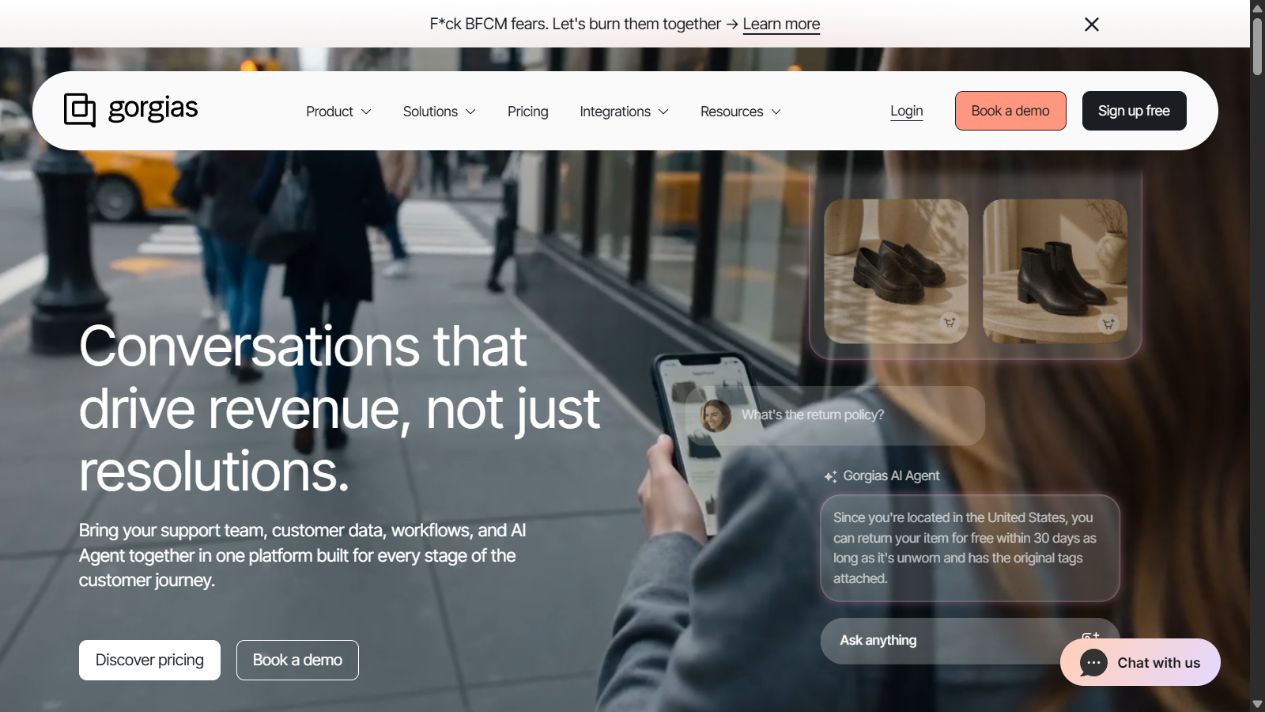
That focus is also the boundary. Store-aware support is not automatically equivalent to complete client tenancy for an agency serving unrelated businesses. Confirm whether contacts, agents, rules, integrations and exports are separated in the way each client contract requires.
Choose Gorgias when: the agency specializes in ecommerce support and needs store context, store-filtered work and store-specific operating schedules.
Verify before committing: supported commerce platforms, store and channel limits, agent access across stores, reporting exports, usage-based commercial terms, client ownership and the process for disconnecting one store without affecting another.
Trial task: connect test stores rather than live commerce accounts, create store-filtered views, verify business hours and attempt a store-specific report. Inspect what a shared agent can see and how the integration is revoked.
Shared account or separate client accounts?
A shared account can make staffing efficient. Supervisors see demand across clients, agents switch queues without maintaining many logins and common quality controls can be applied centrally. It may also simplify consolidated reporting for the agency.
Separate accounts can provide clearer ownership, billing and legal boundaries. The client can retain its history and configuration if the relationship ends. The tradeoff is duplicated administration, fragmented analytics and more difficult coverage by shared agents.
Do not decide from convenience alone. Review contracts, data-processing roles, residency requirements, administrator access and exit obligations. If a client must control deletion and vendor terms directly, an agency-owned shared environment may be inappropriate even if the interface supports multiple brands.
Document the chosen model in the statement of work. Specify account owner, billing owner, administrators, permitted cross-client roles, export frequency and what is delivered at termination.
Reporting that clients can trust
Client reporting should begin with definitions. “First response” may exclude automated acknowledgement or may be measured under business hours. “Resolution” may change when a ticket reopens. An SLA percentage can count instances rather than unique tickets.
Create a data dictionary for every promised measure. Record the source field, filter, timezone, business-hour rule and treatment of spam, merged tickets and bot replies. Reconcile a sample dashboard to individual tickets before presenting it externally.
Separate operational reports from outcome reports. Queue volume and response time explain workload. They do not prove customer satisfaction or business impact. Avoid turning every available chart into a client KPI.
Limit report access to the appropriate client and date range. Exported files can create a new data leak outside the platform, so define storage and deletion rules for recurring reports.
Migration and offboarding checks
Before migration, inventory tickets, contacts, attachments, help-center articles, macros, automations, custom fields, identities and reports. A vendor may import ticket records without recreating every relationship or historical metric.
Run a pilot with synthetic content and a small approved data sample. Compare counts and open representative records. Verify timestamps, authorship, private notes, attachments and links. Keep the source system available until acceptance and rollback conditions are clear.
Offboarding deserves the same rigor. Test how to export one client’s data, remove its domains and integrations, revoke users and preserve evidence required by contract. Determine whether separating one client requires vendor assistance or a paid migration.
Never promise a clean transfer merely because an export button exists. File access, usable structure and import compatibility are separate questions.
Security and quality-control checklist
Use synthetic clients to test permissions. Create an agent assigned to one account, a shared supervisor, a client viewer and an administrator. Attempt search, direct URLs, exports, reports and reassignment from every role.
Verify sender identity so an agent cannot accidentally reply from another client’s address. Test automation collisions when similar tags or customer names exist. Use distinct naming conventions for brands, workspaces, groups, fields and rules.
Review authentication, multifactor options, role management, audit events, retention, subprocessors and incident responsibilities for the selected contract. Vendor certifications can support due diligence but do not prove that the agency configured the account correctly.
Create a change process. A new automation or field can affect several clients in a shared environment. Require an owner, test evidence and rollback plan before changing global rules.
Cost model without misleading headline prices
Do not compare only a monthly agent amount. Build a scenario with full-time agents, supervisors, seasonal seats, contractors, brands or workspaces, channels, automation, AI usage, reporting and integrations. Include implementation, training and migration work.
Volume-based charges can behave differently from seat-based charges. An ecommerce agency may see seasonal conversation spikes, while a managed service provider may scale mainly through staff. Model a normal month and a peak month.
Include client turnover. Creating, auditing and removing a workspace consumes time. An inexpensive plan can become costly if every onboarding requires manual duplication and every exit requires vendor services.
Request an official quote for the exact configuration and record its date, billing term, renewal conditions and overage rules. This guide intentionally avoids numerical pricing because an incomplete number would not represent an agency deployment.
A controlled 30-day evaluation
Week one should prove structure. Configure two fictional clients with different domains, business hours, priorities and agent groups. Document every role and global setting.
Week two should prove operations. Send email, form and chat requests where relevant. Test routing, collisions, escalation, pause rules, sender identity and a handoff between agents.
Week three should prove reporting and failure behavior. Reconcile SLA metrics, create client-specific views, trigger a missed target and test revocation. Inspect whether a supervisor can accidentally expose another client’s information.
Week four should prove portability. Export representative data, remove one client configuration and restore the test environment from documentation. Estimate ongoing administration and review the result with support, security, finance and account-management owners.
Approve the platform only when the failures are understood. A successful demo is useful, but a repeatable operating process is what protects client trust.
Build a weighted agency selection matrix
Turn requirements into weighted evidence before attending vendor demonstrations. Give the highest weight to conditions that could breach a contract: client access isolation, correct sender identity, data ownership and reliable service-level measurement. Give lower weight to conveniences that can be changed later, such as dashboard arrangement or cosmetic preferences.
For each criterion, define a pass condition rather than a vague score. “Good permissions” is not testable. “A client-restricted agent cannot find, open, export or reassign another client’s ticket” is testable. “Strong reporting” is similarly weak; replace it with a requirement to reproduce a monthly first-response report for one client, explain every filter and reconcile the total to source tickets.
Use three result states: passed with evidence, failed, and not tested. Do not convert “not tested” into an average numerical score. A platform with attractive automation but an untested offboarding route should remain unapproved until that route is demonstrated.
Record screenshots, exported samples and configuration notes from the controlled trial. Keep secrets and personal data out of that record. Ask the proposed system owner to repeat one setup task from the documentation; this tests whether the agency can operate the configuration after the sales call.
Finally, apply the same matrix to a separate-account model. A multibrand platform may win on staffing efficiency, while client-owned accounts may win on ownership and exit. Comparing both operating models prevents the software shortlist from deciding an architectural question by accident.
Final recommendation
Start with Zendesk for structured multibrand ticket operations, Freshdesk for separated operational workspaces, Zoho Desk for department-led branded help centers, Intercom for messaging-led multibrand support, or Gorgias for ecommerce store support.
The strongest agency choice is the one that matches account ownership, isolation, staffing, contractual service levels, reporting and offboarding. Run two synthetic clients through the full lifecycle before importing real customer data. If the platform cannot prove separation and a clean exit, its convenience is not enough.
Frequently asked questions
What is the best customer support software for agencies?
Zendesk is a strong starting point for structured multibrand operations, Freshdesk for separated workspaces and configurable service levels, Zoho Desk for department-led branded help centers, Intercom for messaging-led multibrand support, and Gorgias for ecommerce agencies managing stores. The right choice depends on the agency operating model.
Can one help desk keep client tickets separate?
Some products document brands, departments or workspaces, but the degree of isolation differs. Test agent permissions, customer identity, reporting filters, automation scope and exports with two fictional clients before migrating real data.
Should every client have a separate help-desk account?
Not always. A shared environment can reduce administration, while separate accounts can simplify legal ownership, billing and complete data separation. Decide based on contracts, security boundaries, offboarding and who must control the account.
How should an agency compare support software costs?
Model active agents, seasonal staff, ticket or conversation volume, automation usage, channels, brands, workspaces, reporting, implementation and client-offboarding work. Verify current official quotes rather than comparing only entry prices.
Which support platform is best for ecommerce agencies?
Gorgias is a focused candidate because its documentation covers connected stores, store-filtered views and analytics, and store-specific support schedules. Confirm the required commerce platforms and client-separation model before choosing it.
Do multibrand features guarantee data isolation?
No. Branding, ticket classification and access control are different layers. Zendesk, for example, documents additional group and routing configuration for restricting agents by brand. Test the resulting permissions rather than relying on a multibrand label.
What should an agency test before rollout?
Use synthetic clients to test inbound routing, sender identity, permissions, SLA timers, escalations, client reports, exports, revocation and offboarding. Approve the system only after the failures and ownership boundaries are understood.