Best Sales Software for Agencies
Compare HubSpot, Salesforce, Pipedrive, Close, and Zoho CRM for agency pipelines, outreach, client handoffs, reporting, and revenue operations.
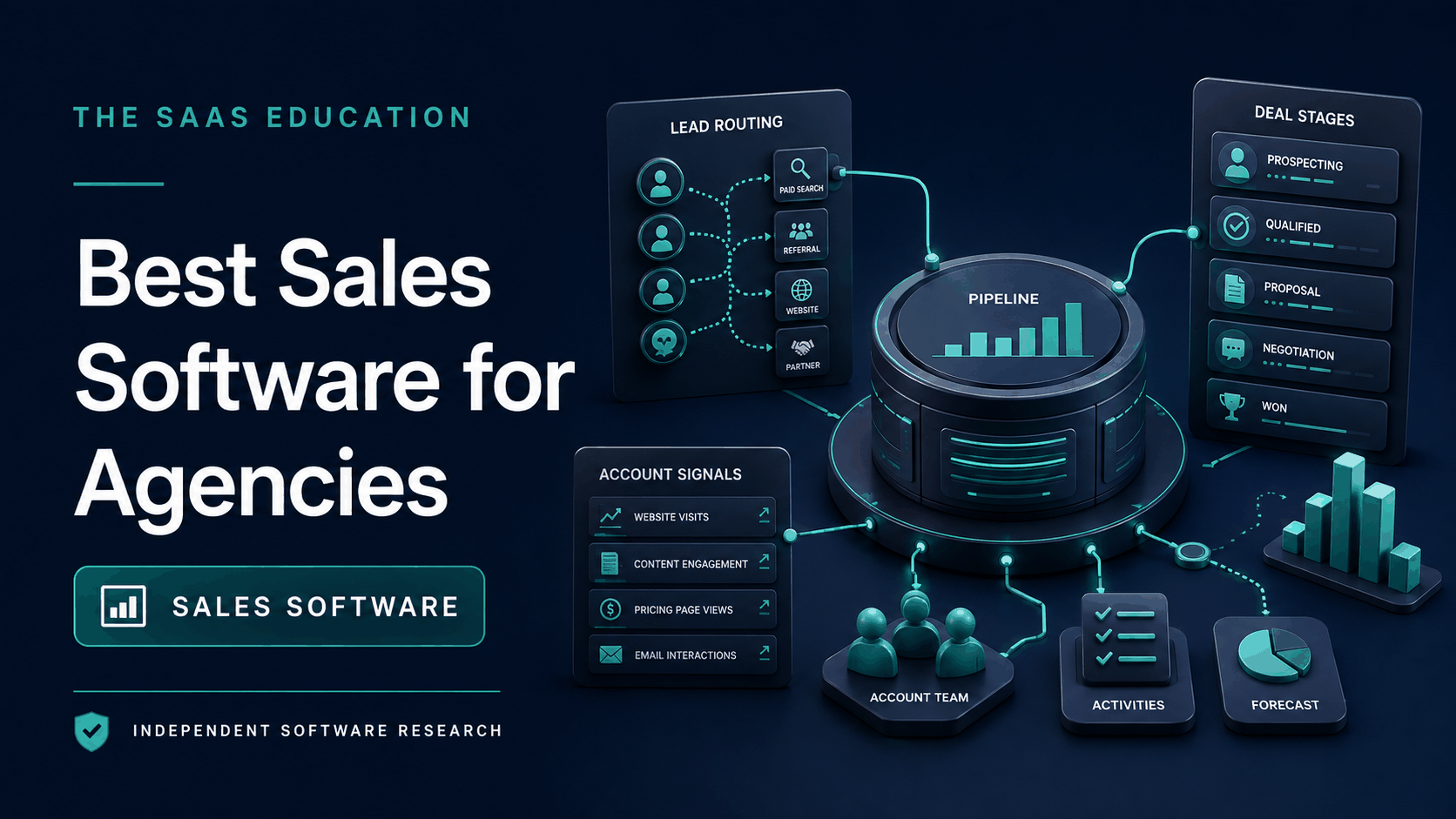
Direct answer
HubSpot Sales Hub is the strongest general starting point for many agencies because it combines an approachable sales workspace with a wider customer platform covering marketing, service, content, data, and commerce. That connected model can reduce the friction between lead generation, qualification, proposal work, client onboarding, and account expansion.
Salesforce Sales Cloud is the better fit when a larger agency needs complex objects, territories, governance, forecasting, automation, and an extensive ecosystem. Pipedrive is strong for a focused visual pipeline with relatively light administration. Close suits outbound-led agencies that want calling, email, SMS, and pipeline work close together. Zoho CRM offers a broad, configurable route for agencies willing to work within the wider Zoho ecosystem.
There is no universal winner. A design studio driven by referrals does not need the same system as a lead-generation agency operating several outbound teams. The right choice is the product that preserves trustworthy pipeline data while making the next commercial action obvious.
Shortlist
| Product | Best fit | Main reason to shortlist | Main caution |
|---|---|---|---|
| HubSpot Sales Hub | Agencies connecting inbound, sales, and service | Broad customer platform with a comparatively approachable CRM experience | Cost and complexity can rise across seats, hubs, credits, and higher editions |
| Salesforce Sales Cloud | Larger or highly structured agencies | Deep configuration, automation, forecasting, ecosystem, and governance | Implementation and administration can become a substantial operating program |
| Pipedrive | Small and midsize sales-led agencies | Clear pipeline and activity discipline without excessive initial complexity | Wider marketing, service, and custom process needs may require integrations |
| Close | Outbound-heavy agencies | Native email, calling, SMS, workflows, and pipeline context | Communication cost, deliverability, client separation, and post-sale handoff need testing |
| Zoho CRM | Cost-conscious, configurable operations | Broad CRM capability and access to the wider Zoho application suite | Configuration consistency and cross-application ownership require governance |
How we selected the tools
We reviewed the current search results for “best sales software for agencies” and related agency CRM queries. Ranking pages consistently focus on multi-pipeline management, outreach, automation, reporting, integrations, client delivery handoffs, and pricing. We used that intent to build the decision framework, but we did not copy competitor wording, rankings, or page structures.
We then checked official product, pricing, and documentation sources for each shortlisted vendor. The evaluation criteria were:
- Lead capture, qualification, routing, and deduplication.
- Pipeline stages, required fields, activities, and next-step visibility.
- Email, calling, messaging, sequencing, and consent operations.
- Proposals, approvals, electronic signatures, and commercial records.
- Forecasting, attribution, conversion, loss reasons, and service-line reporting.
- Handoff from sales to account management and delivery.
- Permissions, client separation, identity, audit, retention, and export.
- Integrations with marketing, finance, project, support, and communication systems.
- Adoption effort for sellers, partners, contractors, and administrators.
- Three-year total cost at the agency’s actual seat and usage model.
This is an official-source evaluation, not a hands-on benchmark. Product behavior should be validated in a pilot using the agency’s own data model and workflows.
What makes agency sales software different?
Agencies sell expertise, capacity, outcomes, or managed services. The sales process therefore has to capture more than a contact and expected close date. A useful opportunity record may need service line, estimated value, delivery shape, target margin, team availability, decision process, procurement requirements, proposal version, conflict checks, and a realistic start window.
The handoff is especially important. If a seller closes work that delivery cannot staff, the CRM has helped create a commercial problem. The system should make assumptions visible before commitment and transfer the approved scope, stakeholders, commercial terms, timeline, risks, and source material into the delivery process.
Agencies also acquire business through referrals, partnerships, inbound content, events, marketplaces, outbound campaigns, and existing clients. Attribution will never be perfect, but inconsistent source fields make it worse. Define a practical source model that people will actually maintain, then measure contribution without pretending every sale has one clean origin.
1. HubSpot Sales Hub: best overall for connected growth
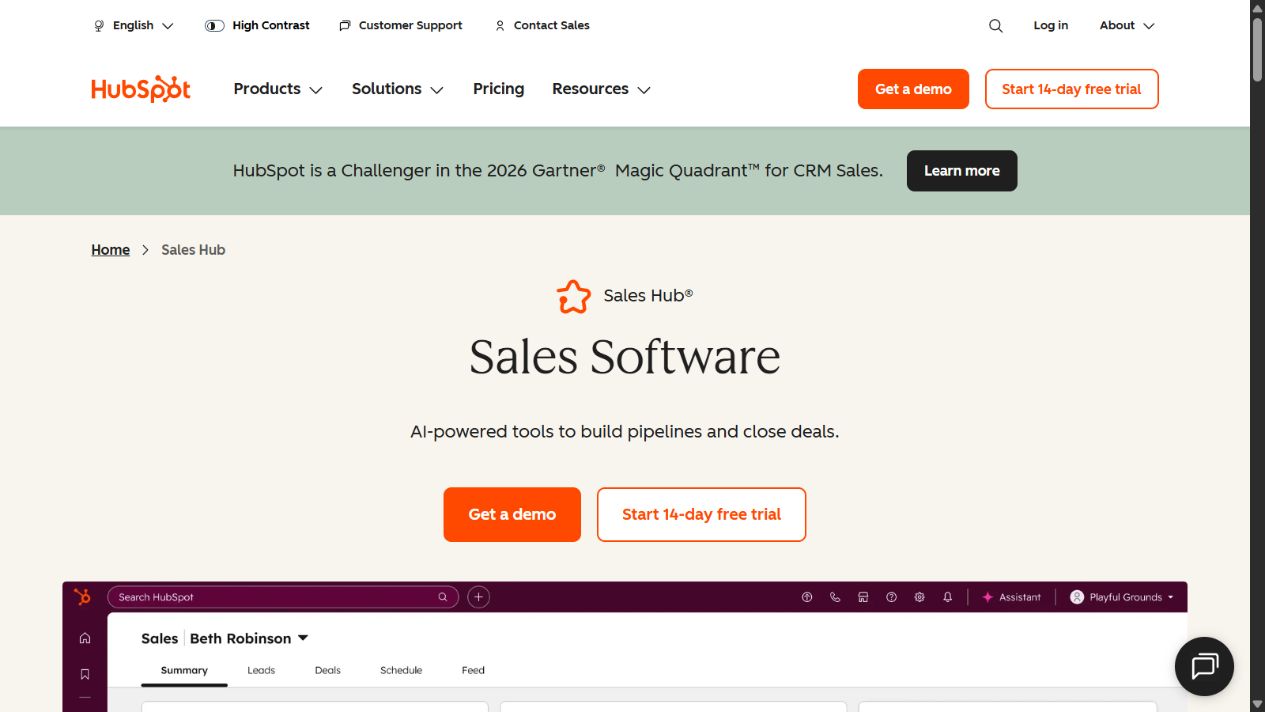
HubSpot Sales Hub is the most balanced starting point when an agency wants CRM, prospecting, pipeline management, automation, reporting, and a route into connected marketing and service workflows. Its main advantage is not any isolated feature. It is the ability to keep commercial activity within a broader customer platform.
Why agencies should shortlist HubSpot
An inbound-led agency can connect forms, campaign responses, contact history, meetings, deals, tasks, and service conversations around shared records. That continuity can reduce manual context transfer and help account teams see why a prospect engaged before the first sales conversation.
HubSpot also supports progressively more advanced sales processes through paid editions. Agencies can evaluate pipelines, automation, forecasting, playbooks, reporting, permissions, custom data structures, and adjacent hubs according to their requirements.
The approachable interface matters. A theoretically powerful CRM produces little value when sellers maintain private spreadsheets because the official system is too difficult. HubSpot can lower that adoption barrier, although disciplined field definitions and ownership are still necessary.
Check before buying
Model the entire customer-platform cost. Required seats, onboarding, higher editions, usage credits, calling, AI, custom objects, advanced permissions, reporting, sandboxes, support, and multiple hubs can materially change the budget. Confirm what happens when a user needs limited access across several products.
Decide whether delivery work belongs in HubSpot or a project platform. For many agencies, the CRM should own the relationship, opportunity, commercial history, and expansion pipeline while a dedicated project system owns delivery. The integration must transfer approved facts without creating duplicate records.
Choose HubSpot Sales Hub when: the agency wants a broadly approachable CRM connected to inbound marketing and post-sale customer context.
2. Salesforce Sales Cloud: best for complex agency revenue operations
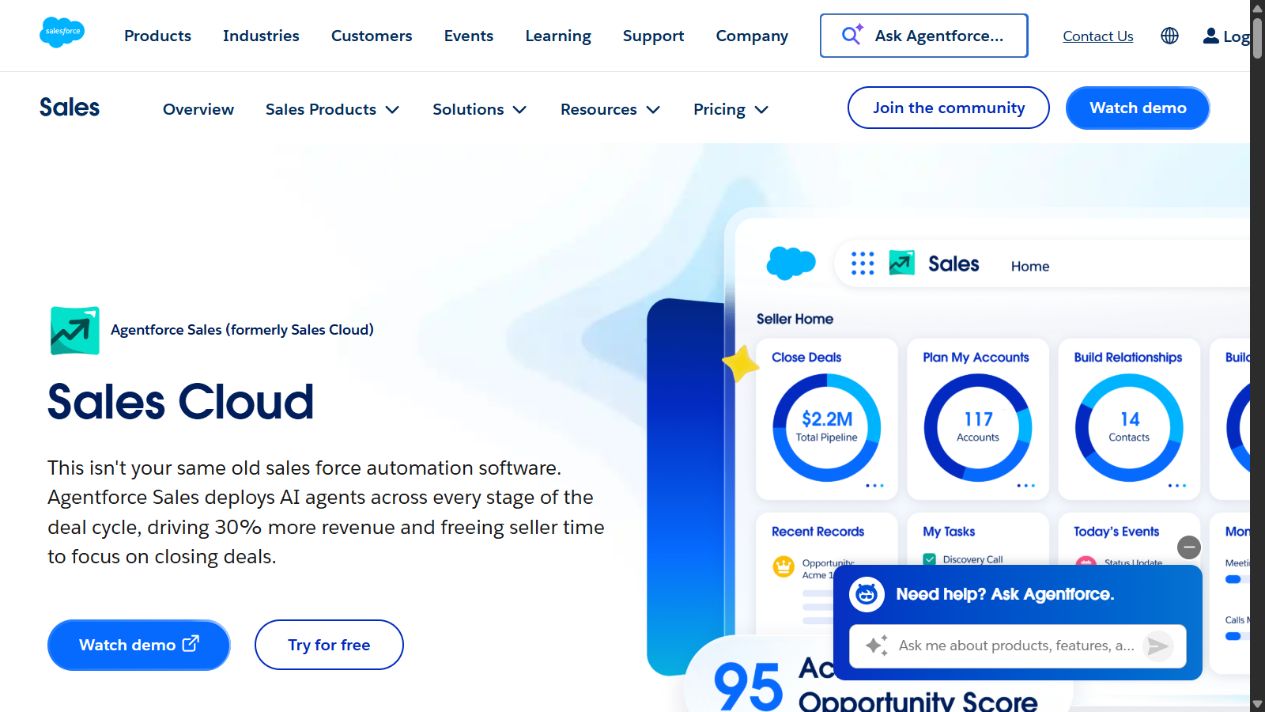
Salesforce Sales Cloud is the strongest candidate when an agency has multiple business units, regions, service lines, partner motions, account hierarchies, approval rules, forecasts, and security requirements. Its platform depth allows the data model and process to reflect a complex commercial operation.
Why agencies should shortlist Salesforce
Larger agencies may need parent-child accounts, global relationships, opportunity teams, territories, currencies, approval chains, product or service catalogs, contracts, forecasts, partner records, and extensive automation. Salesforce can support this type of structure with configuration and an established ecosystem.
The platform also provides a path to adjacent service, marketing, analytics, integration, and application capabilities. For a network already standardized on Salesforce, consolidating commercial data can be more valuable than choosing a simpler point solution.
Check before buying
Salesforce is not a self-executing operating model. Configuration, integrations, data migration, permissions, release management, training, documentation, and ongoing administration need named owners. Excess customization can make every process change expensive, while weak governance can create fields and automations nobody trusts.
Require a clear design authority. Distinguish global standards from local exceptions and challenge every custom object or workflow. Test seller effort, reporting reliability, mobile work, duplicate management, and administrator dependency before approving the architecture.
Pricing should include licenses, add-ons, environments, integration, consulting, data operations, analytics, support, and internal administration. A low implementation estimate is not evidence of a low lifetime cost.
Choose Salesforce Sales Cloud when: commercial complexity and governance justify a platform implementation rather than a lightweight CRM setup.
3. Pipedrive: best for focused pipeline discipline
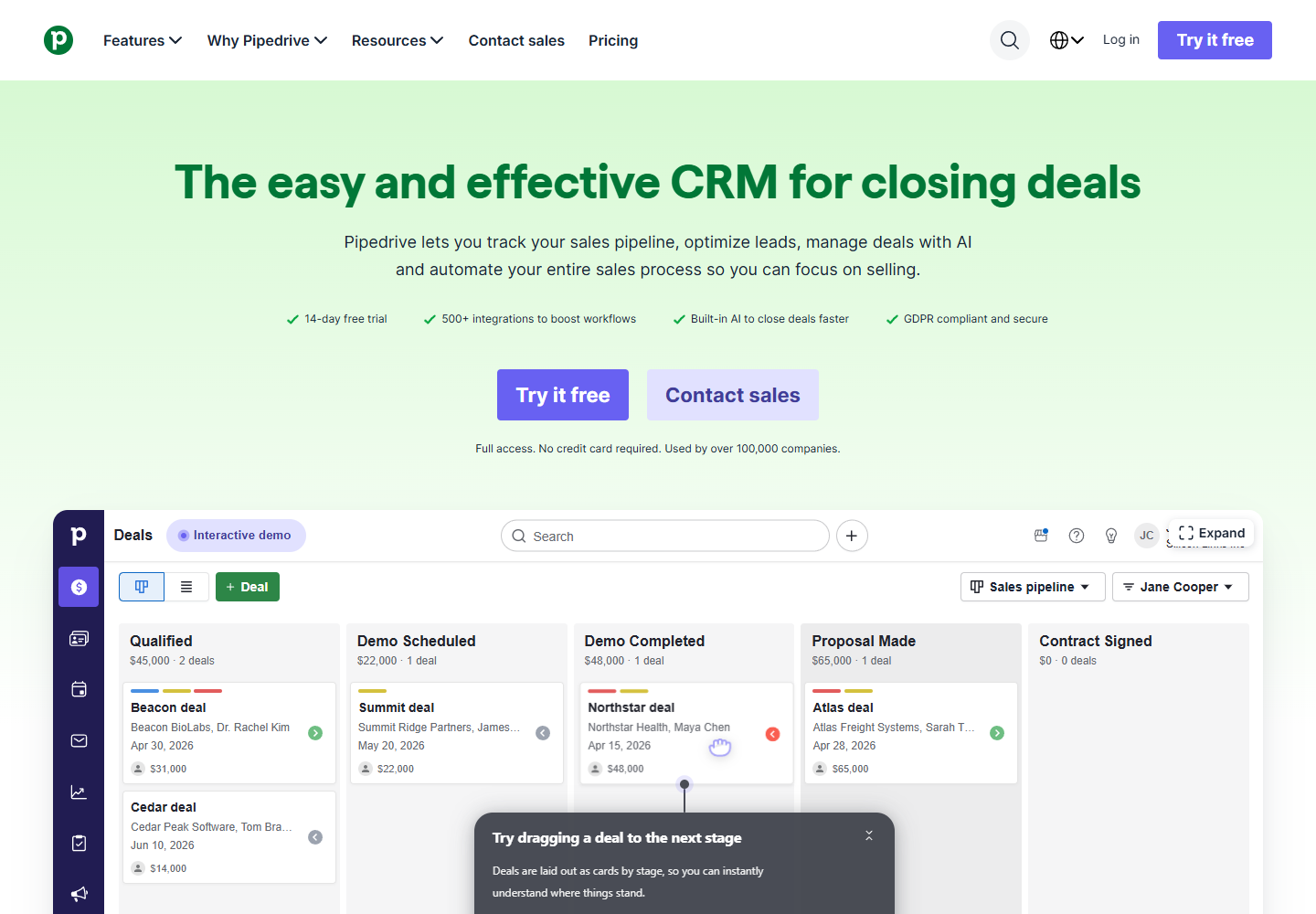
Pipedrive centers the sales experience on deals, stages, activities, contacts, communication, automation, and reporting. That focus makes it a useful shortlist for agencies whose main problem is keeping opportunities moving rather than building a broad customer platform.
Why agencies should shortlist Pipedrive
A visual pipeline can make stalled deals, missing activities, and overloaded stages easy to see. For a small agency, this directness may be more valuable than a large menu of platform capabilities. Sellers can concentrate on qualification, meetings, proposals, follow-up, and closing.
Pipedrive also offers plan-dependent automation, email, reporting, lead, project, and integration capabilities. Agencies can extend the core model as the process matures, while retaining a comparatively recognizable deal workflow.
Check before buying
Map the boundaries carefully. Decide where marketing automation, proposals, contracts, project delivery, invoicing, support, and client success will live. Every integration should have one documented direction, owner, failure alert, and reconciliation process.
Test whether the reporting model can handle service lines, recurring revenue, retainers, expansion, partner influence, multi-currency work, and forecast categories. A clean pipeline view can hide weak economics if opportunity value and probability are not consistently defined.
Confirm edition limits for automation, reports, email, permissions, projects, lead features, AI, integrations, and support. Test the mobile workflow and activity capture with real sellers.
Choose Pipedrive when: the agency values a focused pipeline and consistent next-action discipline over an expansive platform architecture.
4. Close: best for communication-heavy outbound sales
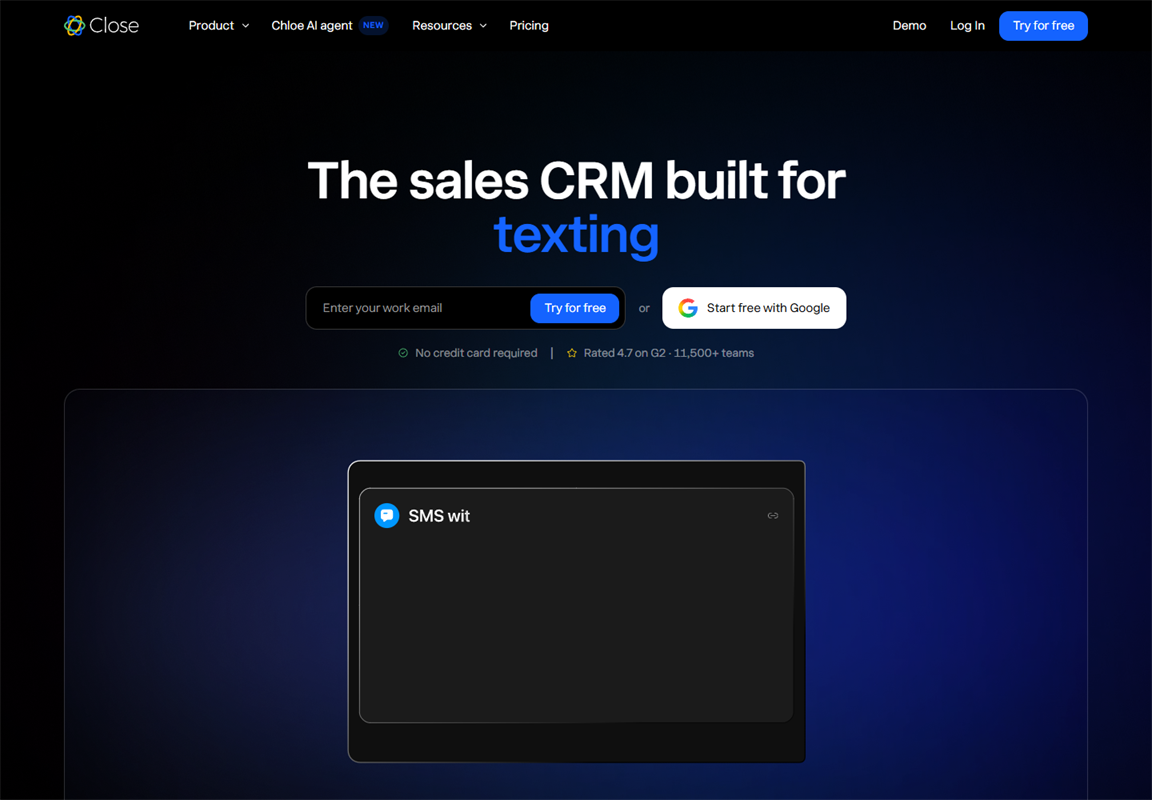
Close combines CRM records with built-in email, calling, SMS, workflows, pipeline views, and reporting. This makes it relevant to agencies that generate business through active prospecting and want communication activity to remain close to the opportunity record.
Why agencies should shortlist Close
Switching between a CRM, dialer, email tool, messaging product, and task list can fragment context. A more integrated workspace can help a business-development team see recent communication, ownership, next steps, and deal status without reconciling several interfaces.
This can be especially useful for an agency with a defined ideal client profile, repeatable offer, disciplined outbound motion, and clear qualification rules. Workflows can support follow-up, while managers can review activity and pipeline outcomes together.
Check before buying
Do not evaluate outbound software only by sequence creation. Test domain and mailbox operations, consent, suppression, bounce handling, unsubscribe behavior, call rules, recording policies, number availability, SMS requirements, local regulations, and deliverability ownership.
Agencies must also decide whether the system manages only their own pipeline or client campaigns. Mixing those purposes can create permission, billing, consent, attribution, and confidentiality problems. Separate workspaces or systems may be safer even when consolidation looks efficient.
Verify plan limits and variable costs for seats, calling, numbers, SMS, email, workflows, pipelines, reporting, permissions, and support. Test the post-sale handoff because an outbound-optimized CRM may not be the delivery team’s natural workspace.
Choose Close when: outbound communication is central and the agency wants email, calling, SMS, and pipeline execution in one focused system.
5. Zoho CRM: best for configurable value
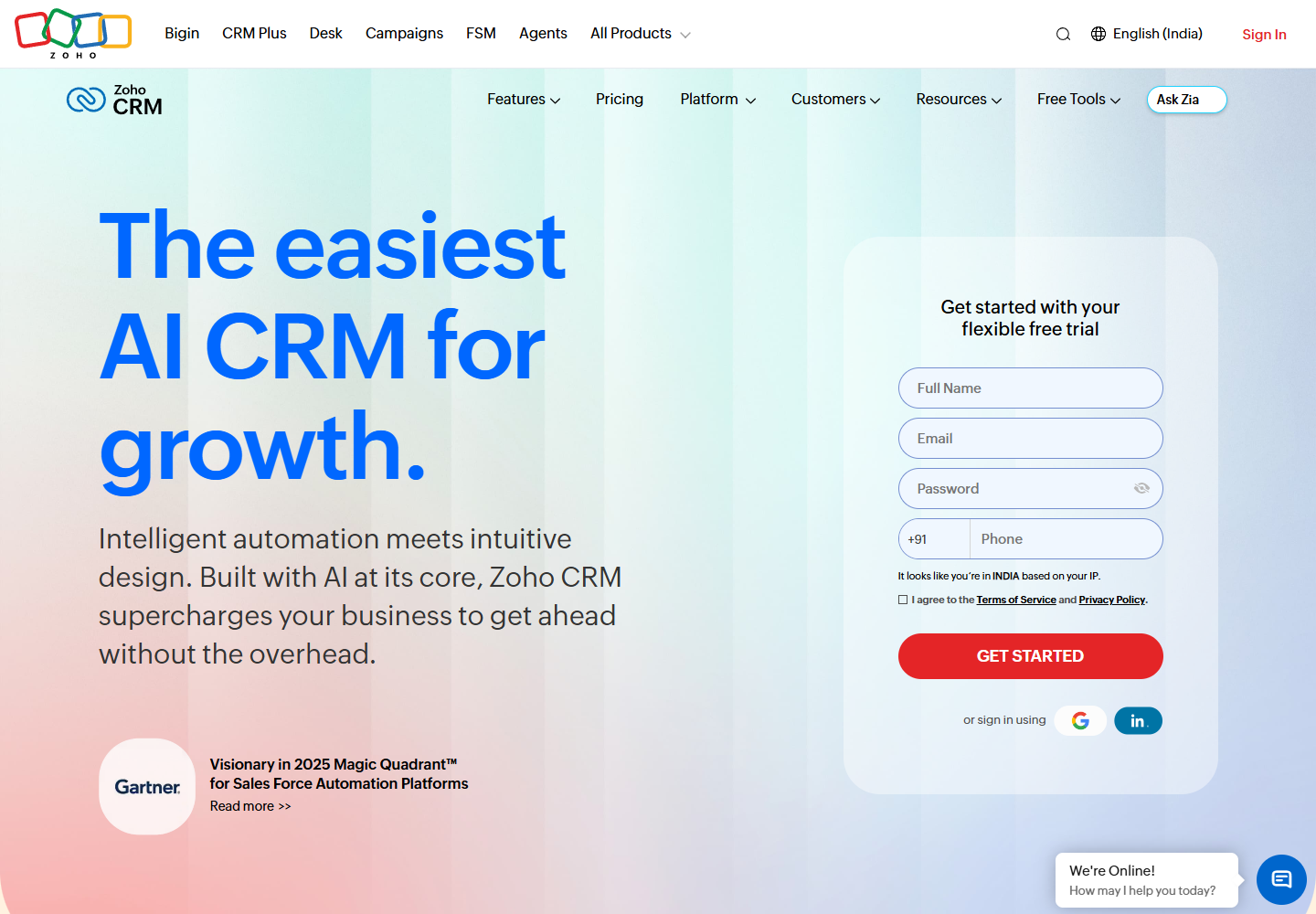
Zoho CRM provides lead, contact, account, deal, workflow, automation, analytics, and customization capabilities within the wider Zoho application ecosystem. It is worth evaluating when an agency wants broad functionality and is prepared to design a coherent configuration.
Why agencies should shortlist Zoho CRM
The wider Zoho portfolio can support marketing, communication, projects, finance, support, analytics, and other operating needs. For an agency seeking several connected applications from one vendor, that breadth may simplify procurement and integration choices.
Zoho CRM also offers configurable fields, modules, workflows, and reporting depending on edition. Agencies can model different service lines and commercial stages without immediately committing to the cost profile of a larger enterprise platform.
Check before buying
Suite breadth does not automatically create one reliable data model. Define which application owns contacts, deals, subscriptions, invoices, projects, tickets, and reporting dimensions. Test synchronization, duplicates, permission inheritance, failure handling, and exports.
Review edition and bundle differences carefully. Capabilities, limits, AI, automation, storage, environments, support, and cross-product entitlements can vary. Include configuration, migration, training, integration, and administration in the cost model.
Keep customization purposeful. A smaller budget does not reduce the need for field governance, naming standards, change control, data-quality rules, and an accountable system owner.
Choose Zoho CRM when: the agency wants configurable CRM value and sees a credible role for the wider Zoho suite.
How to choose the right agency sales software
Start with the revenue motion, not the product list. Document how work is currently won:
- Where qualified opportunities originate.
- Which facts must be known before discovery.
- How ownership and response expectations are assigned.
- What evidence moves a deal between stages.
- How scope, pricing, margin, and delivery availability are approved.
- Which records must transfer after signature.
- How expansion, renewal, referral, and loss reasons are captured.
Then choose a system of record. If the CRM owns contacts and opportunities, other tools should not silently create conflicting versions. If finance owns signed value and invoices, CRM reporting must reconcile with it. If project software owns capacity, the sales process needs a reliable availability signal before commitment.
Build a weighted scorecard
Use one-to-five scores with evidence and weights totaling 100 percent.
| Area | Example weight | Pilot evidence |
|---|---|---|
| Pipeline and qualification | 20% | Sellers progress a real opportunity using agreed exit criteria |
| Outreach and activity | 15% | Communication, consent, ownership, and next steps remain visible |
| Reporting and forecasting | 15% | Forecast and conversion reports reconcile with source records |
| Sales-to-delivery handoff | 20% | Delivery receives approved scope, timing, stakeholders, and risks |
| Integration and data quality | 10% | Duplicates, failures, and record ownership are controlled |
| Governance and security | 10% | Roles, exports, audit, offboarding, and retention pass review |
| Adoption and administration | 10% | Representative users and the system owner complete tasks unaided |
Do not award points for a feature shown only in a demonstration. Require a user to complete the workflow in the proposed edition.
Run a four-to-six-week pilot
Use two finalists and one representative opportunity. Include a seller, account lead, delivery lead, finance reviewer, operations owner, and administrator.
Test:
- Capture a lead from a real channel.
- Detect or resolve a duplicate.
- Qualify need, stakeholders, fit, timing, and commercial potential.
- Assign ownership and a service-level expectation.
- Record communication and schedule the next action.
- Produce and approve a proposal.
- Update forecast category and expected timing.
- Confirm delivery capacity and target economics.
- Complete the sales-to-delivery handoff.
- Produce leadership reporting and export the record.
- Reassign an account after a user leaves.
- Correct an integration failure without losing history.
Measure data completeness, response time, stage conversion, sales-cycle duration, forecast variance, proposal acceptance, handoff defects, duplicate rate, seller effort, administrator time, and reporting reconciliation.
Model three-year cost
Include more than the published per-user price:
- Full, limited, service, partner, and administrative users.
- Required edition and adjacent product licenses.
- Onboarding, implementation, migration, and consulting.
- Email, calling, SMS, numbers, credits, storage, and AI usage.
- Integration platform, connectors, data enrichment, and monitoring.
- Reporting, environments, security, support, and training.
- Internal administration and process ownership.
- Renewal increases and the cost of changing systems later.
Build low, expected, and high scenarios. A tool that is cheaper in year one may be more expensive after the agency adds business units, users, automation, or client reporting.
Governance rules that protect pipeline trust
Keep the data model small enough to maintain. Every required field should support a decision, workflow, obligation, or report. Publish definitions for lead status, opportunity stage, forecast category, source, service line, value, probability, close date, and loss reason.
Set an owner for changes. New fields, pipelines, automations, integrations, and dashboards should have a documented purpose and retirement plan. Review access regularly and remove users promptly. Export critical records and test recovery.
AI can draft follow-ups, summarize calls, enrich records, and suggest next actions, but it should not silently change commercial truth. Require review for material account facts, commitments, forecasts, and messages. Track source, confidence, and correction where automated output influences a decision.
Preserve ownership after the first sale
An agency CRM should not treat a signed proposal as the end of the record. Define who owns renewal dates, expansion signals, relationship health, reference requests, partner influence, and risks discovered during delivery. Feed only meaningful delivery signals back into the commercial record. Copying every project task into the CRM creates noise; recording an approved scope change, satisfaction risk, renewal decision, or expansion opportunity creates usable context. Test this lifecycle during selection because many systems look strongest before the handoff and weakest afterward.
Final recommendation
For most agencies beginning a structured selection, start with HubSpot Sales Hub and Pipedrive. Add Close when outbound communication is the dominant motion, Zoho CRM when configurable suite value is attractive, and Salesforce Sales Cloud when complex scale and governance justify a platform program.
The buying decision should come from a realistic pilot, not a feature matrix. The best sales software for an agency is the system that sellers maintain, leaders trust, delivery can act on, and administrators can govern without creating a second shadow process.
Frequently asked questions
What is the best sales software for agencies?
HubSpot Sales Hub is the strongest general starting point for agencies that want an approachable CRM connected to marketing and service context. Salesforce, Pipedrive, Close, and Zoho CRM are better for specific complexity, pipeline, outbound, or value requirements.
Do agencies need a CRM or a sales engagement platform?
Use a CRM as the system of record. Add sales engagement software only when the required sequencing, communication, deliverability, coaching, or scale cannot be handled appropriately in the CRM.
Can one CRM manage both agency sales and client campaigns?
Technically it may, but data separation, permissions, consent, ownership, reporting, and billing become harder. Keep the agency’s pipeline distinct and document every client-data boundary.
Which sales software is easiest for a small agency?
Pipedrive and HubSpot are sensible usability shortlists, but test the complete process. The easiest empty demo can become difficult after real permissions, reports, integrations, and required fields are added.
How should an agency compare CRM pricing?
Calculate a three-year total including every user class, edition, add-on, communication charge, AI or data credit, implementation service, integration, support tier, administrator, and renewal assumption.
What sales metrics should an agency track?
Prioritize qualified pipeline, stage conversion, cycle time, forecast accuracy, proposal acceptance, source quality, expansion, loss reasons, response time, handoff defects, and revenue by service line.
How long should an agency CRM pilot run?
Run it for four to six weeks with one real opportunity, representative users, production-like permissions, integrations, reporting, mobile tasks, reassignment, and a failure-recovery test.
Sources
As a final pilot, move one qualified opportunity from first contact through assignment, follow-up, proposal, approval, forecast, win or loss, and reporting. Test reassignment when the owner is absent and confirm that another teammate can understand the history without private messages. The chosen system should preserve accountability as well as activity.
Frequently asked questions
What is the best sales software for agencies?
HubSpot Sales Hub is the strongest general starting point for agencies that want an approachable CRM connected to marketing, service, and content operations. Salesforce suits complex scale, Pipedrive focused pipelines, Close communication-heavy prospecting, and Zoho CRM budget-conscious customization.
Do agencies need a CRM or a sales engagement platform?
Most agencies need a CRM as the system of record. A separate sales engagement platform is useful only when outbound volume, sequencing, deliverability, coaching, or channel requirements exceed the CRM's native capabilities.
Can one CRM manage both agency sales and client campaigns?
It can, but permissions, ownership, consent, reporting, billing, and data separation become difficult. Keep the agency's own pipeline distinct from client work and document which system owns each record.
Which sales software is easiest for a small agency?
Pipedrive and HubSpot are commonly approachable shortlists, but ease depends on the actual workflow. Test lead capture, qualification, follow-up, proposal, handoff, reporting, and administration with representative users.
How should an agency compare CRM pricing?
Model every required user, edition, onboarding fee, communication credit, AI allowance, data operation, integration, support level, implementation service, and renewal change over three years.
What sales metrics should an agency track?
Track qualified pipeline, stage conversion, sales-cycle length, forecast accuracy, proposal acceptance, source quality, expansion, loss reasons, response time, and revenue by service line. Avoid rewarding raw activity without outcomes.
How long should an agency CRM pilot run?
Four to six weeks is usually enough to test one real opportunity from capture through handoff, plus reporting, permissions, duplicate handling, mobile use, and an administrator change.