Best Sales Software for Remote Teams
Choose remote sales software by the workflow gap: customer records, deal evidence, meeting scheduling or proposal approvals.
The best sales software for remote teams depends on the part of the sales process that fails when colleagues are offline. Evaluate HubSpot Sales Hub for connected sales execution, Pipedrive for a pipeline-centered operating model, Gong for revenue context and deal inspection, Calendly for meeting scheduling, and PandaDoc for proposal and document workflows.
Research scope and limitations
- Research type
- Official-source documentation review and editorial analysis
- Hands-on tested
- No
- Last verified
- October 30, 2026
- Limitations
- No paid-account or accuracy benchmark. Exact numeric prices and unverified plan allowances are excluded.

Table of contents
Direct answer
The best sales software for remote teams depends on the part of the sales process that fails when colleagues are offline. Evaluate HubSpot Sales Hub for connected sales execution, Pipedrive for a pipeline-centered operating model, Gong for revenue context and deal inspection, Calendly for meeting scheduling, and PandaDoc for proposal and document workflows.
These tools are not five interchangeable CRMs. The shortlist covers a sales stack from opportunity ownership through meetings and proposals. Most teams should choose one authoritative customer system and add specialist tools only where a specific workflow justifies them.
We reviewed official product information on 30 October 2026. We did not run paid-account deployments, measure win-rate improvements or benchmark forecast accuracy. Product facts are vendor-documented; recommendations and acceptance tests are editorial analysis. Exact prices, unverified integrations and plan-specific allowances are excluded.
Who this guide is for
This guide is for a distributed sales team trying to make progress without relying on constant status meetings. It fits a small team whose follow-up lives in individual inboxes and a growing organization whose records, calls and proposals no longer tell the same story.
Who should avoid purchasing a full stack immediately? A team that cannot define a qualified opportunity, the owner of a buyer request or the evidence needed to advance a deal should establish those rules first. More software can distribute an unclear process more efficiently without making it better.
If your decision is specifically about the customer record, see our remote-team CRM comparison . This article instead asks which sales execution tools belong around that record. The sales software evaluation guide provides the broader procurement framework.
The shortlist by sales job
| Sales job | Candidate | What to prove in a pilot | What not to assume |
|---|---|---|---|
| Connect customer context to sales activity | HubSpot Sales Hub | The next owner can see the current opportunity and required action | One platform automatically supplies clean data |
| Run a focused sales pipeline | Pipedrive | Stages and next actions reflect actual buyer progress | A stage label proves a commitment |
| Inspect deal evidence and revenue context | Gong | A manager can distinguish observed information from interpretation | An inferred signal is an accepted buyer decision |
| Coordinate a meeting | Calendly | The right participant reaches the right owner with necessary context | A booking is a qualified opportunity |
| Move a proposal through review and signing | PandaDoc | The approved version and next responsible role remain clear | A signature completes every delivery obligation |
Start with the row causing a measurable problem. If your team loses context between calls and follow-up, adding another proposal tool is unlikely to fix that handoff. If proposals wait for internal approval, more outbound activity may create a larger queue rather than more progress.
How we selected these candidates
The shortlist combines an authoritative sales-record layer with specialist workflow categories. We reviewed official descriptions for relevant capabilities and looked for a distinct role in distributed sales execution. We did not rank products by feature count or reproduce vendor performance percentages.
Two record-centered candidates allow different operating models to be evaluated. The specialist candidates address revenue context, scheduling and document progression. A team can compare these roles against its existing stack instead of interpreting the list as a shopping requirement.
The information gain is in the handoffs. A remote team needs to know what happened, what the buyer agreed, what remains uncertain and who acts next. The product recommendation should follow those needs, rather than begin with an attractive dashboard.
HubSpot Sales Hub: evaluate connected sales execution
HubSpot’s Sales Hub page documents sales engagement, lead and deal workflows, reporting and related capabilities within its customer platform. Its forecast-tool documentation gives a more specific official route for investigating forecast workflows and current requirements.
The editorial pro is a connected place for customer context and sales work. The limitation is governance: a shared platform still needs rules for field ownership, stage changes and the distinction between a seller’s expectation and a buyer’s commitment.
Use a handoff from an initial conversation to an opportunity owner as the pilot. Require a short account of the buyer’s problem, the agreed next step, the accountable seller and any unanswered question. Ask the receiving person to continue without contacting the original owner for a recap.
Then introduce a change. The buyer postpones a decision or adds another reviewer. Check whether the record makes that new information visible and whether the next action follows it. A task that continues unchanged after the underlying commitment changes is a process defect worth finding early.
Evaluate the relevant capabilities in the subscription you would actually buy. A public overview is not proof that every sales, administration or forecasting feature is included. Keep current procurement terms separate from your assessment of whether the workflow helps the team.
Choose a deeper HubSpot evaluation when the surrounding customer platform is part of the intended design. If you need only a narrow specialist function, compare the cost and operating consequences of adding it to the system you already use.
Pipedrive: evaluate pipeline discipline
Pipedrive’s official site presents pipeline management, activity and email-related tools, and reporting. It is a candidate for a distributed team that wants its opportunity process and next actions to remain central to everyday selling.
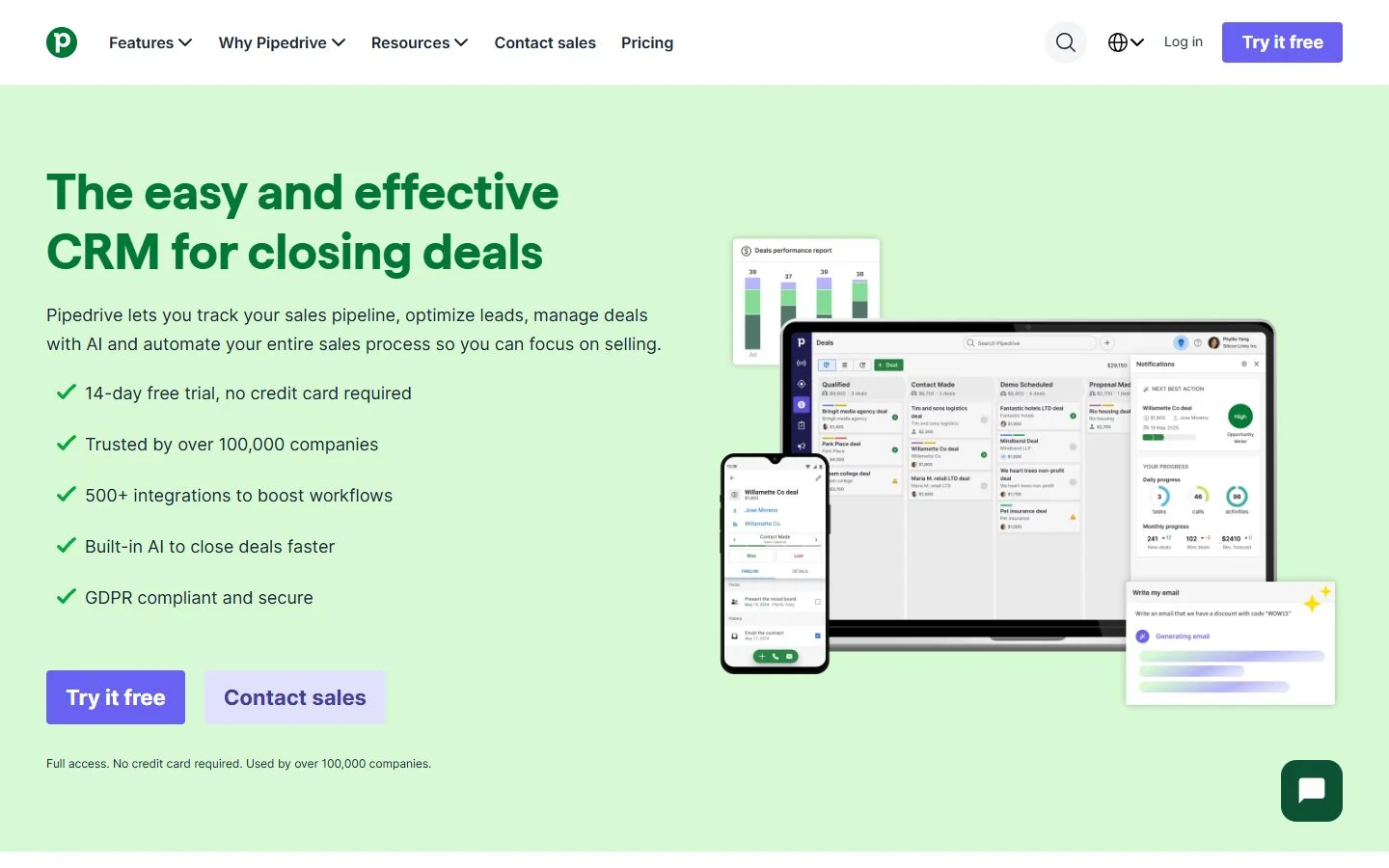
The editorial strength is a pipeline-centered working model. The limitation is the meaning assigned to that pipeline. A seller can move a deal to a later stage without recording the evidence the team expects, leaving management visibility weaker than the interface suggests.
Define a stage-entry rule before the pilot. For example, an illustrative evaluation-stage rule could require an identified buyer problem, an agreed review step and a named customer contact. Your actual rules should match the sales motion rather than follow a generic template.
Ask the receiving seller to distinguish an internal target date from a buyer-confirmed date. Both may be useful, but they should not silently substitute for one another. A remote colleague needs to know whether a forecast assumption is evidence or a planning judgment.
Test activity hygiene without rewarding activity volume alone. A logged call or scheduled task is useful when it advances a meaningful next step. It is less useful when contributors create records solely to make a dashboard appear active.
Shortlist Pipedrive when the team can maintain a clear, focused pipeline with consistent stage meanings. Do not treat simple navigation as a substitute for clear qualification and exception handling. The process still needs an owner.
Gong: evaluate revenue context and deal inspection
Gong’s official site describes a revenue platform with engagement, forecasting and revenue-context capabilities. It is a candidate when a distributed sales organization needs to inspect the information behind deal updates rather than depend only on a seller’s written summary.
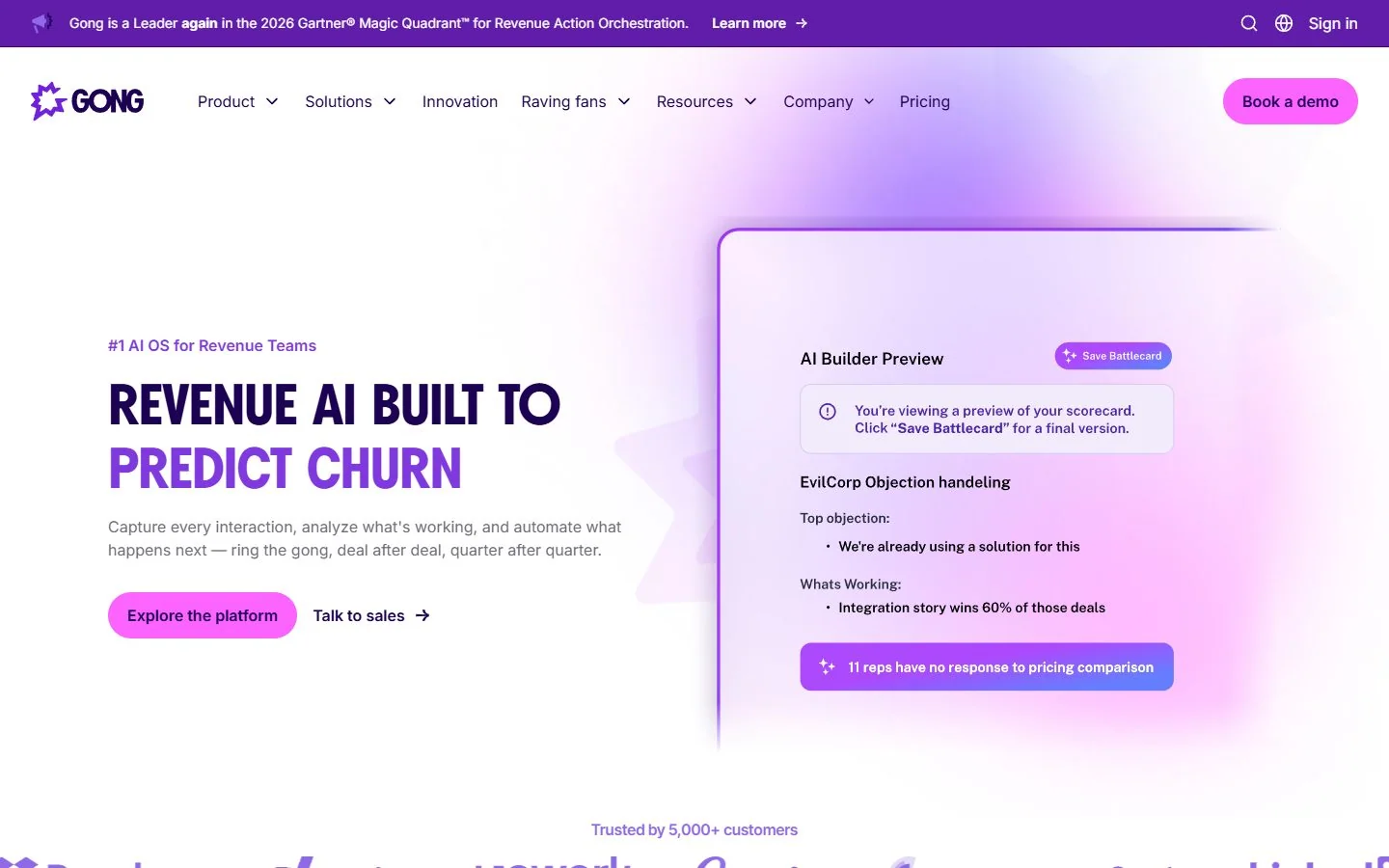
The editorial pro is a route from revenue-related interactions toward a more informed review. The limitation is interpretation. A captured statement or inferred signal should not automatically become a buyer commitment, a qualification decision or a forecast change.
Use a pilot centered on one management question. For example: can a reviewer understand why a deal’s expected timing changed and identify the source behind that update? Keep the question narrow enough that a reviewer can check the evidence manually.
Compare the observed interaction with the seller’s interpretation and the management decision. Those are three separate layers. A useful workflow should let the reviewer examine the difference instead of flattening them into one confidence label.
Involve the people responsible for approved recording and data use in your organization. Confirm the actual account configuration and applicable rules before collecting customer interactions. This article does not infer permission to record or retain information merely because a product supports a workflow.
Evaluate Gong where deal inspection and revenue context are recurring needs large enough to justify a specialist system. If your main problem is missing basic opportunity ownership, repair that foundation first. More contextual data cannot compensate for nobody being accountable for the next action.
Calendly: evaluate meeting scheduling as a handoff
Calendly’s official site documents scheduling and routing forms among its capabilities. It is a candidate when remote sellers lose time coordinating availability or when prospective buyers need a clear route to the appropriate team member.
The editorial strength is a defined booking workflow. The limitation is that a meeting invitation does not establish qualification, readiness or ownership after the meeting. Scheduling is one transition in the sales process, not the whole process.
Pilot a realistic inbound request. The participant should reach an appropriate owner and receive enough information to understand the meeting’s purpose. The seller should know what context is available and what still needs to be established.
Include a reassignment or absence case. If the intended seller is unavailable, determine how the team handles the buyer’s request without losing context or creating contradictory invitations. Verify the behavior available in the current account rather than assuming every routing arrangement is included.
After the meeting, check whether the resulting next action has an authoritative home. A calendar can show that an event occurred while the opportunity record remains incomplete. Decide who closes that handoff and when.
Shortlist Calendly when scheduling friction is a distinct, recurring bottleneck. If the team already schedules effectively in its existing environment, a new tool should earn its place through a demonstrated improvement rather than a familiar product name.
PandaDoc: evaluate proposal progression
PandaDoc’s official site describes document workflows and signing capabilities. It is a candidate when proposals and related documents need a clear path through creation, internal review, buyer review and completion.
The editorial pro is a more explicit document process. The limitation is that a completed signature does not establish that every commercial, delivery or customer-success responsibility has been fulfilled. The sales system needs a deliberate handoff after document completion.
Use a proposal containing an ordinary internal approval requirement. Ask the team to identify the approved version, who can request changes and which role accepts the final content. The test should expose whether people still circulate conflicting copies outside the intended process.
Introduce a buyer change after internal approval. Can the team tell whether the document needs another review, who owns that review and whether a previous version remains in circulation? Version clarity is especially important when approvers work on different schedules.
Keep commercial interpretation with the responsible people. A document workflow can support the process, but the team still needs to decide what the signed terms mean for the promised work. Record the operational next step rather than simply marking the opportunity complete.
Shortlist PandaDoc when document progression is a meaningful source of delay or confusion. If the proposal process is already clear and reliable, examine whether the new workflow removes work or merely adds another place to maintain the same status.
Design one authoritative opportunity record
Decide which system owns the opportunity’s current state. Other tools can contribute information, but contributors should know where an owner, next action and commercial decision become authoritative.
Create a short field-ownership map. An illustrative map might assign scheduling information to the booking workflow, meeting observations to the approved interaction record and opportunity qualification to the sales owner. The map should specify how changes reach the authoritative customer system.
Do not rely on a proposed integration as the map itself. Verify the actual connection and decide what happens when it fails or updates arrive late. A product’s integration directory does not establish your field definitions or exception procedure.
Keep conflicting information visible until resolved. If a proposal has a different amount or timing from the opportunity record, identify the responsible owner rather than silently choosing whichever system updated most recently. Recency is not the same as authority.
Make an asynchronous deal update useful
A useful update explains what the buyer agreed, what the seller believes and what remains uncertain. Keep those statements separate. A manager returning after being offline should be able to identify the decision needed without reconstructing every conversation.
Use a short format appropriate to your sales motion: current buyer objective, last material change, next commitment, accountable owner and risk requiring action. Do not turn it into an exhaustive diary of activity.
Review a deal whose timing slipped. Can another seller explain the cause and act correctly from the record? If the answer depends on a private message or memory, improve the handoff before expanding reporting.
Avoid creating a parallel narrative solely for the forecast meeting. Where possible, the reviewed update should explain the same opportunity record the team uses during the week. Otherwise contributors may maintain two incompatible accounts of the deal.
Evaluate the stack with an end-to-end scenario
Choose one representative sales path. Begin with a buyer request, proceed through scheduling and a conversation, update the opportunity, prepare a proposal and define the post-sale handoff. Use a controlled pilot with appropriate data and access.
Ask a different person to receive each handoff. The receiver should identify the source, current owner, next action and unresolved question. This exercise tests the stack’s continuity rather than one product’s demonstration.
Include a late-stage change. The buyer may alter a requirement, a reviewer may reject a proposal or the accountable seller may be absent. A useful system makes the resulting responsibility visible instead of allowing stale automation to keep progressing.
Measure clarification effort, administrative repair and the time required to understand the current state. Do not claim a win-rate improvement from a small workflow pilot. The evidence supports a narrower conclusion: whether the team can operate this process more clearly.
Practical buying criteria
Start with the required sales motion and roles. An inbound seller, an account executive, a sales manager and an approver may need different actions and information. Verify the relevant account and permission model before assuming every role needs the same access.
Then inspect administration. Name the person responsible for stage definitions, templates, data quality and connection failures. A tool that depends on one enthusiast’s private knowledge can create a new operational dependency.
Consider the buyer’s experience. Test the invitation, document and follow-up as the external participant would encounter them. Internal convenience should not come at the cost of unclear requests or duplicate messages to a customer.
Finally, verify current terms for the actual feature set and users. This article does not quote prices or assume that a trial includes the same arrangements as a production subscription. Keep a dated record of the commercial information used for the decision.
Compare the total cost of the sales workflow
Include subscriptions, setup, ongoing administration and the work required to keep records consistent. If specialists save time in one stage but create duplicate entry elsewhere, include that cost rather than evaluating each tool in isolation.
Check what can be retired. A proposal tool may replace a manual approval queue; a revenue-context tool may reduce a separate preparation step. Count the benefit only when the old obligation actually goes away.
Distinguish implementation effort from recurring effort. A setup project can be worthwhile for a repeated workflow, but a system requiring continuous manual repair may not improve as the team becomes familiar with it.
Use your own observations for the business case. Avoid copying a vendor’s productivity percentage into a forecast for your organization. The relevant evidence is how the proposed stack performs under your actual process and review requirements.
Rollout and continuity
Expand one working sales motion at a time. Publish the ownership map, qualification rules and exception route before inviting more teams. Contributors should not have to infer the process from a collection of fields and automated messages.
Keep a small set of reviewed examples: a well-qualified opportunity, a slipped deal, a rejected proposal and a completed handoff. These examples can help newcomers understand what good records look like without adding more mandatory fields.
Review a sample after the first operating period. Look for missing next actions, ambiguous commitments and duplicate records. Repair recurring patterns with the team rather than treating every inconsistency as an individual failure.
Test continuity when a seller or administrator is absent. Another authorized colleague should be able to find the buyer context and carry out the next permitted action. A remote stack succeeds when the work can continue without private explanations.
Decision guidance
A worked handoff to use in the pilot
Consider an illustrative team with a seller in one region and an approver in another. A buyer asks for a revised proposal while the seller is offline. The receiving colleague should first locate the authoritative opportunity, identify what was requested and distinguish an approved concession from a suggested one. The software should not make that commercial decision on the colleague’s behalf.
Next, the responsible approver should see the specific change requiring review and the relevant version of the document. Once the decision is recorded, the seller needs a clear next action. A private message saying “sorted” is weaker than a maintained record explaining what changed and who accepted it.
When the buyer returns with another question, a different authorized colleague should be able to continue from those records. Check whether they can identify the current proposal, the last accepted commitment and any condition still unresolved. Log the clarification needed at each transition.
This example spans the whole stack, which is why testing tools separately can miss the problem. Scheduling, conversation context and proposal progression may each work while the overall handoff remains ambiguous. Your pilot should reward the complete chain of understanding.
After adoption, repeat a small version of this exercise with recent completed work. It helps reveal whether conventions still match the sales process or whether contributors have rebuilt a parallel workflow in messages and personal notes. Use those observations to simplify the stack before adding another specialist subscription.
Choose the best sales software for remote teams by the broken transition you can demonstrate. Evaluate HubSpot Sales Hub or Pipedrive for the record-centered operating model, then consider Gong, Calendly or PandaDoc for a specialist need that remains.
Keep one authoritative opportunity story and a clear owner at every handoff. Buy the smallest stack that makes buyer commitments, seller judgments and next actions understandable across time zones. More activity is not the same as better sales execution.
How to use this evaluation responsibly
Use our review methodology to understand the distinction between documented capabilities and first-hand testing. Our editorial policy explains how evidence and recommendations are handled. For the surrounding topic, continue through the Sales Software category . These resources help you interpret the scope of this article before applying its recommendations to a different account, team or task.
Frequently asked questions
What is the best sales software for remote teams?
Evaluate HubSpot Sales Hub and Pipedrive for the record-centered sales model, Gong for revenue context, Calendly for scheduling and PandaDoc for document workflows. Choose by the specific gap.
Does a remote sales team need all five tools?
No. Keep one authoritative customer system and add specialist tools only when a pilot demonstrates a distinct benefit.
How is this different from choosing a CRM?
CRM selection concerns the customer record. A sales execution stack also needs to address meetings, evidence, proposals and transitions between responsible roles.
What should an asynchronous deal update contain?
Separate buyer commitments, seller judgments and unresolved questions, then identify the accountable owner and next action.
How should we evaluate sales software pricing?
Verify current terms for the required users and capabilities, then include setup, record maintenance, administration and duplicated work.