Best SEO Software for Agencies
Compare Semrush, Ahrefs, Screaming Frog, SE Ranking, and AgencyAnalytics for agency research, audits, rank tracking, reporting, and AI visibility.
Direct answer
Semrush is the strongest broad starting point for many SEO agencies because it combines keyword and competitor research, rank tracking, site auditing, content and local workflows, reporting, and expanding AI-search capabilities in one platform. It is not automatically the best tool for every specialist job, but it can provide a useful shared operating layer.
Ahrefs is a strong research choice for search opportunities, competitors, content, and links. Screaming Frog SEO Spider is the specialist shortlist for controlled technical crawling. SE Ranking deserves attention for rank operations, collaboration, and agency-oriented packaging. AgencyAnalytics is strongest when repeatable, branded client reporting across many connected data sources is the main problem.
An effective agency stack usually combines first-party data with one broad suite and a few justified specialists. The goal is not to own every tool. It is to produce reliable decisions, execute changes, and show clients what improved.
Shortlist
| Product | Best fit | Main reason to shortlist | Main caution |
|---|---|---|---|
| Semrush | Broad multi-service SEO agencies | Wide research, tracking, audit, content, reporting, local, and AI visibility surface | Units, add-ons, projects, users, and overlapping modules require careful cost modeling |
| Ahrefs | Research-led organic growth teams | Strong competitor, keyword, content, site, and link research workflows | Credit and plan economics must be tested against analyst behavior |
| Screaming Frog SEO Spider | Technical SEO teams | Configurable desktop crawling, extraction, rendering, directives, and integrations | It is a specialist crawler, not a complete client operating system |
| SE Ranking | Agencies prioritizing rank operations and value | Rank tracking, audits, research, reporting, collaboration, and agency options | Validate data quality, add-ons, limits, and specialist depth for each service line |
| AgencyAnalytics | Agencies with reporting scale | Automated dashboards, reports, portals, white labeling, and many connectors | Reporting quality still depends on source data, governance, and expert interpretation |
How we selected the tools
We reviewed current search results for “best SEO software for agencies.” Ranking pages consistently emphasize all-in-one suites, audits, rank tracking, white-label reports, competitor research, AI visibility, and pricing. We used those patterns to identify user needs, then checked claims against official vendor pages and documentation.
The evaluation criteria were:
- Keyword, topic, competitor, content, and link research.
- Technical crawling, rendering, extraction, directives, and issue validation.
- Rank tracking across location, device, language, and SERP features.
- First-party data integration and reliable metric definitions.
- Multi-client project separation, users, permissions, and collaboration.
- Dashboards, scheduled reports, annotations, white labeling, and client access.
- Local, content, digital PR, and AI-search requirements where relevant.
- Data exports, APIs, retention, and reproducibility.
- Units, credits, crawl volume, keywords, projects, seats, and add-ons.
- Operational fit, training, governance, and total cost.
This is an official-source assessment rather than a hands-on database benchmark. Search databases differ by market and change continuously, so agencies should test representative clients before purchase.
What an agency SEO stack must do
An agency does not buy SEO software for one website. It needs repeatable research, execution, quality control, and communication across clients with different markets, platforms, risk levels, and reporting expectations.
The stack should preserve three kinds of truth:
- Observed truth: first-party clicks, impressions, conversions, revenue, crawl responses, logs, and implementation state.
- Modeled truth: estimated volume, traffic, difficulty, authority, intent, visibility, and competitor opportunity.
- Operational truth: who owns the action, when it changed, what was validated, and what happened afterward.
Problems arise when modeled metrics are presented as first-party facts or when reporting shows movement without connecting it to decisions and implementation. Software should help analysts investigate and prioritize, not turn estimates into certainty.
1. Semrush: best broad agency platform
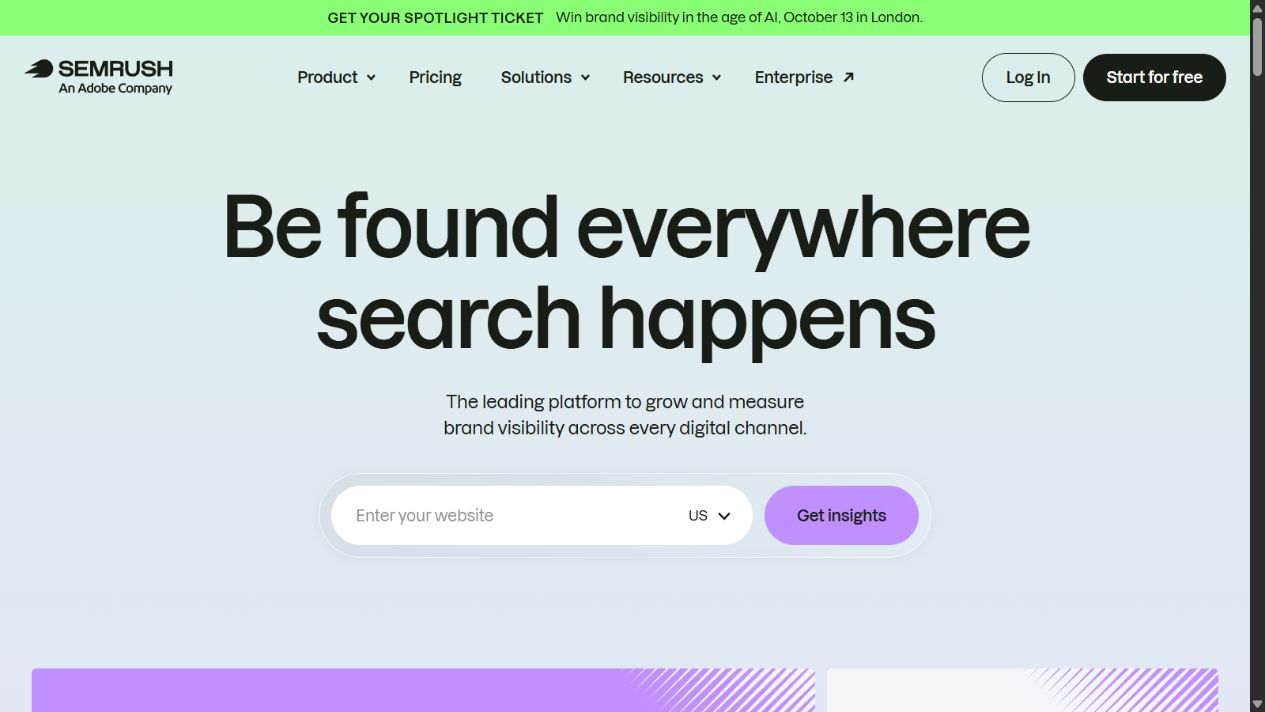
Semrush is the most comprehensive general shortlist here. Its official product surface spans keyword and competitor research, rank tracking, site auditing, content workflows, local visibility, reporting, and AI-search visibility capabilities depending on the selected product and plan.
Why agencies should shortlist Semrush
A broad suite can standardize common workflows. Strategists can research a market, specialists can audit a site, account teams can review rankings, and leaders can use shared reporting conventions. Reducing tool switching can improve consistency when the platform is configured around a documented process.
Semrush also serves adjacent marketing work, which may be useful for agencies connecting organic search with paid, content, local, social, or competitive research. The value depends on whether teams actually use the shared data and modules.
Its expanding AI visibility tools are relevant as clients ask how brands appear in generated answers. Agencies should evaluate engine coverage, prompt methodology, location, frequency, source citations, historical data, exports, and reproducibility rather than accepting one visibility score.
Check before buying
Map every workflow to the exact subscription and add-on. Projects, users, tracked keywords, crawl limits, reports, historical data, API access, content tools, local features, AI visibility, and other units can affect cost.
Test database quality in the markets that matter. Run the same known keywords, competitors, links, and pages through finalists. Record coverage, freshness, useful filters, export quality, and analyst time. A large global database is not automatically best for a narrow regional client.
Control workspace creation and reporting definitions. Without governance, teams may duplicate projects, consume limits, and present inconsistent metrics.
Choose Semrush when: the agency wants one broad SEO operating layer and will govern modules, units, reporting, and specialist exceptions.
2. Ahrefs: best for research-led SEO strategy
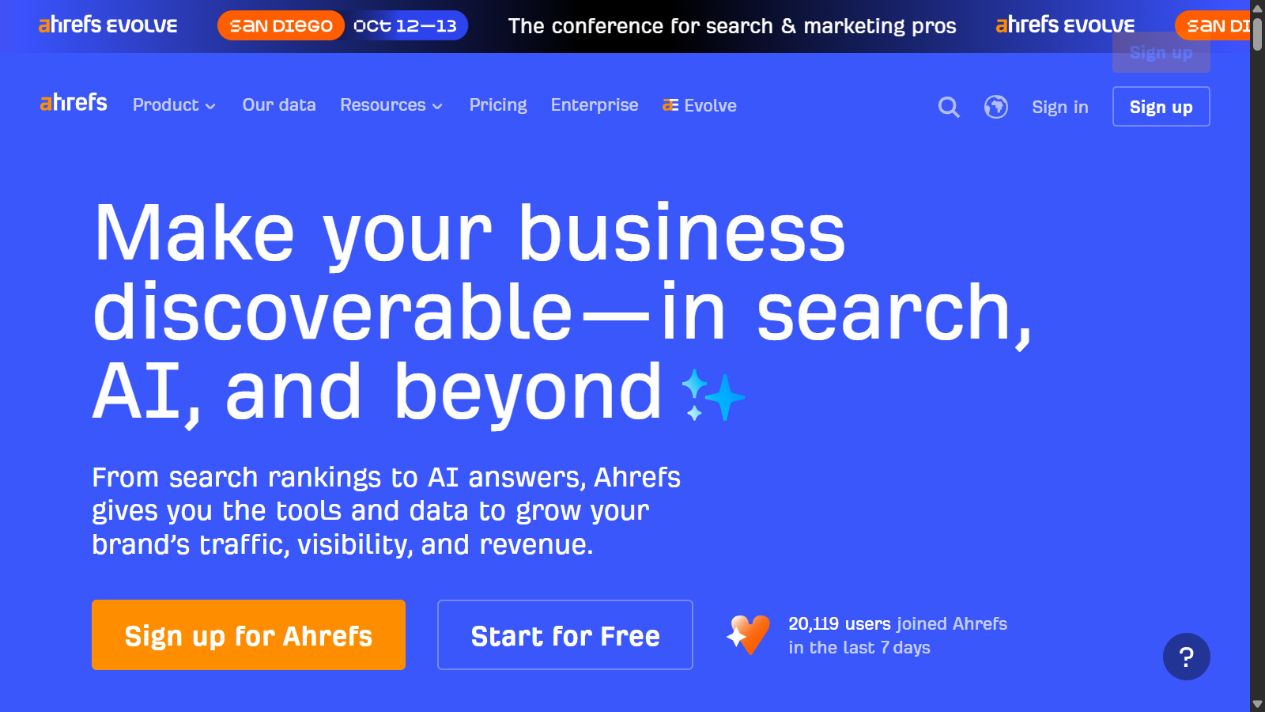
Ahrefs is a strong candidate for competitor research, keyword discovery, content analysis, site exploration, link research, rank tracking, and auditing. It is particularly useful when strategists spend significant time understanding where organic visibility and authority come from.
Why agencies should shortlist Ahrefs
Research teams need to move from a broad market to a defensible opportunity set. They may compare competitors, inspect ranking pages, group topics, review link patterns, find declining content, and estimate whether a recommendation is commercially plausible. Ahrefs brings many of those investigations into a recognizable environment.
Link data remains valuable for digital PR, authority analysis, migration risk, competitor discovery, and diagnosing changes. It should not become a simplistic score contest. Analysts must inspect relevance, placement, source quality, intent, and the site’s actual organic performance.
Check before buying
Understand the current credit and usage model. Simulate a week of real analyst behavior, including exploration, exports, batch analysis, scheduled tracking, audits, historical review, and client requests. A plan that looks sufficient on a static feature table may constrain normal investigation.
Compare its data with Search Console and known market examples. Differences between SEO databases are expected. The question is whether the product reliably supports the agency’s decisions, not whether every number matches another vendor.
Document which Ahrefs metrics may appear in client reports and how they are described. Estimated traffic, volume, difficulty, and authority metrics should never be presented as first-party measurements.
Choose Ahrefs when: deep search and competitor research is central and the usage economics fit the team’s real investigation pattern.
3. Screaming Frog SEO Spider: best for technical crawling
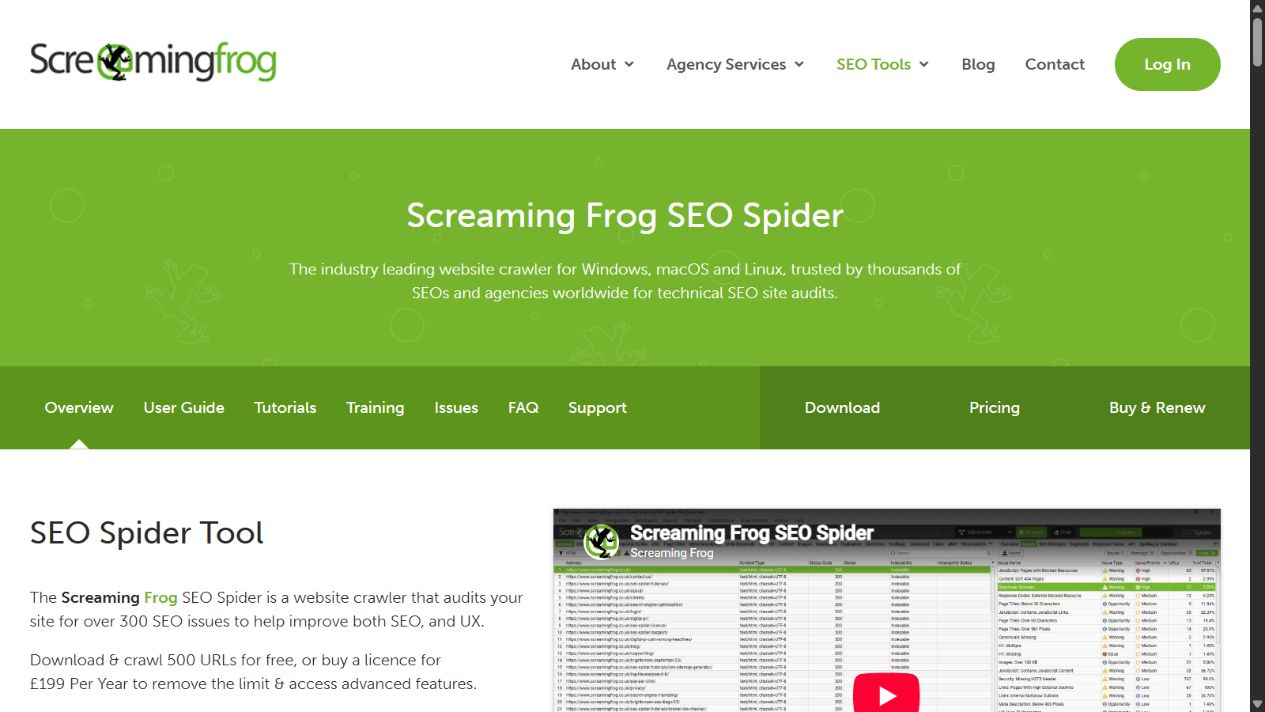
Screaming Frog SEO Spider is a focused desktop crawler for auditing website URLs, responses, metadata, directives, links, canonicals, structured data, rendering, extraction, and related technical signals. Its role is different from a broad SEO platform.
Why agencies should shortlist Screaming Frog
Technical SEO requires observable evidence. A crawler can show what a client site returned under a defined configuration at a defined time. Teams can inspect redirects, indexability signals, duplicate metadata, broken links, canonicals, pagination, structured data, rendered content, and custom extractions.
The product’s flexibility is valuable for migration QA and repeatable audit templates. Agencies can configure includes, excludes, authentication, user agents, rendering, speed, extraction, and integrations according to the site and objective.
Check before buying
A crawl is not the website and is not Google. JavaScript, personalization, geography, authentication, rate limits, CDNs, bot controls, parameters, and configuration affect the result. Save the crawl configuration with the findings and validate important issues in the browser, server logs, Search Console, and source systems.
Large sites need memory, storage, crawl scheduling, infrastructure, and politeness planning. Agree crawl windows and rates with the client. Prevent accidental load on fragile environments and exclude sensitive or destructive URLs.
Screaming Frog does not replace rank tracking, market research, analytics, ticket ownership, or executive reporting. Integrate its evidence into the agency workflow rather than expecting one crawler to manage the engagement.
Choose Screaming Frog when: the agency needs controlled, configurable technical crawling and staff can interpret the evidence correctly.
4. SE Ranking: best for rank operations and agency value
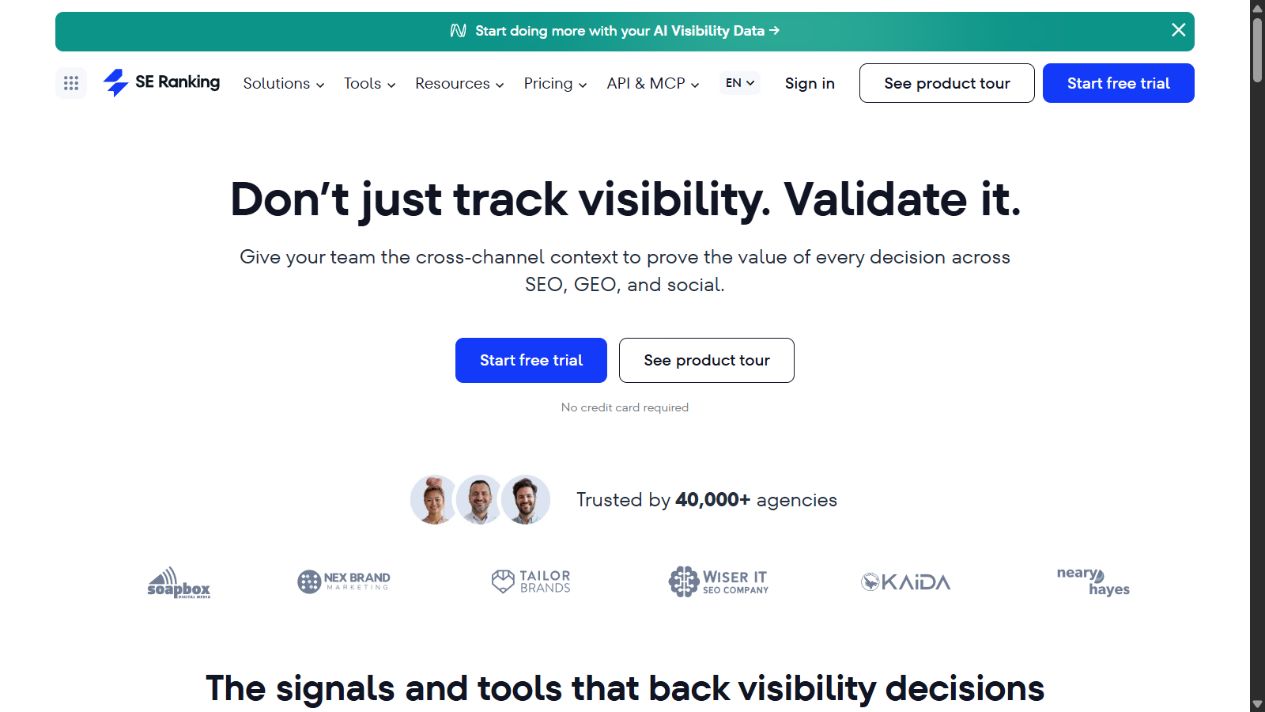
SE Ranking combines rank tracking with website audits, keyword and competitor research, backlinks, reporting, collaboration, and agency-oriented options. It is worth shortlisting when a team needs recurring SEO operations without the cost or breadth of a larger suite.
Why agencies should shortlist SE Ranking
Rank operations are repetitive. Teams need reliable project templates, keyword groups, tags, locations, devices, competitors, alerts, scheduled reports, and client access. A platform oriented around those recurring workflows can reduce manual coordination.
SE Ranking also provides broader research and audit capabilities, allowing smaller agencies to consolidate several routine jobs. Agency packaging and reporting options may support client delivery, while newer AI visibility capabilities can extend monitoring.
Check before buying
Test ranking data using a representative set of local, national, multilingual, branded, non-branded, and SERP-feature queries. Confirm update frequency, location precision, device handling, historical retention, competitor rules, tags, exports, and reporting.
Review current plans and add-ons for users, projects, keyword checks, audit pages, backlinks, reports, white labeling, API, historical data, AI search, and support. Calculate cost per active client and model temporary projects or seasonal keyword growth.
Compare specialist depth. Consolidation is useful only when research, crawling, backlink, content, or reporting capability is sufficient for the agency’s service promise.
Choose SE Ranking when: recurring rank and client operations need a balanced feature and cost model.
5. AgencyAnalytics: best for client reporting
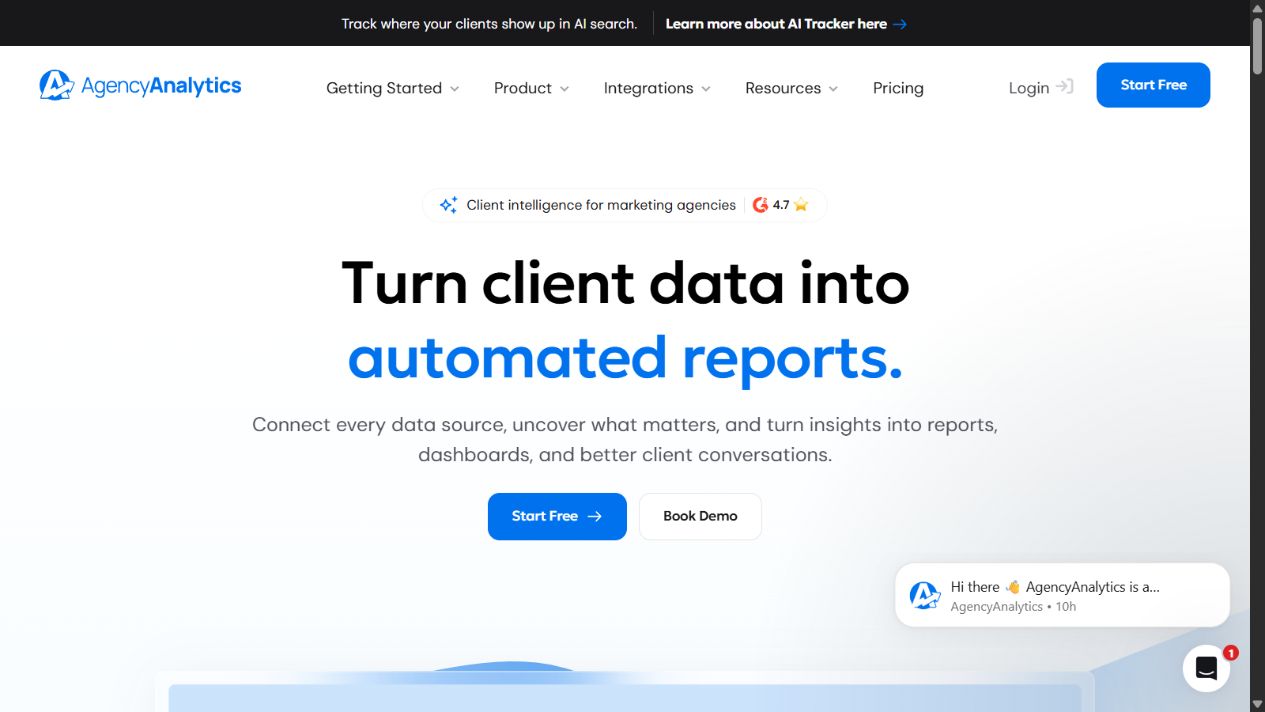
AgencyAnalytics is designed around agency reporting. Official materials describe connected marketing data, dashboards, automated reports, client portals, goals, alerts, custom metrics, white labeling, AI-assisted insights, and a large integration catalog.
Why agencies should shortlist AgencyAnalytics
Client reporting becomes expensive when account teams export charts, rebuild slides, correct formatting, and answer the same data questions every month. A dedicated reporting layer can standardize dashboards, automate delivery, and provide controlled client access.
Connecting SEO data with analytics, advertising, local, social, call, ecommerce, and CRM sources can also improve the client conversation. The report can move from “rankings changed” to “visibility, qualified traffic, leads, and revenue moved together or diverged.”
AI-generated summaries may reduce first-draft effort, but they need review. A model can describe a chart while missing a tracking outage, campaign change, seasonality, brand event, or implementation delay.
Check before buying
Define every metric, source, owner, refresh schedule, timezone, currency, attribution rule, and known limitation. Test expired tokens, schema changes, renamed campaigns, missing data, backfills, and client permission boundaries.
Review client-based pricing, add-ons, users, reports, integrations, AI tracking, white labeling, API access, support, and cancellation terms. Archive client data and templates in a form the agency can retain if it changes platforms.
AgencyAnalytics complements research and technical tools; it does not replace them. Do not choose a reporting layer based only on attractive dashboards.
Choose AgencyAnalytics when: repeatable, branded, multi-source client reporting is the operational bottleneck.
The minimum viable agency SEO stack
A small agency can begin with four layers:
- First-party measurement: Google Search Console, analytics, conversion systems, and business outcomes.
- Research and tracking: one broad platform such as Semrush, Ahrefs, or SE Ranking.
- Technical evidence: a capable crawler such as Screaming Frog.
- Communication: a reporting workflow appropriate to client count and complexity.
Add local SEO, digital PR, content optimization, log analysis, experimentation, or AI visibility only when a documented service requires it. Every added tool creates cost, training, permissions, integration, renewal, and offboarding work.
Build a weighted scorecard
| Area | Example weight | Required evidence |
|---|---|---|
| Data coverage and freshness | 20% | Known queries, pages, links, markets, and competitors are represented usefully |
| Technical capability | 15% | A representative crawl produces reproducible, actionable evidence |
| Tracking operations | 15% | Location, device, tags, history, and SERP features match the service |
| Client reporting | 15% | Reports reconcile with sources and explain decisions and outcomes |
| Multi-client workflow | 10% | Templates, permissions, projects, and limits work at agency scale |
| Integrations and exports | 10% | Data can be reconciled, extracted, and retained reliably |
| Governance and security | 5% | Identity, access, audit, deletion, and client separation pass review |
| Cost and administration | 10% | Three-year cost and monthly operating effort are sustainable |
Require analysts to attach evidence to scores. Vendor demonstrations can clarify capability, but they should not determine the result.
Run a representative pilot
Test two broad platforms and the required specialists across three client shapes: a small local site, a content-led SaaS site, and a technically complex ecommerce or marketplace site.
Complete these workflows:
- Discover a market and identify true organic competitors.
- Build and cluster a defensible keyword set.
- Diagnose a traffic decline using first-party and modeled data.
- Crawl a JavaScript-dependent site with a saved configuration.
- Review internal linking, redirects, canonicals, indexability, and structured data.
- Track representative queries by location and device.
- Investigate backlink and digital PR opportunities.
- Monitor selected AI-answer prompts and inspect cited sources.
- Produce an account-team dashboard and client report.
- Export the underlying data and reproduce a key finding.
- Remove a user and verify access boundaries.
- Simulate a broken connector and document recovery.
Measure useful coverage, false positives, analyst time, report preparation, client comprehension, limit consumption, correction effort, and cost per active client.
AI search visibility without false confidence
AI answer monitoring is an emerging measurement layer. It can help identify whether a brand, competitor, or source appears for selected prompts. However, results may vary by engine, model, account, location, date, personalization, prompt wording, and product updates.
Require the tool to disclose or make testable:
- Engines and surfaces covered.
- Prompt set and change history.
- Location, language, and account context.
- Query frequency and timestamp.
- Citation or source extraction method.
- Brand/entity matching rules.
- Historical retention and exports.
- Handling of inconsistent repeated responses.
Treat visibility scores as modeled indicators. Pair them with manual checks, referral data, cited-source analysis, organic performance, brand demand, conversions, and customer research.
Total-cost model
Calculate three-year cost across:
- Users, contractors, administrators, and client viewers.
- Projects, campaigns, websites, and temporary audits.
- Tracked keywords and update frequency.
- Crawl pages, storage, rendering, schedules, and infrastructure.
- Reports, dashboards, white labeling, and client portals.
- API, exports, data warehousing, and connector maintenance.
- Content, local, digital PR, AI visibility, and other add-ons.
- Migration, templates, training, support, and renewal increases.
- Analyst time spent overcoming limits or reconciling tools.
Track utilization quarterly. Remove products that duplicate another tool without saving time, improving evidence, or fulfilling a client requirement.
Evidence retention and reproducibility
SEO recommendations should survive beyond a live dashboard. For every material audit or strategy decision, preserve the query, date, market, device, crawl configuration, filters, exported evidence, analyst interpretation, implementation ticket, and validation result. This is especially important when vendor databases refresh and historical interfaces change.
Build a client evidence folder with consistent naming and access controls. Store raw exports separately from transformed reporting. Record formulas and exclusions used to calculate custom metrics. When an AI summary is involved, preserve the underlying tables and require a reviewer to approve the interpretation.
Reproducibility improves both quality and trust. Another analyst should be able to follow the recorded method and reach a reasonably similar finding. If a recommendation can only be explained by opening one analyst’s private dashboard, the agency has a process risk regardless of how capable the software is.
Final recommendation
For a general SEO agency, begin with Semrush or Ahrefs, add Screaming Frog for technical evidence, and keep first-party data authoritative. Choose SE Ranking when recurring rank operations and value are priorities. Add AgencyAnalytics when reporting scale justifies a dedicated client layer.
The best SEO software for agencies is a governed stack, not a shopping list. Every product should own a clear job, produce inspectable evidence, connect to an accountable action, and earn its place at renewal.
Frequently asked questions
What is the best SEO software for agencies?
Semrush is the strongest broad starting point for many agencies, while Ahrefs, Screaming Frog, SE Ranking, and AgencyAnalytics serve important research, crawling, operations, and reporting needs.
Do SEO agencies need both Semrush and Ahrefs?
Only when a side-by-side pilot demonstrates meaningful data, workflow, client, or productivity benefits. Overlapping subscriptions without defined owners often create inconsistent reporting.
What SEO tools should a small agency start with?
Use first-party search and analytics data, one broad research and tracking platform, one technical crawler, and a repeatable reporting method. Expand only for a named service need.
Is AI search visibility software necessary for agencies?
It can support an AI-visibility service, but methodology and repeatability must be tested. It should complement, not replace, search, citation, conversion, and customer evidence.
How should agencies evaluate rank tracking?
Test location, language, device, frequency, SERP features, competitors, tagging, history, exports, alerts, and reporting against known queries and manual spot checks.
How much should an agency spend on SEO software?
There is no useful flat benchmark. Model projects, users, keywords, crawls, reports, connectors, APIs, add-ons, specialist workflows, and analyst time per active client.
Can one SEO platform replace the whole agency stack?
Usually not. A broad suite can consolidate common work, but first-party measurement and specialist crawling, reporting, local, content, PR, or AI visibility tools may still be justified.
Sources
During evaluation, test one real client or internal site from crawl through prioritization, implementation, and measured follow-up. Require each alert or recommendation to identify the affected page, evidence, expected outcome, owner, and verification method. A larger keyword or issue count is not better if the team cannot turn it into accurate changes. Also confirm permissions, exports, historical continuity, regional databases, and how client data is separated when staff or contractors leave.
Frequently asked questions
What is the best SEO software for agencies?
Semrush is the strongest broad starting point for many agencies. Ahrefs is strong for research and link analysis, Screaming Frog for technical crawling, SE Ranking for rank operations and agency workflows, and AgencyAnalytics for client reporting.
Do SEO agencies need both Semrush and Ahrefs?
Not automatically. Buy both only when measurable differences in databases, workflows, client requirements, or analyst productivity justify the overlap. Pilot each against the same keyword, competitor, and backlink tasks.
What SEO tools should a small agency start with?
Start with Google Search Console and analytics as primary data, one broad research platform, one capable crawler, and a reporting method. Add specialist tools only when a defined workflow or client requirement needs them.
Is AI search visibility software necessary for agencies?
It is useful when clients need monitoring across AI-generated answers, but coverage and methodology vary. Treat it as directional evidence alongside search performance, citations, conversions, and manual checks.
How should agencies evaluate rank tracking?
Test location, device, language, frequency, SERP features, tagging, competitor coverage, historical data, exports, alerts, and client reporting using a representative keyword set.
How much should an agency spend on SEO software?
Budget from required projects, users, tracked keywords, crawl volume, reports, AI visibility, API use, storage, and specialist add-ons. Model cost per active client and per retained workflow.
Can one SEO platform replace the whole agency stack?
Rarely. Broad suites reduce tool switching, but first-party search data, analytics, crawling, reporting, local SEO, content, digital PR, and AI visibility may still require specialist systems.