Claude vs ChatGPT: Which Is Better?
Compare Claude and ChatGPT for research, writing, files, coding, team workspaces, pricing, privacy, and business fit.
Direct answer
Choose Claude when the main job is reading, writing, analyzing, and organizing substantial documents or project knowledge. Choose ChatGPT when the team needs a broader general-purpose AI workspace spanning research, files, data analysis, images, apps, company knowledge, and varied business tasks.
Neither product is universally better. The practical decision is which product completes your recurring work with fewer corrections, acceptable data controls, predictable limits, and a plan your team can administer.
This comparison uses official sources checked on August 15, 2026. We did not run a controlled output-quality benchmark, so recommendations are based on documented capabilities and buyer fit rather than invented test results.
Claude vs ChatGPT at a glance
| Decision area | Claude | ChatGPT |
|---|---|---|
| Best starting point | Document-heavy writing, analysis, and project knowledge | Broad business assistance across many task types |
| Project context | Projects organize chats and knowledge | Projects organize chats, files, and instructions |
| Research | Research and web search vary by plan | Search and deep research vary by plan |
| Team workspace | Team plan with centralized billing and administration | Business workspace with billing, administration, apps, and company context |
| Coding | Claude and Claude Code are separate surfaces with plan nuances | ChatGPT and Codex access varies by seat and plan |
| API | Billed separately | Billed separately |
| Main buying risk | Usage limits and product-surface complexity | Rapidly changing models, credits, limits, and feature entitlements |
Choose Claude for document-centered knowledge work
Anthropic’s pricing and help material positions Claude around writing, analysis, Projects, Research, connected tools, and extended thinking. Projects are especially relevant when a user needs persistent instructions and reference material for a client, campaign, research question, or internal workstream.
That makes Claude a sensible shortlist option for teams that spend much of the day reviewing long material, shaping structured drafts, comparing documents, or maintaining reusable project context. The value is not simply a large context window. It is whether the workspace reduces repeated setup and keeps source material organized enough for reliable review.
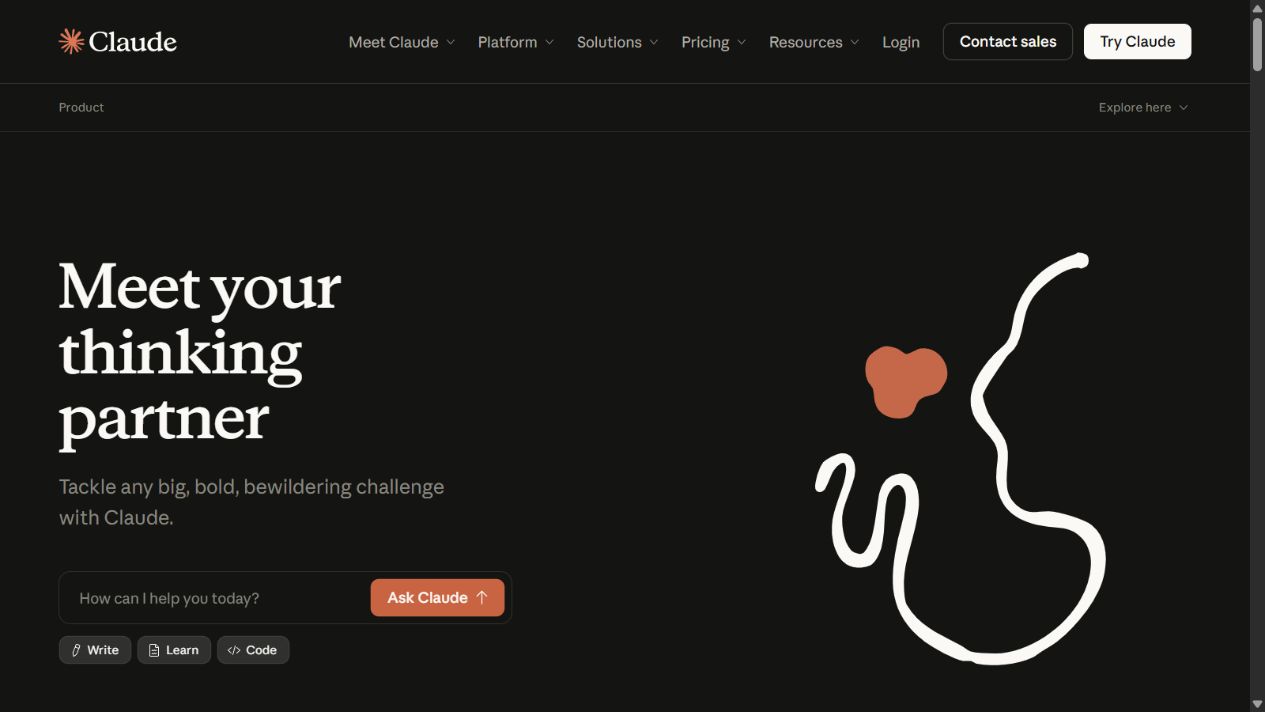
Test Claude with real documents before committing. Check citation fidelity, formatting preservation, instruction consistency, export needs, permission boundaries, and how often a reviewer must return to the source.
Choose ChatGPT for a wider operating surface
OpenAI’s current business pricing pages describe ChatGPT as a shared workspace for chat, coding, analysis, research, files, apps, company knowledge, administration, and spend controls. That breadth matters when founders, marketers, analysts, sales teams, and operators want one assistant for several kinds of work.
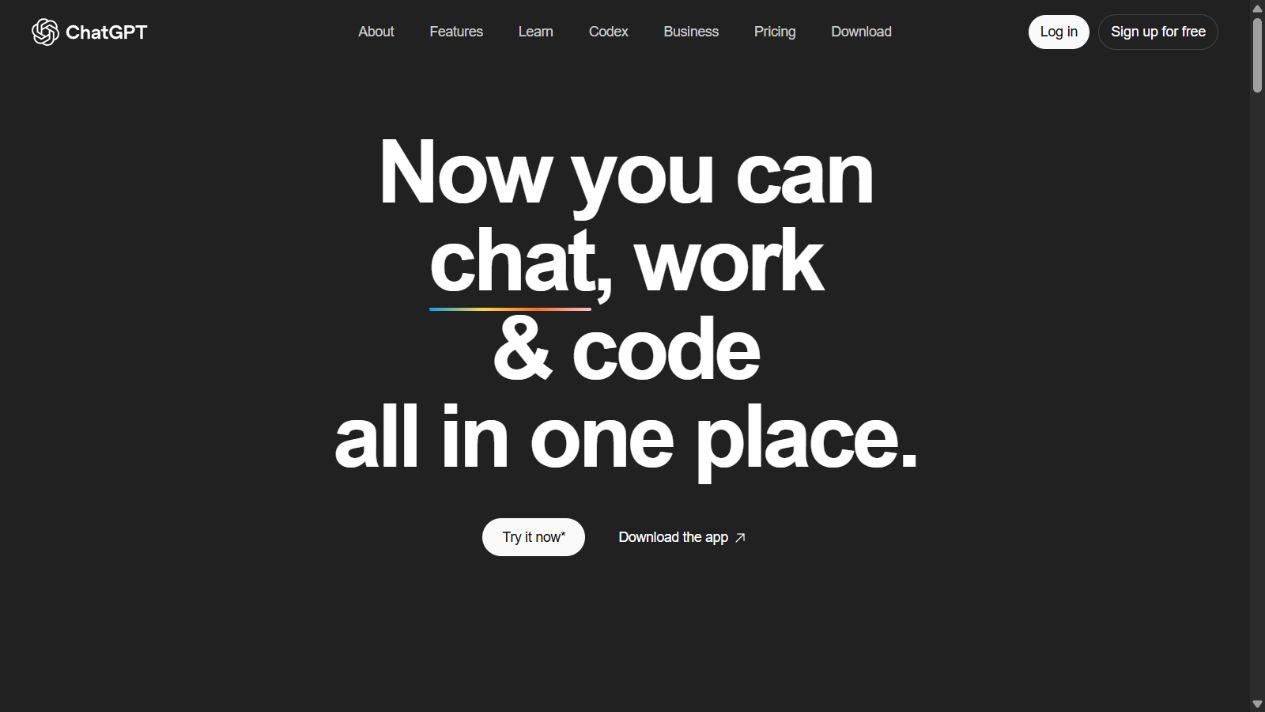
The trade-off is governance. A broad tool creates more possible use cases, which means the company must define approved data, acceptable tasks, human review, workspace ownership, and spending rules. A feature-rich plan does not automatically create a controlled operating model.
Research and source-grounded work
Both products support research-oriented workflows, but plan access and implementation differ. Anthropic documents Research and connected tools in its plan descriptions. OpenAI documents search, deep research, projects, files, and apps across plans with different limits.
For a serious evaluation, use the same research brief in both products and score:
- whether sources are visible and relevant;
- whether claims remain faithful to the source;
- whether contradictory evidence is represented;
- whether the answer distinguishes fact from inference;
- how easily a reviewer can trace the conclusion;
- how limits affect repeated research.
Do not choose on a polished demonstration alone. Run questions from your actual domain, including one ambiguous request and one task where the correct response is to acknowledge uncertainty.
Writing and document analysis
Claude’s strongest buyer case is often sustained work with documents and prose. ChatGPT also supports file analysis and writing, but its broader workspace may be more useful when the same project includes spreadsheets, image work, web research, coding, or tool connections.
The right test is editorial effort, not first-draft fluency. Measure factual corrections, structural rewrites, source-check time, tone corrections, and whether the assistant preserves important caveats. A draft that sounds polished but requires extensive verification is not necessarily the more productive result.
Team administration, privacy, and controls
Anthropic lists centralized billing and administration for Team, with additional enterprise controls available through sales-led plans. OpenAI lists business workspace administration, SAML SSO, MFA, billing, usage visibility, and enterprise controls that vary by plan.
Before purchase, verify:
- whether business data is used for model training by default;
- retention and deletion options;
- SSO, provisioning, role, and domain controls;
- connector permissions and third-party data paths;
- audit, compliance, and residency requirements;
- incident-response and offboarding procedures.
Security claims should be checked against the current official trust and privacy material, not copied from an old comparison page.
Pricing and total cost
Both vendors maintain free and paid access, with individual, team or business, and enterprise paths. Prices, minimum seats, credits, and feature limits have changed over time, so verify the current checkout or sales quote.
Total cost includes more than the subscription:
- seats and minimum commitments;
- advanced usage or credits;
- API usage, which is separate;
- implementation and governance work;
- connector or adjacent software cost;
- review time and correction effort;
- duplicate subscriptions retained by individuals.
A practical two-week pilot
Select five representative tasks: one long-document analysis, one research brief, one structured draft, one data or file task, and one repeatable team workflow. Give both tools the same source pack and acceptance criteria.
Score each result from 1 to 5 for source fidelity, completeness, correction time, usability, repeatability, and governance fit. Record plan, model, date, prompts, and limits. The winning product is the one that improves the workflow consistently, not the one that produces the most impressive isolated response.
Verdict
Claude is the stronger shortlist candidate when document-centered analysis, writing, and reusable project knowledge dominate. ChatGPT is the stronger general starting point when a small business wants one broad AI workspace across several roles and task types.
Choose neither if the team cannot define approved data, accountable review, measurable use cases, and a budget owner. Start with a controlled pilot, then expand only when the workflow evidence supports it.
Sources: Anthropic pricing , Claude Team help , Claude Pro help , OpenAI business pricing , ChatGPT pricing , and ChatGPT Business help .
Frequently asked questions
Is Claude better than ChatGPT?
Claude is often the clearer shortlist choice for document-heavy work and project knowledge, while ChatGPT is the broader general-purpose workspace for research, analysis, files, images, apps, and business workflows. The better choice depends on the task and plan.
Which is better for a small business, Claude or ChatGPT?
ChatGPT is the broader default when several roles need one workspace. Claude is a strong alternative when long documents, writing, analysis, and shared project context dominate the workload. Test both with the same representative tasks.
Does either subscription include API usage?
No. Anthropic and OpenAI document their consumer or business subscriptions separately from API usage. Confirm current API pricing and billing before building an integration.