Consensus vs ChatGPT: Which Is Better?
Compare Consensus and ChatGPT for academic search, literature reviews, general research, citations, workflows, pricing, and buyer fit.
Direct answer
Consensus is better when the core job is finding, filtering, and synthesizing peer-reviewed research. ChatGPT is better when research is one part of a broader workflow that also includes web information, uploaded files, writing, data analysis, planning, coding, or business collaboration.
Consensus is a specialist research product. ChatGPT is a general-purpose AI workspace. The choice should follow the source base and review standard your work requires, not which interface gives the fastest-looking answer.
Quick comparison
| Area | Consensus | ChatGPT |
|---|---|---|
| Primary use | Academic and scientific research | General research and business assistance |
| Source focus | Peer-reviewed research corpus and uploaded or saved papers | Web, files, apps, and connected sources depending on plan |
| Research workflow | Paper search, Pro, Deep review, Research Agent, snapshots, library tools | Search, deep research, projects, files, data analysis, apps |
| Best user | Researchers, clinicians, students, evidence teams | Founders, analysts, marketers, operators, mixed teams |
| Main strength | Focused paper discovery and citation-backed synthesis | Breadth across source types and downstream work |
| Main limitation | Not a replacement for formal review methodology | Broad access does not guarantee academic corpus completeness |
Choose Consensus for peer-reviewed evidence discovery
Consensus describes itself as an AI search engine and research agent for scientific research. Its current product pages document a corpus of more than 220 million peer-reviewed papers, academic filters, citation crawling, DOI and author search, Paper Search, Pro analysis, Deep reviews, Study Snapshots, and library workflows.
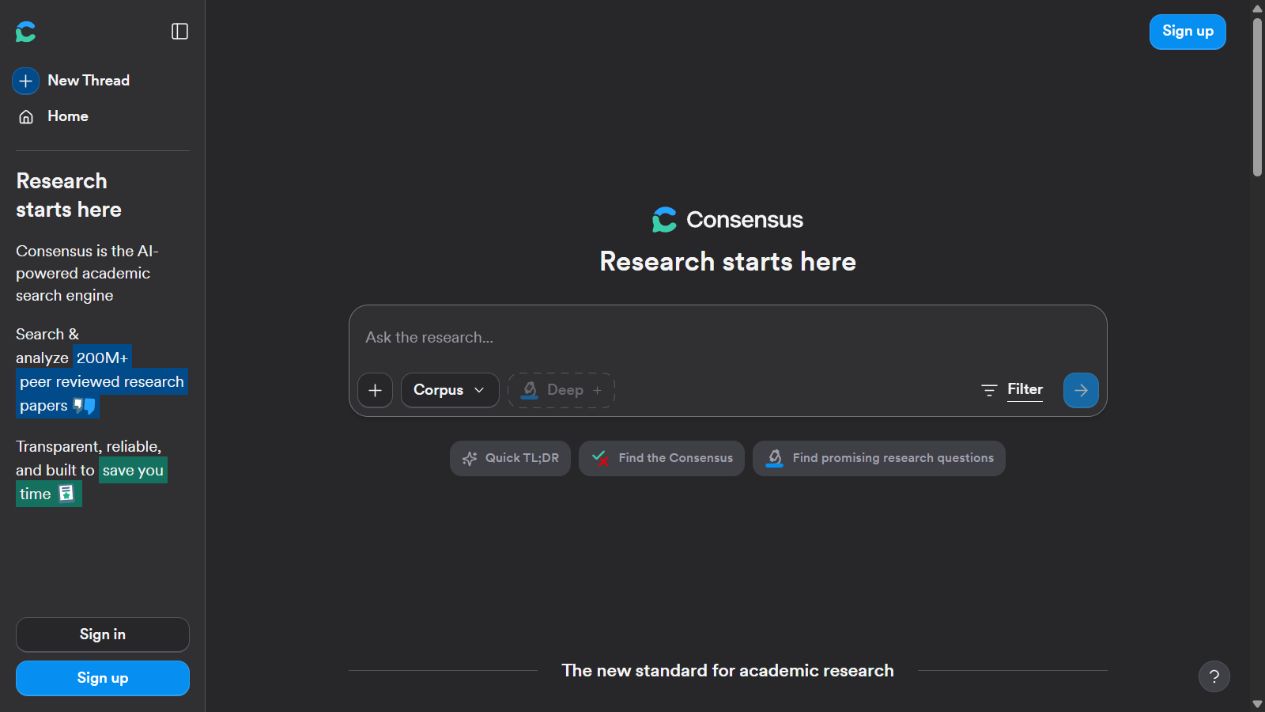
That specialization is valuable when the source requirement is explicit: published studies rather than a general web answer. A researcher can begin from a question, paper, author, or DOI, then use filters and citation paths to refine the evidence base.
The limitation is methodological. A convenient synthesis is not automatically a systematic review. Teams still need to document databases, inclusion criteria, screening, risk of bias, extraction, and expert interpretation when the decision demands rigor.
Choose ChatGPT for mixed-source research and downstream work
OpenAI’s pricing and product material describes search, deep research, projects, file uploads, data analysis, apps, company knowledge, writing, and coding capabilities that vary by plan. ChatGPT therefore has a wider operating surface.
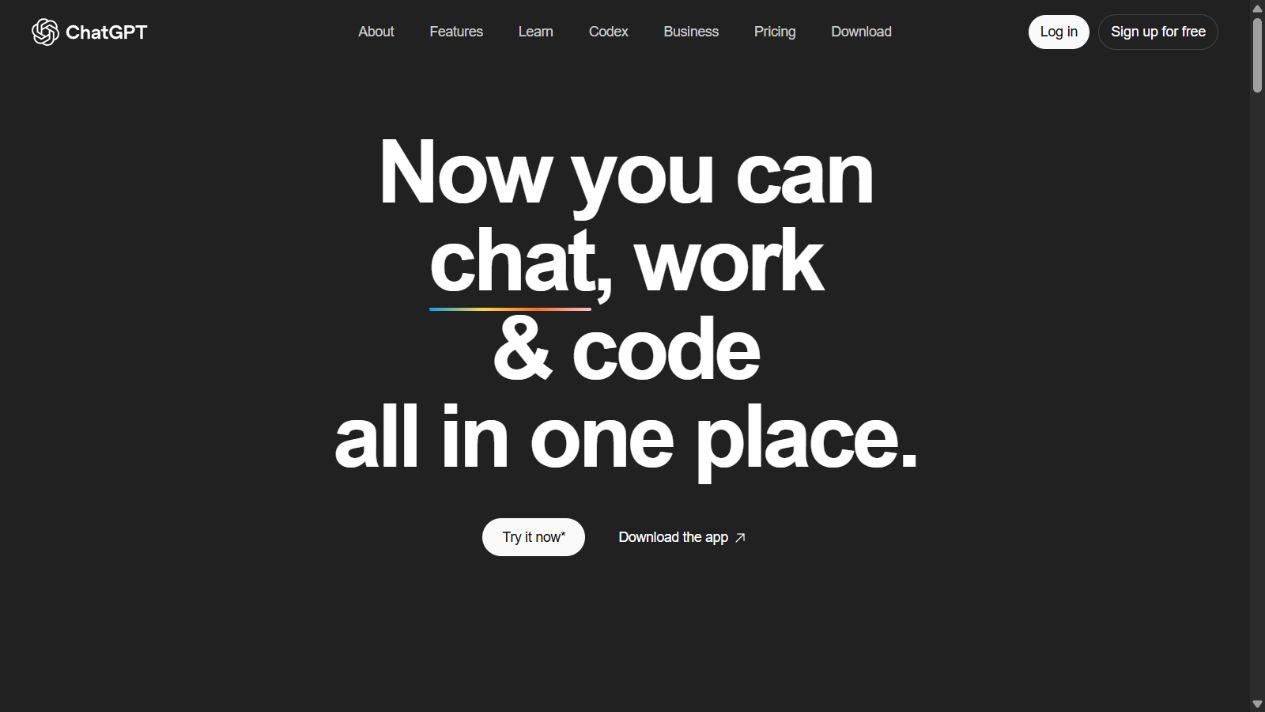
That breadth suits a market analyst who needs to combine official product pages, uploaded reports, spreadsheets, and a final presentation. It also suits teams that need research to flow directly into planning or operational work.
The limitation is source ambiguity. Buyers must understand which sources were searched, what connectors were used, and whether the relevant academic literature is sufficiently represented. A cited answer is still something a reviewer must inspect.
Literature review workflow
Consensus currently documents Paper Search for direct browsing, Pro messages that analyze multiple papers, and Deep reviews that run a multi-step process and synthesize a selected set of papers. Its help center also documents exports and citation formats.
ChatGPT can support broad literature-review tasks through search, deep research, uploaded documents, and connected sources. It may be the more flexible workspace when the review must include policy, company, market, or technical material alongside papers.
Use this decision rule:
- Start with Consensus when peer-reviewed studies define the evidence base.
- Start with ChatGPT when the evidence base is deliberately mixed.
- Use formal databases and a documented protocol when completeness or regulatory defensibility matters.
Citation and verification
Neither interface removes the need to open the source. Check that the paper exists, authors and dates are correct, the cited passage supports the claim, the population and method fit the question, and limitations are not lost in synthesis.
For academic work, record the query, filters, date, selected papers, exclusions, and export. For business work, keep a claim ledger linking every material conclusion to the official document or data source that supports it.
Pricing and limits
Consensus documents Free, Pro, Deep, Teams, and Enterprise paths. Its help center listed different monthly allowances for Pro messages, Deep reviews, and Study Snapshots when checked. OpenAI uses Free and paid ChatGPT plans with plan-dependent access to deep research and other advanced functions.
Do not compare headline subscription prices alone. Estimate:
- number of researchers or seats;
- research volume per month;
- Deep or advanced usage limits;
- export and collaboration requirements;
- institutional access and connectors;
- review time saved or added;
- API or integration cost, if applicable.
Who should choose which?
Choose Consensus when researchers, clinicians, students, or evidence teams repeatedly need paper discovery, academic filters, citation paths, and literature synthesis.
Choose ChatGPT when analysts and operating teams need one workspace for mixed-source research, uploaded files, analysis, writing, and follow-on business work.
Use both when Consensus builds the academic evidence set and ChatGPT supports a wider deliverable. Keep source boundaries visible so material from the open web is not mistaken for peer-reviewed evidence.
Choose neither as the sole method for high-stakes medical, legal, regulatory, or formal systematic-review decisions. Use qualified reviewers and the required professional methodology.
Verdict
Consensus wins the narrow contest for academic research workflow. ChatGPT wins the broader contest for general research and execution. The safest buying choice is the product whose source coverage, exports, limits, and review path match the work you must defend.
Sources: Consensus , Research Agent , Consensus plans , Deep review , Consensus changelog , OpenAI business pricing , and ChatGPT pricing .
Frequently asked questions
Is Consensus better than ChatGPT for research?
Consensus is the more focused choice for searching and synthesizing peer-reviewed research. ChatGPT is broader and better suited to mixed research that also involves web sources, files, writing, data analysis, and general business tasks.
Can Consensus replace a systematic review?
No. Consensus can accelerate discovery and synthesis, but a formal systematic review still requires a documented protocol, database strategy, screening, quality appraisal, reproducible extraction, and expert judgment.
Can ChatGPT search academic papers?
ChatGPT can support research and use connected or web sources depending on plan and configuration, but buyers should verify exactly which corpus, connectors, and source-access methods are available.