ElevenLabs vs ChatGPT: Which Is Better?
Compare ElevenLabs and ChatGPT for voice generation, conversational AI, research, content workflows, pricing models, controls, and production fit.
Direct answer
ElevenLabs is better for producing and deploying AI speech. ChatGPT is better for researching, writing, analyzing, and holding a broad AI-assisted conversation.
Choose ElevenLabs when the deliverable is an audio file, a consistent synthetic voice, multilingual speech, a speech API, dubbing, transcription, or a voice agent. Choose ChatGPT when the deliverable is an answer, analysis, document, plan, code change, or ongoing conversation that may also use voice as an interface.
The products overlap around spoken interaction, but they solve different layers of the problem. ElevenLabs specializes in the voice layer. ChatGPT is a general AI workspace whose Voice feature lets a user speak with the assistant. A team may use both: ChatGPT for the thinking and content layer, ElevenLabs for controlled speech generation or voice delivery.
This comparison uses official sources checked on August 28, 2026. We did not conduct a controlled listening test, latency benchmark, transcription accuracy test, or paid-workspace security assessment. Product facts below are verified from official material; the fit recommendations are editorial inferences based on the documented capabilities and constraints.
ElevenLabs vs ChatGPT at a glance
| Decision area | ElevenLabs | ChatGPT |
|---|---|---|
| Primary role | Voice generation, speech recognition, dubbing, and voice-agent infrastructure | General AI assistant for research, writing, analysis, coding, creation, and conversation |
| Best for | Producing and deploying speech | Thinking, researching, drafting, and interacting with a general assistant |
| Voice workflow | Dedicated models, voices, APIs, projects, and agent tools | Voice conversation inside ChatGPT |
| Production output | Audio and speech-enabled applications | Answers and work products across multiple modalities |
| Developer path | Speech APIs and voice-agent stack | OpenAI APIs are separate from a ChatGPT subscription |
| Pricing model | Subscription or pay-as-you-go with usage measured by product/model | ChatGPT plans with plan-dependent limits; API billed separately |
| Main limitation | Specialist scope requires another system for broad reasoning and workflow work | Not a dedicated speech-production or voice-management platform |
The central difference: voice infrastructure versus a general assistant
ElevenLabs is built around generating, understanding, and deploying speech. Its official product and documentation pages cover text to speech, speech to text, voice design and cloning, dubbing, sound effects, music, APIs, and ElevenAgents. The value is not merely that audio comes out. The platform gives creators and developers a dedicated environment for selecting a model, voice, language, output format, latency profile, and delivery method.
ChatGPT begins from a different job. It helps a user investigate a question, work with files, draft and revise content, reason through a decision, write code, or conduct an ongoing conversation. ChatGPT Voice makes that conversation spoken. OpenAI describes Voice as a natural, free-form conversation in which the user can listen while following text and review earlier messages. That is a voice interface to ChatGPT, not a substitute for a complete audio-production pipeline.
The practical test is the required output:
- If the output is controlled speech or a speech-enabled product, start with ElevenLabs.
- If the output is an informed answer or completed knowledge-work task, start with ChatGPT.
- If the process needs both, define the handoff and account for two separate products, data paths, and cost models.
Choose ElevenLabs for text-to-speech production
ElevenLabs documents several speech models for different production needs. At the time of review, its text-to-speech documentation described Eleven v3 for expressive delivery, a conversational v3 variant for lower-latency interaction, Multilingual v2 for stable long-form generation, and Flash models for faster output. Supported languages, character limits, latency statements, and output options differ by model.
That model choice matters in production. An audiobook chapter, an interactive agent, a game character, and a short social advertisement do not have the same requirements. A team may care about emotional control, consistency over long passages, speed, telephony formats, multilingual coverage, or cost per generated unit. ElevenLabs exposes those trade-offs directly.
The documentation also lists several output formats, including MP3, PCM, mu-law, A-law, and Opus with model- and plan-dependent options. Those details are relevant when generated speech must enter a publishing, telephony, streaming, or application workflow.
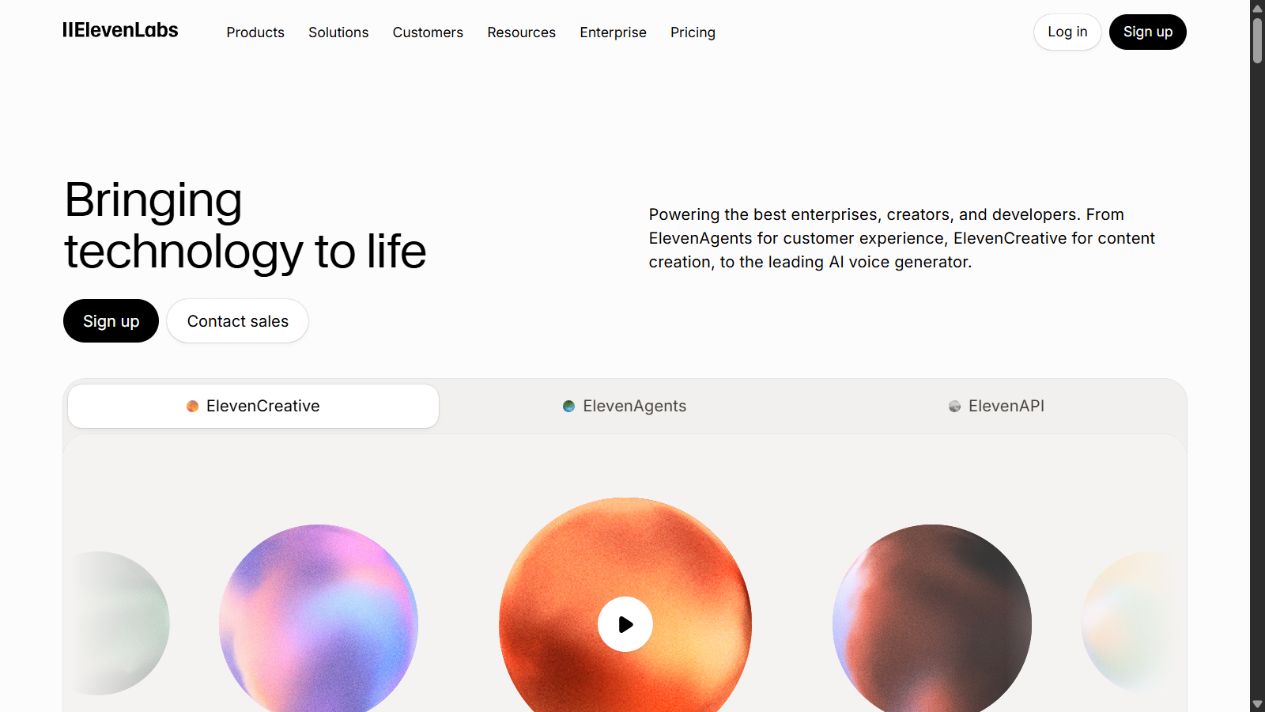
ElevenLabs official homepage, captured August 28, 2026. The page separates creative voice tools, voice agents, and APIs.
Choose ElevenLabs when:
- finished or application-ready speech is the main deliverable;
- voice selection, design, or authorized cloning is required;
- developers need a text-to-speech or speech-to-text API;
- a workflow requires specific audio formats or low-latency speech;
- a team needs dubbing or multilingual audio production;
- speech quality, pronunciation, pacing, and delivery require dedicated controls.
Check before committing: model availability, language support, commercial rights, voice-consent requirements, output formats, per-generation limits, monthly quotas, overage behavior, and the cost of regenerating production audio.
Choose ChatGPT for research and general knowledge work
ChatGPT has the stronger fit when speech is how a person interacts with the assistant rather than the final product being manufactured. A user can ask questions, refine ideas, work with text and supported files, develop a plan, or continue a discussion in voice. Depending on account, plan, region, and app version, OpenAI’s current help material says Voice may support web search, memory, visual results, text, and images.
This broader context is useful before any voice production begins. A marketing team might research an audience, establish a thesis, create an outline, draft a script, develop pronunciation notes, and build a review checklist in ChatGPT. ElevenLabs can then produce the speech. The tools are complementary because one shapes the content and the other specializes in delivering it as audio.
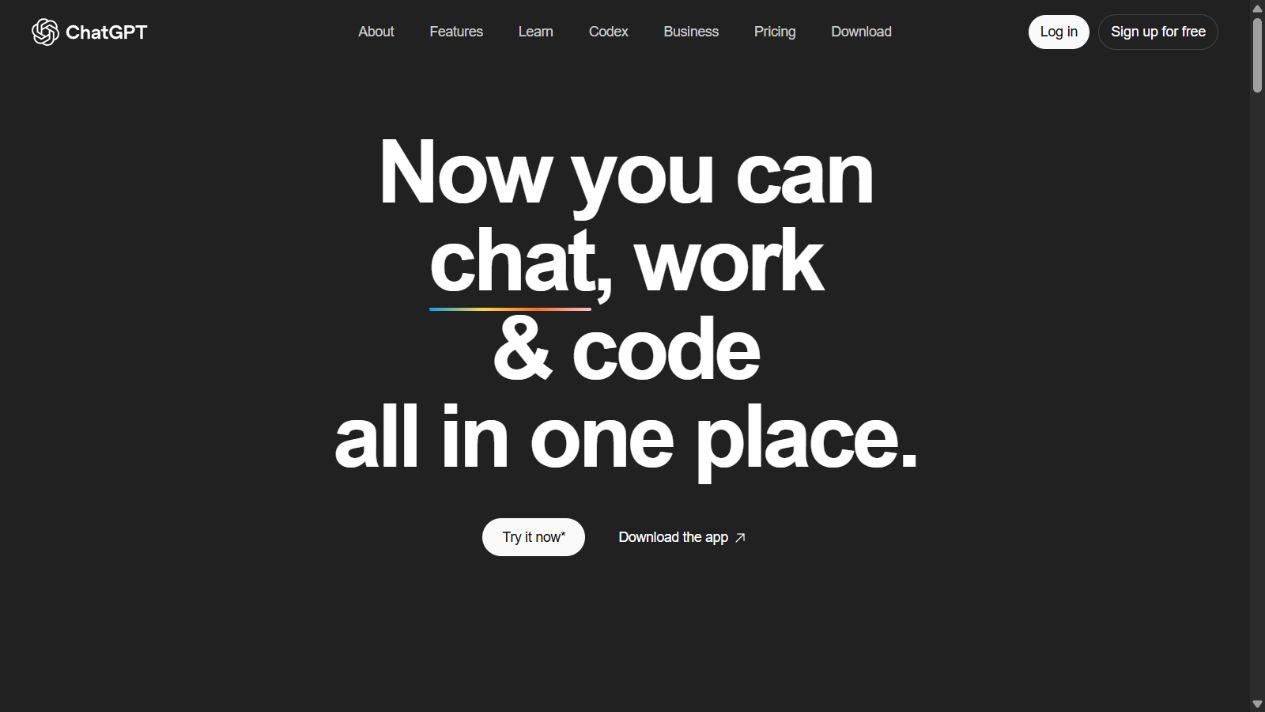
ChatGPT official homepage, captured August 15, 2026. ChatGPT is positioned as a broad assistant rather than a dedicated speech-production console.
Choose ChatGPT when:
- research, reasoning, drafting, analysis, or coding is the main job;
- the user wants a spoken conversation with a general assistant;
- context must be developed through an extended dialogue;
- files or other supported modalities contribute to the answer;
- voice is an interface, not the final production asset.
Check before committing: plan and regional availability, voice usage limits, data controls, connected tools, workspace administration, and the distinction between a ChatGPT subscription and separately billed API usage.
Which is better for conversational AI?
The phrase “conversational AI” hides two different requirements.
ChatGPT Voice is designed for a person to converse with ChatGPT. OpenAI’s help documentation distinguishes current voice options and explains that plan, region, and application version affect availability. It is the simpler choice when an individual wants to speak naturally with a general assistant and retain the surrounding conversation.
ElevenAgents is intended for teams building voice experiences into a customer or operational workflow. ElevenLabs documents a speech engine, knowledge, tools, integrations, telephony options, and agent customization. Its conversational speech models are part of a stack a developer or business configures, rather than only a user-facing assistant session.
Choose based on ownership of the experience:
- A user wants to talk to an assistant: ChatGPT.
- A business wants to build a voice experience for its users: evaluate ElevenLabs.
- A developer wants full application control: compare the relevant ElevenLabs and OpenAI APIs separately; do not use consumer subscription pricing as a proxy for API cost.
Which is better for creators?
ElevenLabs is the more direct production tool for creators who need narration, character voices, multilingual versions, dubbing, or repeatable audio output. Its creative product family and speech documentation are organized around making audio assets.
ChatGPT is stronger around the production: research, briefs, scripts, titles, interview questions, revision, repurposing plans, and audience analysis. It may provide spoken responses, but that does not automatically provide the asset controls, formats, voice management, or commercial workflow required for a published audio product.
A practical creator workflow can be:
- Research the topic and document approved sources.
- Draft and fact-check the script.
- Mark names, numbers, acronyms, and pronunciation risks.
- Generate a short voice sample before committing the complete script.
- Review meaning, pronunciation, pacing, and emotional appropriateness.
- Generate the final audio and retain the script, model, voice, settings, date, and approval record.
This workflow avoids treating generated speech as automatically publication-ready.
Voice cloning, consent, and identity risk
Voice cloning changes the decision from a normal software purchase into an identity and governance question. A technically available feature does not establish permission to use a person’s voice.
Before cloning or imitating any identifiable voice, a team should define:
- who owns or controls the source recording;
- whether the speaker gave informed, documented permission;
- which products, channels, languages, and time periods are authorized;
- who can generate or export audio;
- how synthetic audio will be disclosed where appropriate;
- how access and generated assets will be revoked or deleted;
- how impersonation, fraud, abuse, and complaint reports will be handled.
ChatGPT Voice does not remove these concerns when audio is recorded, redistributed, or used in a consequential setting. The safest policy is to treat voice as sensitive identity data and limit production access accordingly.
Pricing: compare the units, not only the plan names
The products use different commercial structures, so a headline monthly price does not settle the comparison.
ElevenLabs’ official billing documentation describes subscription plans with included quotas and pay-as-you-go options. Its API pricing page prices different models using units such as characters, speech hours, or agent minutes. At the time checked, the page listed distinct rates and included allowances by model and plan. These figures are volatile and should be verified immediately before purchase.
ChatGPT pricing is organized around user plans and plan-dependent access and limits. ChatGPT API use is separate. A business cannot assume that paying for a ChatGPT seat includes the API capacity required to power a product or high-volume workflow.
Build a scenario model instead:
| Cost driver | ElevenLabs questions | ChatGPT questions |
|---|---|---|
| Human access | How many production users and administrators? | How many ChatGPT seats? |
| Usage | Characters, minutes, transcription hours, agents, or other metered units? | Which plan limits apply to messages, Voice, files, and tools? |
| API | Which speech model and volume? | Is OpenAI API usage required and separately budgeted? |
| Rework | How much audio will be regenerated after review? | How much iterative research and drafting is expected? |
| Governance | Enterprise controls, retention, support, and contracts? | Workspace controls, retention, support, and contracts? |
Use representative monthly workloads and include failed generations, script changes, quality review, storage, editing, and distribution. The cheapest generation rate can still create an expensive workflow if revision and approval are unmanaged.
Integration and implementation considerations
ElevenLabs provides APIs and developer documentation for teams embedding speech into a product. That creates flexibility and implementation responsibility. Authentication, rate limits, failure handling, latency, logging, consent, data minimization, and fallbacks become part of the team’s system.
ChatGPT provides a more complete end-user environment for general work. It can reduce implementation effort when employees simply need an assistant. It offers less control over building a fully branded speech-production layer because that is not the consumer product’s main purpose.
For a combined workflow, document:
- Which system stores source text and customer data.
- Which system creates or retrieves the final response.
- Which system turns text into speech.
- Whether transcripts and audio are retained.
- What happens if one service is unavailable.
- How users are informed that they are hearing or interacting with AI.
- How a human takes over when accuracy, consent, safety, or emotion requires it.
A fair pilot for ElevenLabs and ChatGPT
Do not test both tools with one impressive demo. Use a task set that reflects the actual decision.
For ElevenLabs, test short and long scripts, names, numbers, acronyms, several emotional tones, at least two target languages where relevant, regeneration consistency, output formats, and the complete review-to-export process. If building an agent, test interruptions, silence, noisy input, tool failures, escalation, and cost per completed outcome.
For ChatGPT, test source-based research, factual checking, script development, revision, file handling, conversation continuity, voice usability, and the ability to produce a reviewable work product. Record plan, model or voice mode where visible, date, prompts, sources, errors, and human corrections.
Use separate success metrics:
- ElevenLabs: acceptable audio, pronunciation defects, regeneration rate, latency where relevant, production time, and cost per approved minute or outcome.
- ChatGPT: factual correction rate, task completion, revision cycles, reviewer time, and cost per completed knowledge-work task.
A single “quality” score would hide the different jobs.
Common purchasing mistakes
Treating voice chat and speech production as identical
A natural conversation does not prove that the same product supports controlled narration, audio formats, voice governance, or application deployment.
Comparing subscription prices with API prices
End-user plans and developer usage are different products and billing units. Model the exact path the organization will buy.
Publishing the first generated take
Names, numbers, emphasis, emotional tone, and language can require review. Build approval and regeneration into the schedule and budget.
Claiming hands-on quality without a documented test
Official capability pages can verify that a feature exists. They cannot prove that a voice sounds best for a specific audience. That requires a controlled, disclosed test.
Ignoring consent and disclosure
Voice can carry identity and emotional authority. Permission, access, disclosure, and abuse controls belong in the purchase decision.
Final recommendation
Choose ElevenLabs when voice is the product layer: text to speech, voice creation, dubbing, speech APIs, transcription, or a configurable voice agent. Its specialized models and developer pathways are designed around producing and deploying audio.
Choose ChatGPT when the central job is knowledge work and the user wants a broad assistant that can also be accessed through voice. It is the better fit for research, analysis, writing, planning, coding, and contextual conversation.
Use both only when the handoff creates measurable value. A sensible division is ChatGPT for research and script development, followed by ElevenLabs for reviewed speech production or voice delivery. Document source material, permissions, model and plan, review steps, data flow, cost units, and failure handling before scaling.
Official sources
- ElevenLabs homepage
- ElevenLabs text-to-speech documentation
- ElevenLabs API pricing
- ElevenLabs billing documentation
- ElevenLabs API quickstart
- ElevenLabs expressive voice-agent mode
- OpenAI ChatGPT Voice help
- OpenAI ChatGPT pricing
- OpenAI ChatGPT homepage
Frequently asked questions
Is ElevenLabs better than ChatGPT for text to speech?
ElevenLabs is the more specialized choice when the job is producing, controlling, and delivering synthetic speech. ChatGPT Voice is designed primarily for speaking with ChatGPT, not as a complete text-to-speech production and distribution platform.
Can ChatGPT replace ElevenLabs?
ChatGPT can replace ElevenLabs only when the requirement is a spoken conversation with a general assistant. It does not replace ElevenLabs for production text to speech, voice selection and cloning, dubbing, speech APIs, or a dedicated voice-agent stack.
Can ElevenLabs replace ChatGPT?
No. ElevenLabs can provide speech generation, recognition, and voice-agent infrastructure, but it does not replace ChatGPT’s broad research, writing, file analysis, coding, image, and general conversational workflows.
Which is better for a customer service voice agent?
ElevenLabs is the more direct specialist when a team needs to build and operate a branded voice agent with telephony, speech models, knowledge, tools, and integrations. ChatGPT Voice is better suited to a person conversing with ChatGPT inside its supported applications.
Should a business use ElevenLabs and ChatGPT together?
Possibly. ChatGPT can support research, scripts, knowledge preparation, and conversational design, while ElevenLabs can generate speech or operate the voice layer. The combination requires clear data handling, consent, quality review, and cost controls.
Frequently asked questions
Is ElevenLabs better than ChatGPT for text to speech?
ElevenLabs is the more specialized choice when the job is producing, controlling, and delivering synthetic speech. ChatGPT Voice is designed primarily for speaking with ChatGPT, not as a complete text-to-speech production and distribution platform.
Can ChatGPT replace ElevenLabs?
ChatGPT can replace ElevenLabs only when the requirement is a spoken conversation with a general assistant. It does not replace ElevenLabs for production text to speech, voice selection and cloning, dubbing, speech APIs, or a dedicated voice-agent stack.
Can ElevenLabs replace ChatGPT?
No. ElevenLabs can provide speech generation, recognition, and voice-agent infrastructure, but it does not replace ChatGPT's broad research, writing, file analysis, coding, image, and general conversational workflows.
Which is better for a customer service voice agent?
ElevenLabs is the more direct specialist when a team needs to build and operate a branded voice agent with telephony, speech models, knowledge, tools, and integrations. ChatGPT Voice is better suited to a person conversing with ChatGPT inside its supported applications.
Should a business use ElevenLabs and ChatGPT together?
Possibly. ChatGPT can support research, scripts, knowledge preparation, and conversational design, while ElevenLabs can generate speech or operate the voice layer. The combination requires clear data handling, consent, quality review, and cost controls.