Gemini vs ChatGPT: Which Is Better?
Compare Gemini and ChatGPT across research, writing, files, coding, multimodal work, Google integration, business controls, limits, and cost.
Direct answer
Gemini is better when your work is centered on Google’s ecosystem, large mixed-media context, and Gemini features integrated into eligible Google services. ChatGPT is better when you want a broad standalone AI workspace with projects, custom GPTs, data analysis, image and voice tools, research, tasks, connected apps, and coding workflows such as Codex on eligible plans. Neither is universally better, and both change too quickly for a feature checklist to remain decisive for long.
For an individual, the better choice is the assistant that produces reliable work from the sources, files, and applications already used every day. For a company, model quality is only one part of the decision. Identity, administrator controls, data handling, connectors, retention, auditability, usage limits, procurement, and the cost of reviewing AI output matter at least as much.
This comparison uses official Google and OpenAI sources checked on August 30, 2026. We did not run a controlled benchmark or submit confidential production data. Product facts are sourced; workflow conclusions are editorial inferences.
Because both products change frequently, treat this article as a decision framework rather than a permanent feature inventory. Before purchase, verify the selected account type, country, plan, model access, usage limits, connectors, administrator settings, retention, and data terms on the current official pages. Run a dated pilot with representative work and record which version and settings produced the result.
Gemini vs ChatGPT at a glance
| Decision area | Gemini | ChatGPT |
|---|---|---|
| Best overall fit | Users and teams deeply invested in Google services | Users wanting a broad standalone assistant and extensible AI workspace |
| Personal plans | Standard access plus Google AI subscription tiers, subject to limits | Free and paid consumer tiers, subject to limits and regional availability |
| Business path | Gemini capabilities through eligible Google Workspace and Google business offerings | ChatGPT Business and Enterprise workspaces with plan-specific controls |
| Context and files | Google publishes plan-dependent context windows and multimodal file support | File uploads, projects, data analysis, and plan-dependent context and limits |
| Research | Gemini research features on supported accounts and plans | Search and deep research on supported plans, with usage limits |
| Customization | Gems and Google ecosystem configuration where supported | Custom GPTs, projects, tasks, apps, and workspace sharing where supported |
| Coding | Gemini developer ecosystem and coding capabilities | ChatGPT coding assistance and Codex workflows on eligible plans |
| Main buying risk | Confusing personal, Workspace, Cloud, plan, region, and feature boundaries | Rapidly changing models, limits, tools, credits, and workspace controls |
The products overlap, but the ecosystems differ
Gemini and ChatGPT are both multimodal AI assistants. They can help with questions, drafting, summarization, files, analysis, images, research, and coding in supported experiences. That overlap makes a generic prompt test less useful than it appears. A good answer to one question does not prove that a product fits the operating environment.
Gemini’s strategic advantage is its relationship with Google. Personal Gemini Apps, Google AI subscriptions, Workspace experiences, and Google developer or cloud services are related but not identical products. A user should verify which account type, subscription, country, administrator setting, and service governs the intended workflow.
ChatGPT’s advantage is the breadth of the assistant workspace. Official product pages describe a combination of chat, search, deep research, data analysis, file uploads, projects, tasks, custom GPTs, voice, image generation, connected apps, and coding capabilities. Availability and limits vary across Free, paid individual, Business, Enterprise, education, and other offerings.
The right comparison therefore begins with environment and governance, not a model leaderboard.
1. Core assistant experience
Gemini’s official app presents a personal AI assistant with selectable models or modes, uploads and tools, and links to subscriptions and business offerings. Google’s help documentation publishes plan-dependent access, context windows, usage limits, and features. Google explicitly notes that limits, model names, versions, and availability may change.
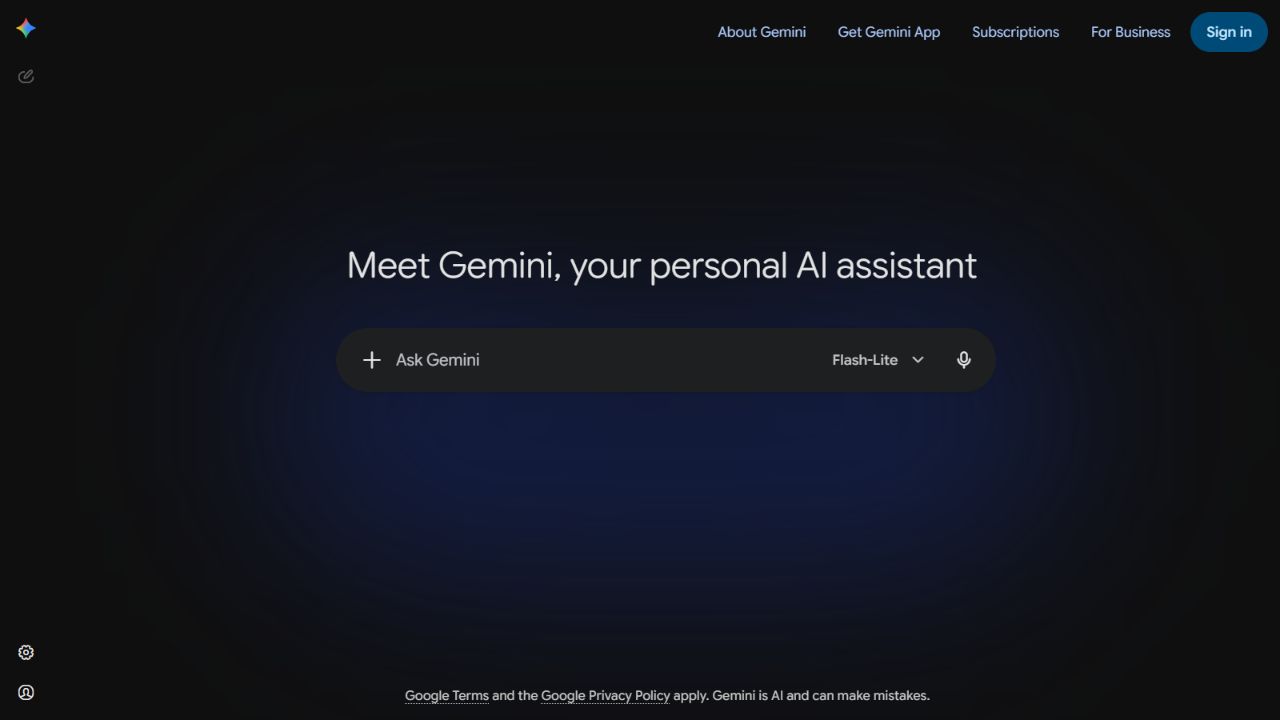
Google Gemini official product screen, captured August 30, 2026. Source: Gemini .
ChatGPT presents a general AI workspace across web and applications. Official pricing and help pages separate free and paid access and describe plan-dependent models, messages, files, analysis, voice, images, search, research, projects, tasks, GPTs, apps, and business controls.
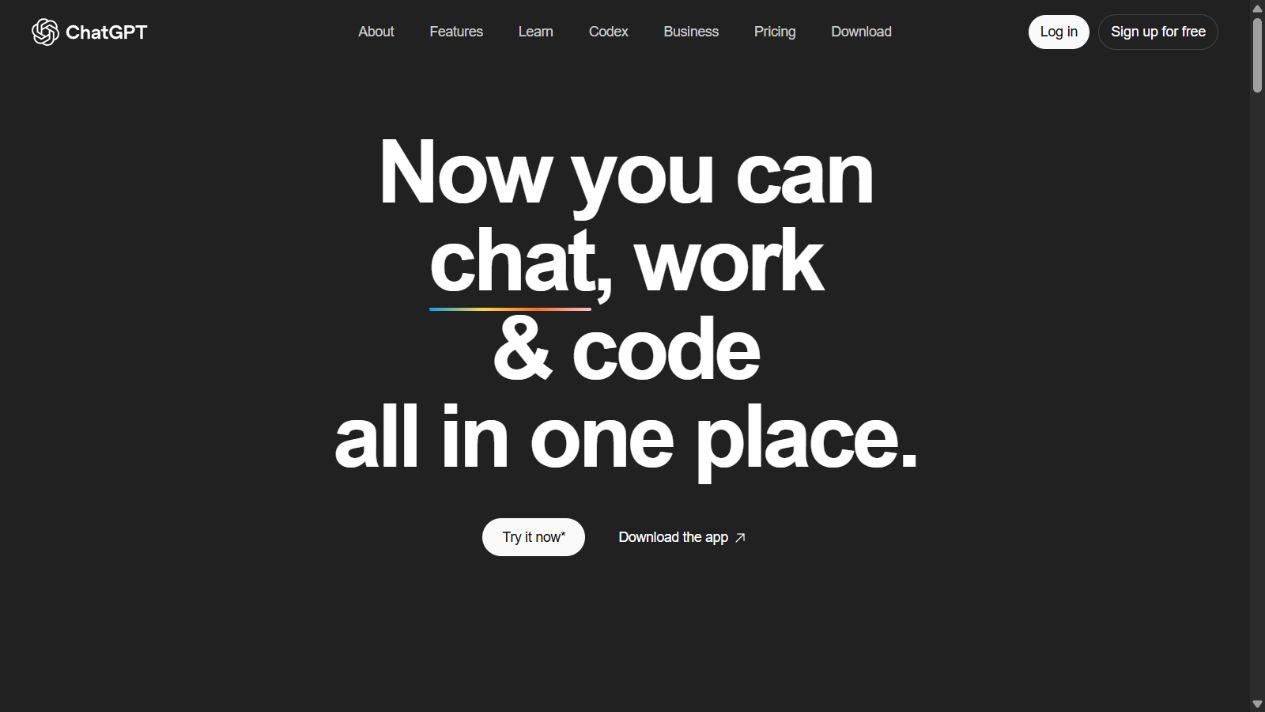
ChatGPT official homepage, captured August 15, 2026. Source: ChatGPT .
Decision: choose Gemini first when Google account context and Google-native workflows are central. Choose ChatGPT first when the assistant itself needs to become a broad workspace across several task types and external sources.
2. Writing and editorial work
Both products can generate outlines, drafts, rewrites, summaries, tables, and editorial feedback. The meaningful difference is how reliably each follows your source material and how easily the workflow supports revision.
For Gemini, test the exact Google documents, email context, Drive files, or other supported sources needed by the role. Confirm that the account and plan permit the integration and that the model cites or distinguishes supplied evidence from generated interpretation.
For ChatGPT, test projects or other supported context mechanisms, file handling, connected apps, custom instructions, and reusable GPT workflows. Do not assume a custom assistant guarantees compliance with a style guide; outputs still need editorial review.
A useful writing test includes a real brief, five primary sources, prohibited claims, a defined audience, a length range, and two revision rounds. Measure factual corrections, unsupported claims, structure, editing time, and source fidelity. Do not score only the first draft’s fluency.
Decision: there is no durable universal winner for prose quality. Gemini has a practical advantage when approved context already lives in Google. ChatGPT has a practical advantage when reusable assistant workflows and a broader tool set are more important.
3. Files, context, and analysis
Google’s official Gemini limits page publishes different context windows for standard and paid Google AI access and explains that uploads consume model context. It also lists plan-dependent tools and media features. Those published figures are useful, but a large context window does not mean every detail will be retrieved or interpreted correctly.
ChatGPT supports file uploads and data analysis with plan-dependent limits. Projects and connected applications can organize recurring context in supported plans. Business buyers should distinguish interactive ChatGPT subscriptions from API usage: OpenAI states that a ChatGPT subscription does not include API consumption.
For both products, test:
- maximum and practical file sizes;
- supported formats and image or table extraction;
- context retained across a project or conversation;
- retrieval from connected sources;
- citation and source-link behavior;
- spreadsheet calculations and reproducibility;
- export or retention requirements;
- treatment of confidential files;
- limits during realistic peak use.
Decision: Gemini deserves priority when very large, multimodal context and Google-held information define the task. ChatGPT deserves priority when the workflow combines files with data analysis, projects, custom assistants, research, and external connected apps.
4. Search and deep research
Both companies offer web-connected research experiences. These are valuable for discovering sources, comparing claims, and creating a research plan. They do not eliminate verification.
Evaluate research output by opening every material citation. Check whether the source is primary, current, and actually supports the sentence. Watch for a model combining two true facts into an unsupported conclusion. Pricing, laws, security documentation, product limits, leadership, and availability are especially time-sensitive.
Create a repeatable test: ask each product the same scoped question, require primary sources, define the date boundary, and request a separation of facts from inference. Score source quality, missing counterevidence, citation accuracy, and the time required for human verification.
Decision: do not choose on the label “deep research.” Choose the workflow that retrieves better evidence for your domain and gives reviewers a practical way to inspect it.
5. Coding and technical work
Gemini supports coding through Gemini experiences and Google’s broader developer ecosystem. ChatGPT supports coding in chat and through Codex on eligible plans and products. These capabilities evolve independently, so buyers should verify the current tool, plan, repository access, execution environment, and billing model.
A coding pilot should use a noncritical repository and include codebase navigation, a small bug fix, tests, documentation, and review. Measure whether the assistant understands local conventions, changes only intended files, explains uncertainty, runs verification, and avoids exposing secrets.
Repository access raises governance questions: who can authorize a connection, which repositories are available, whether code or prompts are retained, how external tools are invoked, and who reviews generated changes. A fast code generation demo does not answer those questions.
Decision: ChatGPT is the stronger starting point when Codex and OpenAI’s coding workflow are specifically desired. Gemini is the stronger starting point when the technical organization is standardized on Google’s AI developer ecosystem. Test both against the actual language, repository, and review process.
6. Voice, images, and multimodal creation
Gemini and ChatGPT both support multimodal input and output in eligible experiences, but feature availability, usage, quality, and policy constraints vary. Personal plans and business workspaces may not expose identical tools.
For voice, test transcription, latency, interruption, language, accessibility, retention, and whether the output can become a durable business record. For images, test prompt adherence, editing, text rendering, brand review, provenance requirements, and commercial policy. For video or advanced media, verify the current product rather than assuming inclusion from the parent subscription.
Decision: neither wins every media workflow. Use representative assets and evaluate the complete review and rights process, not only visual appeal.
7. Custom assistants, projects, and reusable workflows
Google provides Gems and other customization or agent capabilities in supported Gemini offerings. OpenAI provides custom GPTs, projects, tasks, apps, and agent or coding tools on supported ChatGPT plans. The concepts overlap, but sharing, permissions, connectors, execution, and administration differ.
Before scaling a custom assistant, document its owner, instructions, approved sources, tools, data classification, test cases, failure behavior, review frequency, and retirement process. Treat it as maintained software, not a permanent prompt.
ChatGPT can be preferable when custom GPTs and project-oriented workflows are central. Gemini can be preferable when reusable assistance must stay close to Google content and administration. In either case, confirm how a custom configuration behaves when its creator leaves and whether administrators can inspect or restrict sharing.
8. Personal plans and usage limits
Google’s help center distinguishes access without a Google AI plan from Google AI subscription tiers and publishes plan-dependent limits, context, and features. It warns that limits depend on prompt complexity and may change. Some features are restricted by country, age, account type, or experiment.
OpenAI publishes Free and paid individual ChatGPT plans, with current pricing and limits on official pages. OpenAI also states that paid plans can have usage caps and that API billing is separate. Model names and availability change, so an old pricing screenshot is not reliable procurement evidence.
Compare the plan required for the actual workflow, not the free demo. Record:
- monthly and annual cost where offered;
- message, research, image, voice, file, and coding limits;
- context and file restrictions;
- peak-period behavior;
- included storage or connected services;
- regional taxes and availability;
- whether the subscription is personal or organization managed.
Decision: price is meaningful only when paired with the required usage. A lower-cost plan that repeatedly hits a critical limit is not cheaper in practice.
9. Business privacy and administration
Consumer and business AI products must be evaluated separately. Personal settings, opt-outs, and privacy terms are not the same as organization-managed commitments.
Google business buyers should review the exact Workspace edition or Google business service, Gemini administrator controls, data protection terms, retention, app access, regional processing, and whether submitted content is used for model improvement under that offering.
OpenAI states that ChatGPT Business workspace data is excluded from training by default and encrypted at rest and in transit. Its official documentation also explains collaboration boundaries, shared links, data residency details, and differences between Business and Enterprise. Controls such as workspace-wide sharing restrictions, retention, SCIM, analytics, and regional options may depend on plan.
For either vendor, review:
- identity, multifactor authentication, SSO, and provisioning;
- administrator visibility and feature controls;
- sharing inside and outside the organization;
- retention, deletion, export, and legal obligations;
- training defaults and contractual data handling;
- data residency versus inference or safety processing;
- connectors, scopes, and third-party application terms;
- audit logs, compliance evidence, and incident procedures;
- support, service terms, and procurement requirements.
Decision: Google Workspace customers may find Gemini easier to govern within existing administration. Organizations wanting a dedicated AI workspace and OpenAI’s business controls may prefer ChatGPT Business or Enterprise. Verify the exact edition rather than relying on brand-level assurances.
10. Accuracy and human review
Both products can produce confident errors. Neither should be treated as an authoritative source. Accuracy depends on the task, model, context, source quality, and verification process.
Classify use cases by risk. Brainstorming and formatting may need light review. Public claims, financial analysis, hiring, legal, medical, security, customer communication, and production code require stronger controls and qualified reviewers. Require links to primary evidence for changing facts and retain the underlying source where auditability matters.
Do not use agreement between Gemini and ChatGPT as proof. Models can repeat the same common misconception or source. Independent verification means checking the evidence, not asking a second assistant.
Which should you choose?
Choose Gemini when:
- Gmail, Drive, Docs, Sheets, Meet, and Google administration are central;
- large mixed-media context is a frequent requirement;
- the organization prefers Google’s AI and cloud ecosystem;
- the required Gemini features are available on the actual account and plan.
Choose ChatGPT when:
- you want a broad standalone assistant across writing, files, analysis, images, voice, research, tasks, and coding;
- projects, custom GPTs, apps, or Codex are material workflows;
- the organization wants a dedicated ChatGPT Business or Enterprise workspace;
- work spans several external systems rather than primarily Google services.
Use both only when a measured pilot shows distinct value. Define which data each can receive, avoid buying duplicate seats without usage evidence, and prevent teams from building competing knowledge bases or custom assistants.
A practical evaluation process
Select 10 to 20 representative tasks from real work. Include easy and difficult examples, accepted outputs, restricted data, and failure cases. Give both products the same source package and instructions where possible.
Score:
- factual accuracy and unsupported claims;
- source retrieval and citation quality;
- instruction and style adherence;
- quality after one revision;
- time saved after human review;
- file, context, and integration reliability;
- coding or analysis reproducibility;
- user adoption and accessibility;
- security and administrator fit;
- full subscription and governance cost.
Record the model or mode, plan, date, prompt, source set, output, reviewer, and corrections. AI products change frequently; a dated evaluation is more trustworthy than a permanent ranking.
Final verdict
Gemini is the better default for users whose work and governance are deeply rooted in Google. ChatGPT is the better default for users who want a broad, extensible AI workspace and OpenAI’s combination of research, analysis, customization, media, and coding tools. The boundary is ecosystem fit, not a universal intelligence score.
Start with one high-value, low-risk workflow. Verify official plan and privacy terms, run a real pilot, measure review-adjusted value, and expand only when the assistant makes work more reliable rather than merely faster to generate.
Sources and verification notes
Official sources were reviewed on August 30, 2026. Models, limits, pricing, features, and availability can change without this article updating immediately.
- Google: Gemini , Gemini Apps limits and upgrades, Google AI plans , Gemini for Google Workspace , Google Workspace privacy
- OpenAI: ChatGPT , ChatGPT pricing , ChatGPT Plus , ChatGPT Business FAQ , Business privacy and sharing , Apps in ChatGPT
Frequently asked questions
Is Gemini better than ChatGPT?
Gemini is the stronger starting point for many users whose work already lives in Google's ecosystem or who prioritize Gemini's published context and Google integrations. ChatGPT is the stronger general-purpose choice for many users who want its combination of projects, custom GPTs, coding, data analysis, image, voice, research, tasks, and connected-app workflows. Test the same real tasks in both.
Which is better for writing, Gemini or ChatGPT?
Both can draft and revise text, but quality depends on the prompt, source context, model, and editorial review. Compare them using your real brief, style guide, source documents, citation requirements, and revision process rather than a one-prompt sample.
Which is better for Google Workspace users?
Gemini usually has the clearer ecosystem fit when Gmail, Drive, Docs, Sheets, Meet, and other Google services are central to the workflow and the required capabilities are available on the selected account and plan. Administrators should verify Workspace-specific controls and data terms.
Is Gemini or ChatGPT better for coding?
Both support coding-related work, but the surrounding workflow matters. ChatGPT offers coding and agent capabilities including Codex on eligible plans, while Google connects Gemini to its own developer products and models. Evaluate repository access, execution, review, security, and cost with representative tasks.
Can Gemini and ChatGPT browse the web?
Both provide web-connected or research experiences in supported plans and regions. Availability, limits, source handling, and depth can differ. A web-connected answer still requires checking the cited primary source, publication date, and whether the claim actually follows from it.
Are Gemini and ChatGPT safe for confidential business data?
Do not infer business protection from a consumer product. Review the exact Google Workspace or Gemini business terms and the exact ChatGPT Business or Enterprise terms, administrator controls, retention, connectors, regional processing, and training defaults before submitting confidential data.
Should a company buy both Gemini and ChatGPT?
Only when distinct workflows justify the overlap. Run a controlled pilot, define approved data, compare adoption and output quality, and calculate the full seat and administration cost. Two assistants can increase choice but also duplicate spend, governance, and support work.