HeyGen vs ChatGPT: Which Is Better?
Compare HeyGen and ChatGPT for scripts, avatar video, translation, localization, research, team workflows, consent, and governance.
Direct answer
HeyGen is better when the outcome must be a finished avatar-led, translated, localized, or studio-edited video. ChatGPT is better when video is one part of a wider workflow involving research, ideation, scripts, files, analysis, planning, images, projects, apps, coding, and general knowledge work.
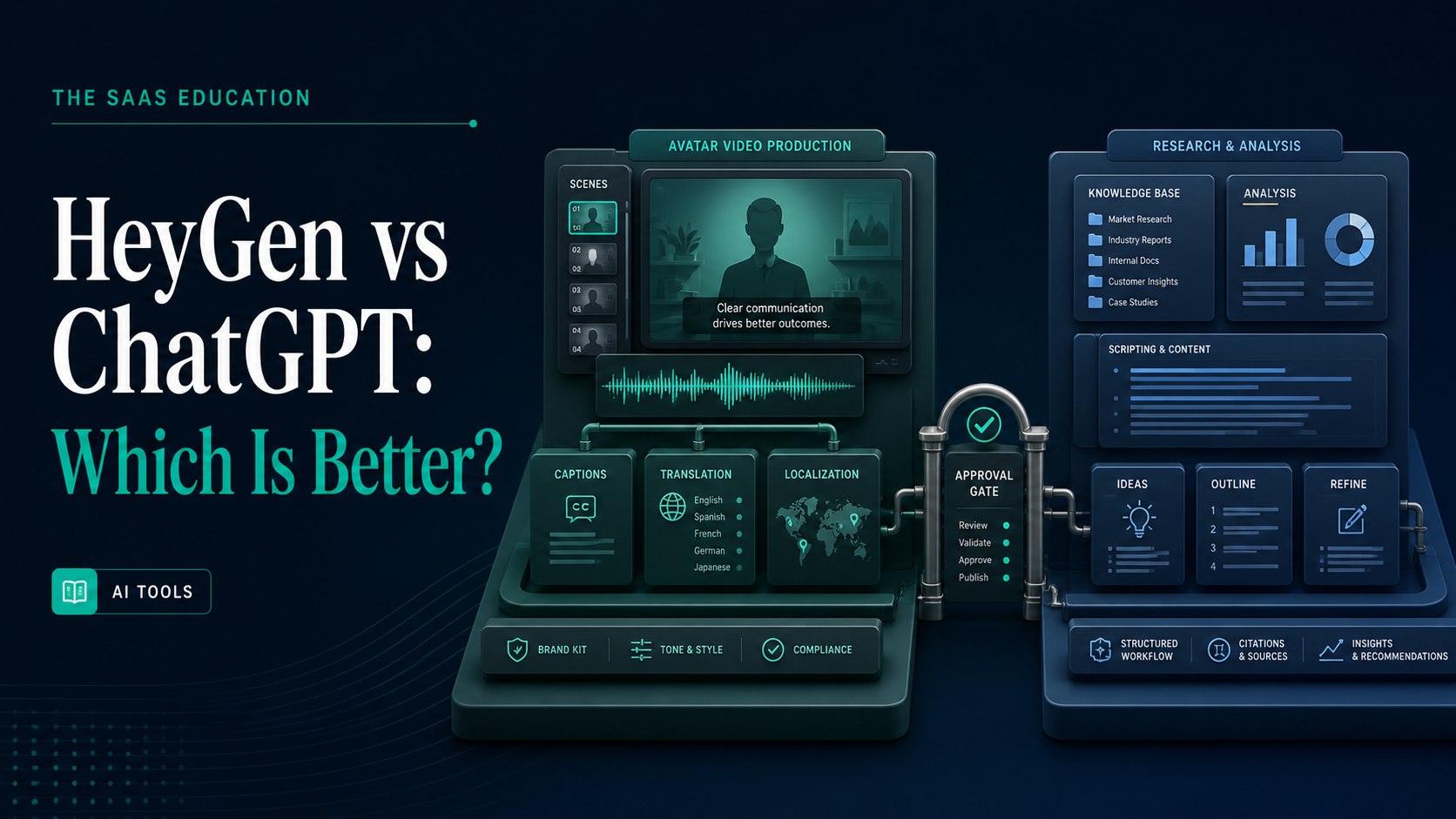
The products overlap at the beginning of a creative process but diverge at delivery. Both can help turn an idea into content. HeyGen is organized around video production: digital twins and stock avatars, Video Agent, AI Studio, voice, captions, translation, localization, templates, collaboration, and export. ChatGPT is organized around a general assistant that can develop a brief, inspect sources, draft a script, analyze files, create supporting assets, and coordinate broader work.
For an individual, the decision may be as simple as “Do I need a video?” For a business, the answer also depends on identity consent, brand control, source accuracy, accessibility, localization review, intellectual property, data handling, workspace administration, credits, integrations, and approval. This guide compares the complete governed workflow rather than judging a single generated clip.
HeyGen vs ChatGPT at a glance
| Decision area | HeyGen | ChatGPT |
|---|---|---|
| Best starting point | AI-assisted video production and localization | Research, scripting, analysis, and general knowledge work |
| Primary deliverable | Rendered and editable video workflow | Text, analysis, research, files, images, code, and plan-dependent multimodal work |
| Avatars and digital twins | Core product area | Not a replacement for HeyGen’s avatar production workflow |
| Video translation | Purpose-built translation, voice, lip-sync, and localization features | Useful for language analysis and script review; not the same finished-video workflow |
| Editing | AI Studio and plan-dependent video controls | Canvas and general content tools; video workflow differs |
| Team use | Business and Enterprise video workspaces | Business and Enterprise general AI workspaces |
| Main governance risk | Likeness, voice, consent, brand, localization, and external publishing | Source accuracy, connected data, broad feature expansion, and plan boundaries |
| Cost unit | Plans, seats, credits, duration, exports, avatars, models, and add-ons | Seats, included limits, credits or usage, models, features, and enterprise terms |
The table describes orientation, not absolute quality. Compare the exact plans available to the buyer because model, duration, output resolution, credit consumption, seats, collaboration, integrations, and enterprise controls change by plan.
How we evaluated the products
This comparison reviewed official HeyGen and OpenAI product, pricing, help, business, privacy, trust, and security material available on August 30, 2026. It did not run controlled rendering, avatar-realism, translation, model-quality, or performance tests.
We used eight criteria:
- Brief and research: sources, files, goals, audience, constraints, and evidence.
- Script workflow: structure, tone, facts, timing, scenes, revisions, and approvals.
- Production: avatars, voices, visuals, editing, captions, output, and formats.
- Localization: language, pronunciation, glossary, voice, lip-sync, captions, and reviewer correction.
- Collaboration: comments, roles, assets, versions, templates, brand, and handoffs.
- Trust and safety: identity, consent, moderation, privacy, security, and external communication.
- Administration: workspaces, billing, SSO, user management, integrations, analytics, and support.
- Economics: subscriptions, credits, seats, review, corrections, localization, publishing, and exit.
The recommendations are editorial inferences from verified scope. They are not a claim that one vendor wins an undisclosed benchmark.
1. HeyGen: best for avatar video and localization production
HeyGen presents itself as an AI video platform spanning AI avatars and digital twins, Video Agent, AI Studio, text-to-video, image-to-video, audio-to-video, presentation-to-video, voices, captions, translation, localization, and team collaboration. Its current product material emphasizes creating videos from prompts and scripts, editing them, and producing multilingual variations without a conventional camera-and-crew workflow.
That specialization is the central advantage. A training, marketing, sales, enablement, localization, or communications team can move from an approved script to an avatar-led deliverable in one production environment. The value is not merely generation speed; it is the possibility of a repeatable template, presenter, brand, language, review, and export process.
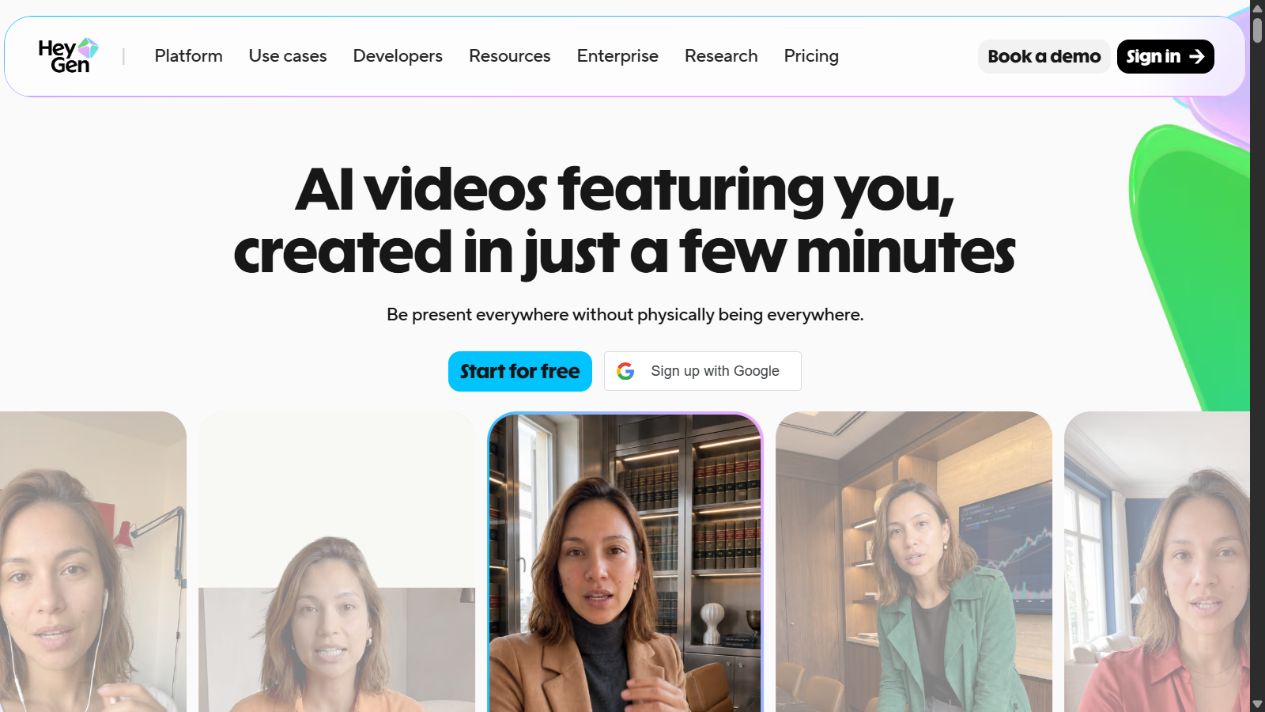
HeyGen homepage captured August 30, 2026. Avatars, models, plans, credits, and interfaces can change.
Where HeyGen fits
- Avatar-led training, onboarding, product, policy, or internal communication videos.
- Marketing and sales videos built from approved scripts and brand assets.
- Localization of existing footage or generated presenter videos.
- Presentation, text, image, or audio inputs converted into video.
- Teams needing comments, shared assets, templates, editing, and business workspace controls.
- Developers or operations teams using supported video APIs and integrations.
What buyers must verify
Map every deliverable to the current plan: video duration, resolution, processing, credits, avatars or digital twins, voice cloning, translation, advanced models, concurrency, interactive features, collaboration, seats, SSO, integrations, API, and Enterprise controls. A free or individual account is not evidence that a Business or Enterprise workflow will behave the same way.
Video credits require scenario testing. Record the cost of drafts, rerenders, corrections, language versions, aspect ratios, model choices, and failed generations. A nominal monthly plan can become unpredictable when each approved video needs multiple iterations.
HeyGen limitations
HeyGen’s strength is also its boundary. It does not replace broad research, data analysis, coding, or general-purpose knowledge work. Avatar realism does not guarantee script truth, pronunciation accuracy, cultural fit, accessibility, or audience trust. Generated footage can also create reputational harm if the likeness, voice, or message lacks clear authorization and disclosure.
2. ChatGPT: best for research, scripting, and broader content work
OpenAI presents ChatGPT as a general assistant for brainstorming, writing, research, search, files, analysis, images, projects, apps, voice, coding, and plan-dependent agentic work. For a video team, this breadth is most valuable upstream and around production: understanding source material, shaping the brief, drafting scripts, converting content into scenes, generating questions, reviewing translations, and documenting decisions.
ChatGPT can also support multimodal and video-adjacent creation where available, but buyers should not confuse the ChatGPT workspace, image generation, and Sora-related offerings with HeyGen’s avatar and localization production environment. Verify the exact OpenAI product, plan, region, interface, usage model, and business controls for the intended task.
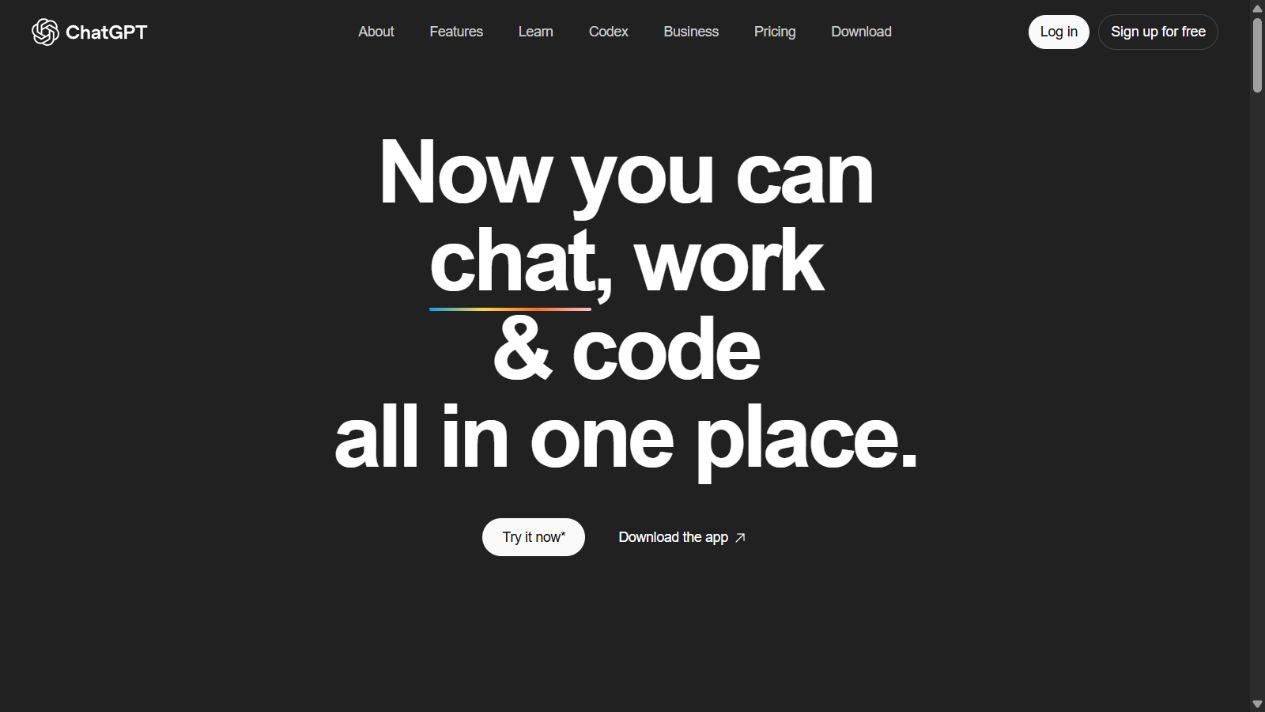
ChatGPT homepage captured August 15, 2026. Available models and tools can change.
Where ChatGPT fits
- Researching a video topic from approved web and internal sources.
- Extracting requirements and facts from files.
- Creating briefs, outlines, scripts, storyboards, shot lists, quizzes, and metadata.
- Rewriting content for audience, length, tone, channel, and accessibility.
- Reviewing terminology and translating draft scripts before native-speaker approval.
- Coordinating video work with broader campaigns, documentation, data, and code.
What buyers must verify
Separate consumer ChatGPT from Business and Enterprise workspaces. OpenAI publishes business-data commitments, administration, identity, retention, residency, connectors, support, and other plan-dependent controls. Confirm which models and features are available, how included usage and credits work, and whether connected sources preserve underlying permissions.
For video work, define what content may be uploaded: unreleased products, customer footage, employee likenesses, voice recordings, scripts, licensed assets, and confidential training material may require separate approval. “Business workspace” is not blanket permission for every data class.
ChatGPT limitations
ChatGPT can produce fluent scripts containing invented or outdated details. It may also flatten brand voice, miss visual continuity, or translate terminology literally. Every factual, legal, safety, policy, product, and customer claim needs source review. A good script is not a finished accessible video, and ChatGPT does not eliminate production, consent, localization, or publishing controls.
Script and research workflow
ChatGPT is the stronger first tool when a video begins with fragmented source material. A team can provide an approved source pack, ask for a claim table, identify missing evidence, develop a narrative, and create script versions. HeyGen can then turn an approved script into scenes and a presenter-led output.
The handoff must be explicit. Freeze a source-bound script containing:
- the approved claims and source links;
- spoken text and on-screen text;
- pronunciation notes and protected terminology;
- scene purpose, visual direction, and timing;
- required captions, description, and disclosures;
- approved presenter, voice, language, brand, and channel;
- owner, reviewer, version, and expiry date.
Do not ask either platform to “make a video about our product” without evidence and constraints. The model may fill gaps with plausible marketing language that creates unsupported promises.
Avatars, voice, and identity consent
HeyGen publishes identity-verification and trust controls for custom avatars. Organizations still need their own consent lifecycle. Obtain documented authorization for capture, cloning, use cases, languages, channels, territories, duration, editing, and reuse. Explain whether a presenter can withdraw consent and how existing published material will be handled.
Restrict who can create, access, edit, export, and publish a digital twin or cloned voice. Maintain an asset registry with the person, owner, purpose, consent evidence, approved templates, last review, and revocation status. Immediately remove access when a person changes roles, leaves, or withdraws permission.
Never use a person’s likeness to imply they said, endorsed, or experienced something they did not approve. Consider disclosure that content is AI-generated or uses an avatar, based on law, policy, platform rules, audience expectation, and risk.
Translation and localization
HeyGen’s purpose-built video translation, voice, lip-sync, captions, and multilingual production make it the stronger finished-localization candidate. ChatGPT can help build glossaries, analyze text, propose translations, and explain alternatives. Neither replaces qualified local review.
Use native or domain-qualified reviewers to check facts, terminology, names, numbers, pronunciation, tone, cultural context, legal notices, on-screen text, timing, captions, and visual appropriateness. Preserve the approved source script and map each language version to it. When the source changes, identify every affected language rather than editing one export manually.
Test sensitive terms and edge cases before scaling. Product names, acronyms, medical or legal language, currencies, dates, units, gender, formality, and regional variants often require explicit rules. Measure correction rate by language and content type.
Accessibility and audience trust
Generated captions are a starting point, not acceptance evidence. Review punctuation, speaker identification, sound cues, timing, reading speed, and terminology. Provide transcripts and audio description where required. Ensure on-screen text has sufficient contrast, size, duration, and a reading order that survives mobile playback.
Avoid presenter visuals that distract from or misrepresent the content. For training, test comprehension and task performance, not only watch time. For external communication, evaluate whether an avatar strengthens clarity or reduces trust for that audience. Some messages should be delivered by a real accountable person.
Business security and administration
HeyGen’s current pricing and Enterprise material describe plan-dependent collaboration, team management, centralized billing, SSO, integrations, and enterprise options. Its trust material discusses identity, moderation, security, privacy, and compliance. OpenAI separately documents managed ChatGPT Business and Enterprise workspaces, identity, administration, business-data practices, retention, residency, connectors, and support.
Build a matched control matrix for:
- Contracting entity, service, plan, and region.
- Training and product-improvement defaults.
- Likeness, voice, source footage, and generated-asset ownership or licences.
- Retention, deletion, exports, backups, and legal hold.
- SSO, provisioning, roles, MFA, domains, and privileged administrators.
- Workspace sharing, templates, assets, links, APIs, and integrations.
- Audit events, analytics, incidents, moderation, and support.
- Subprocessors, residency, transfer, encryption, and compliance evidence.
- Publishing, disclosure, consent, revocation, and removal procedures.
- Exit, asset portability, connector revocation, and deletion verification.
Test controls with real roles and sample assets. Suspend a user, revoke an avatar, remove a source file, rotate an integration credential, and verify what remains accessible or publishable.
Pricing and total cost
HeyGen uses plan, seat, credit, duration, model, export, avatar, collaboration, and enterprise packaging. ChatGPT uses plan, seat, included limits, credits or usage, features, and sales-led Enterprise terms. Exact prices can change, so this comparison does not freeze them.
Calculate:
subscriptions + seats + credits + rerenders + languages + review + integrations + administration + security + consent + accessibility + publishing + storage + support + migration + exit
For HeyGen, model a representative monthly video slate with draft and correction iterations. For ChatGPT, include research and scripting usage plus human source review. If using both, count workflow administration and duplicated storage or assets. Compare cost per approved, accessible, publishable video—not cost per generation.
Which product should you choose?
Choose HeyGen when the main outcome is scalable avatar video, AI Studio production, video translation, localization, presentation-to-video, or related team workflows. It is the specialist production choice.
Choose ChatGPT when the main need is research, source analysis, scripting, planning, files, images, data, coding, or broad content work. It is the stronger general assistant.
Choose both when the measured process uses ChatGPT for source-bound research and scripts, then HeyGen for governed production and localization. Define a formal handoff and avoid generating unapproved claims in either system.
Choose neither yet when the team lacks source ownership, brand rules, consent, localization review, accessibility checks, publishing approval, or measurable demand. Automation scales weak process as efficiently as strong process.
A six-week pilot
Week 1: define deliverables
Select representative training, marketing, sales, and localization videos. Prepare approved source packs, brand rules, consent, accessibility standards, languages, reviewers, and acceptance metrics.
Week 2: research and scripts
Use the same brief to develop scripts. Record factual corrections, source repairs, tone edits, timing changes, and reviewer effort. Freeze approved versions.
Week 3: production
Create videos with representative avatars, voices, templates, captions, visuals, and exports. Record credits, render time, failed outputs, edits, and production effort.
Week 4: localization and accessibility
Produce selected language versions. Run native review, pronunciation, glossary, captions, transcript, contrast, mobile, and comprehension checks.
Week 5: administration and risk
Test workspace roles, SSO, assets, sharing, integrations, audit evidence, consent revocation, incident response, user suspension, exports, and deletion.
Week 6: economics and decision
Calculate cost per approved video and by language. Review unresolved risks, adoption, and duplicated tools. Approve specific workflows with owners and renewal gates.
Common mistakes
Comparing a script with a finished video
ChatGPT text and a HeyGen export are different stages. Compare the complete outcome and labour.
Using an avatar without durable consent
A technically possible digital twin is not automatically authorized. Preserve consent and revocation evidence.
Skipping native localization review
Lip-sync can look polished while terminology or meaning is wrong. Use qualified reviewers.
Treating captions as accessibility
Accessibility also includes transcripts, description, visual clarity, keyboard/player support, and comprehension.
Ignoring rerender economics
Minor script changes can affect credits, languages, approvals, and publishing. Model iteration, not only first generation.
Publishing directly from AI output
Require factual, brand, legal, safety, consent, accessibility, and channel approval before release.
Final recommendation
HeyGen is better for finished AI avatar video and localization. ChatGPT is better for research, scripting, analysis, and broad content work.
For many organizations the best architecture is sequential: ChatGPT supports evidence and script development, while HeyGen produces an approved video. That workflow succeeds only when sources, consent, brand, accessibility, localization, review, credits, and publishing are governed end to end.
Sources
Frequently asked questions
Is HeyGen better than ChatGPT?
HeyGen is better when the required deliverable is an avatar-led, translated, localized, or studio-edited video. ChatGPT is better when the main work is research, ideation, scripting, files, analysis, planning, images, coding, or broader knowledge work. Many teams may use ChatGPT upstream and HeyGen for governed video production.
Can ChatGPT replace HeyGen for AI video?
ChatGPT can help research, plan, script, review, and create supporting assets, but it does not reproduce HeyGen's complete avatar, digital twin, AI Studio, video translation, lip-sync, localization, and team video-production workflow. Verify current ChatGPT and Sora availability separately.
Can HeyGen replace ChatGPT?
HeyGen can handle substantial video ideation, scripting, generation, editing, avatar, and translation work, but it is a specialist video platform. It does not replace ChatGPT's wider research, file analysis, data analysis, projects, apps, coding, and general-purpose assistant scope.
Which is better for training videos?
HeyGen is the stronger production candidate for avatar-led training, presentation-to-video, captions, translation, SCORM and LMS-related workflows where supported. ChatGPT is useful for source analysis, learning objectives, scripts, quizzes, and review. Validate accessibility, factual accuracy, consent, brand, and learning outcomes.
Which is better for video translation?
HeyGen publishes purpose-built video translation and localization capabilities including voice and lip-sync workflows. ChatGPT can assist with translation and terminology review, but buyers seeking a finished localized video should test HeyGen's exact plan, languages, glossary controls, output quality, and reviewer workflow.
Is HeyGen safe for creating digital twins?
HeyGen publishes identity-verification, moderation, security, privacy, and trust material, but organizations still need documented consent, purpose, approved scripts, access, retention, revocation, incident, and removal procedures. Do not create or reuse a person's likeness without valid authorization.
Should a company subscribe to both HeyGen and ChatGPT?
Only when measured workflows are distinct. ChatGPT can support research and scripting while HeyGen produces governed video, but overlapping ideation and generation can duplicate cost. Pilot the complete workflow and measure approved videos, corrections, localization review, production time, credits, and governance effort.