Leonardo AI vs ChatGPT: Which Is Better?
Compare Leonardo AI and ChatGPT for image creation, editing, ideation, model control, team workflows, pricing, privacy, and production use.
Direct answer
Leonardo AI is better for creators and production teams that want a dedicated visual workspace with model choice, presets, generation controls, editing, asset organization, team options, and API access. ChatGPT is better when image work is part of a broader conversational process involving research, concept development, writing, file analysis, feedback, and repeated natural-language revisions.
Neither product is universally better at “image quality.” That claim requires a controlled test using the same brief, references, aspect ratio, revision budget, evaluation rubric, and current model versions. This comparison does not pretend that official feature pages prove output superiority.
Choose based on workflow. A concept artist producing many visual directions may value Leonardo’s dedicated controls and model catalog. A marketer turning a research document into campaign concepts, copy, and images may value ChatGPT’s broader context. Some teams can use ChatGPT upstream and Leonardo downstream, but only if the handoff improves accepted output enough to justify another tool and governance layer.
Leonardo AI vs ChatGPT at a glance
| Requirement | Leonardo AI | ChatGPT |
|---|---|---|
| Primary identity | Creator-first image, video, design, motion, and API platform | General AI assistant with image creation and editing |
| Best fit | Dedicated visual exploration and production | Conversation-led, multimodal knowledge and creative work |
| Interaction model | Visual controls, presets, model selection, generation settings, editing | Natural-language conversation, uploaded references, iterative instructions |
| Model strategy | Official catalog presents multiple image and video models | ChatGPT Images is integrated into the ChatGPT experience |
| Broader work | Centered on visual creation | Research, writing, analysis, files, coding, images, and other assistant tasks |
| Team buying question | Do visual controls and throughput improve accepted assets? | Does one assistant reduce handoffs across the whole campaign workflow? |
| Cost question | How many tokens and revisions does an accepted asset consume? | Is image use sufficient within the broader subscription and its limits? |
What first-page comparisons often miss
Search results tend to rank tools by attractive examples, prompt adherence, speed, ease of use, styles, editing, and subscription price. Those categories are useful, but screenshots from unrelated prompts cannot establish which product will perform better for a particular team.
The real unit of value is not an image generated. It is an accepted deliverable produced with lawful inputs, predictable review effort, usable dimensions, correct text, stable identity, required brand details, and an editable downstream path. A tool can generate impressive one-off art while performing poorly on a six-asset campaign that must preserve the same product, character, typography, and layout.
Cost comparisons also fail when they divide a monthly fee by the maximum number of outputs. Teams pay for discarded generations, revisions, human review, retouching, upscaling, background cleanup, approvals, storage, and recreation when a model changes. ChatGPT also bundles non-image work, so its subscription cannot be compared fairly with a dedicated creative platform by image limits alone.
Our comparison therefore focuses on operating fit, control, context, team governance, realistic economics, and a reproducible pilot.
How we compared the tools
We evaluated documented capabilities against ten decision areas:
- Brief development: turning goals, audience, claims, brand rules, references, and deliverables into a usable specification.
- Generation control: models, presets, dimensions, references, style, composition, typography, variation, and repeatability.
- Editing: local changes, background work, identity preservation, layout, text, expansion, and revision continuity.
- Workflow breadth: research, copy, analysis, video, design, motion, file use, and handoff to downstream tools.
- Asset operations: collections, versions, naming, privacy, sharing, approvals, retention, and retrieval.
- Team administration: seats, roles, shared resources, identity, permissions, audit, onboarding, and offboarding.
- API and automation: production access, metering, limits, observability, retries, moderation, and rights.
- Safety and rights: policies, source assets, likeness, trademarks, provenance, disclosure, and human review.
- Economics: subscriptions, tokens, limits, revisions, review, retouching, storage, administration, and waste.
- Resilience: export, model changes, prompt records, reproducibility, fallback tools, and continuity.
Leonardo AI: dedicated visual production
Leonardo describes itself as a creator-first generative platform spanning image, video, design, motion, and production API use. Its official model catalog presents multiple model choices, while pricing differentiates tokens, private creations, collections, quality settings, personal models, simultaneous generations, queues, relaxed generation, and team seats.
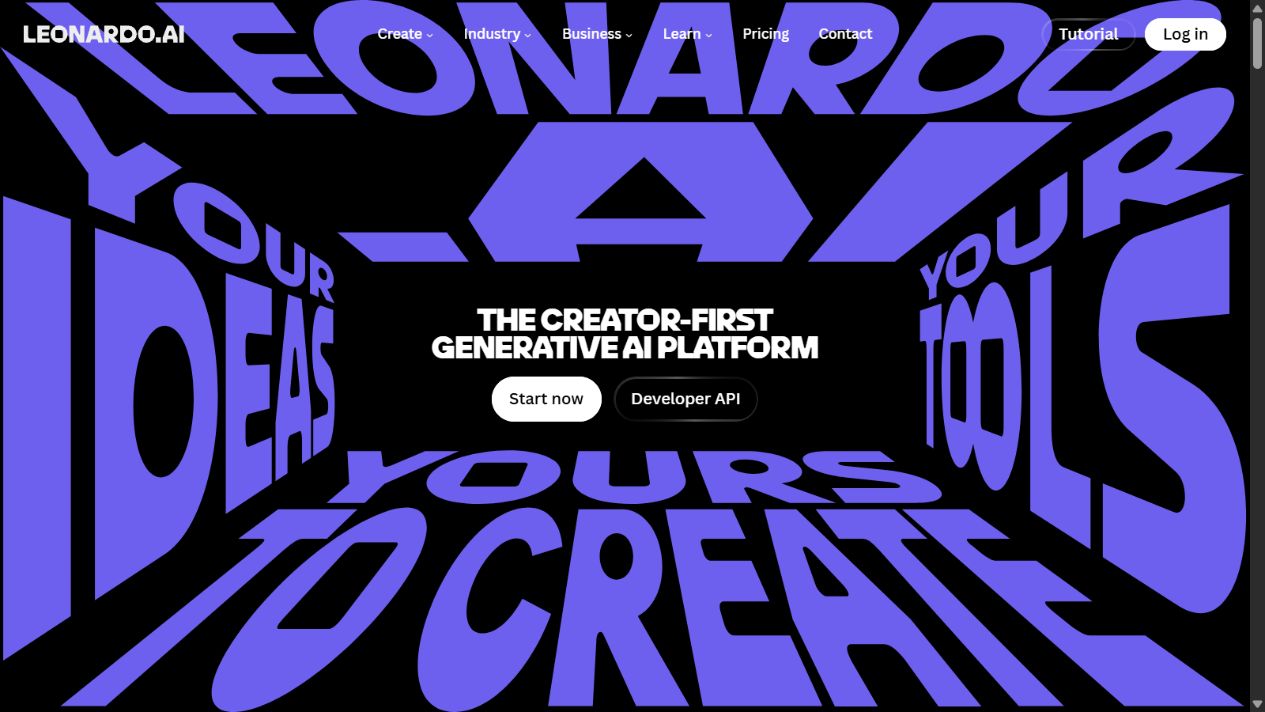
Leonardo AI homepage captured September 3, 2026. Verify current models, tokens, privacy, generation rights, team features, and API terms before purchase.
Leonardo’s advantage is specialization. A dedicated visual interface can expose choices that would be cumbersome to express repeatedly in conversation. Creators can explore models and settings, organize outputs, and remain in an environment designed around visual iteration rather than general knowledge work.
Where Leonardo AI fits best
- Concept art, mood boards, marketing visuals, game assets, product directions, and visual exploration are frequent tasks.
- Creators want to compare models and use generation-specific controls.
- The team needs a workspace centered on assets rather than conversations.
- Private creation and shared team production are explicit buying requirements.
- Developers need a production image or video API with usage-based economics.
Leonardo AI strengths
Dedicated control surface: The platform is organized around visual creation. Model choice, presets, settings, references, and output management are primary interactions rather than secondary features in a general assistant.
Multiple model options: Leonardo’s official catalog provides access to different image and video models. That can help a team match a model to typography, realism, style, editing, speed, or video needs, though it also increases testing and governance.
Creator and team paths: Published plans cover individual and team use with different allowances and rights. A creative department can evaluate shared tokens and production workflows rather than forcing every user into an isolated consumer account.
Production API: Leonardo documents API access and current pay-as-you-go mechanics. This matters when generation must be embedded in a product or automated pipeline rather than performed manually.
Leonardo AI limitations to test
Token economics are not intuitive until a team measures its own workflow. Different models, sizes, features, and output counts can consume different amounts. A generous headline allowance may be small when a complex asset needs many attempts.
Model breadth creates choice but also operational drift. If creators choose models and settings independently, campaign consistency can suffer. Teams need approved model profiles, prompt templates, reference standards, naming, and review rules.
Private creation, relaxed generation, simultaneous jobs, queues, training, and team rights are plan dependent. Procurement should map every required behavior to the exact offered plan instead of assuming it is universal.
Sources: Leonardo AI , Leonardo models , Leonardo pricing , Leonardo for Teams , and Leonardo documentation .
ChatGPT: conversational, multimodal creative work
ChatGPT is a general assistant rather than a dedicated image studio. Official documentation says ChatGPT Images can create and edit images through conversation and uploaded inputs. The wider product also supports writing, research, file analysis, coding, and other workflows depending on plan and availability.
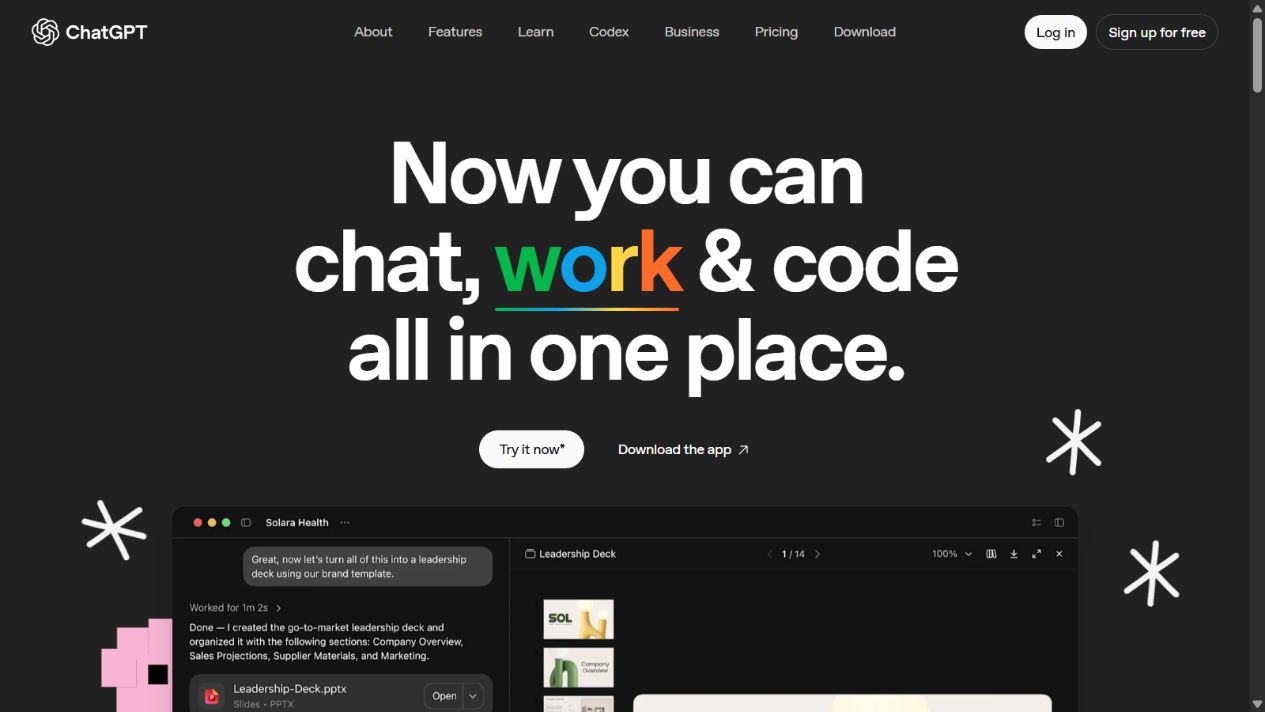
ChatGPT homepage captured September 3, 2026. Confirm current plan limits, image modes, workspace controls, data treatment, and API separation.
ChatGPT’s advantage is context. A user can develop a brief, analyze source material, challenge assumptions, write copy, generate an image, critique it, and request edits in one conversation. That can reduce translation loss between planning and execution.
Where ChatGPT fits best
- Visual work begins with research, documents, positioning, copy, or structured reasoning.
- Non-designers prefer to describe and revise outcomes conversationally.
- The same users need an assistant for many tasks beyond images.
- Teams want to turn source files and business context into creative directions.
- Iterative natural-language editing matters more than exposing many generation controls.
ChatGPT strengths
Brief-to-output continuity: Context from the conversation can inform the image request. A team can refine audience, message, constraints, and copy before asking for the visual.
Natural-language iteration: Users can request targeted changes without translating every adjustment into a specialized control. This is useful for stakeholders who can evaluate a design but do not operate a visual generation interface.
Broader assistant value: Image generation is one capability inside a larger subscription. The same workspace may help with research, campaign planning, variants, alt text, documentation, data analysis, and implementation support.
Multimodal review: Uploaded images and files can become part of the conversation. The practical value is the ability to discuss what should change and why, not merely generate another variation.
ChatGPT limitations to test
A conversational interface may expose less direct control than a dedicated visual tool for users who want to select models, tune generation settings, compare batches, or manage large asset libraries. Teams should test whether natural-language control is efficient for their highest-volume work.
Plan limits and availability can change, and ChatGPT subscriptions do not include API usage. A team planning automated production must evaluate the OpenAI API separately, including model availability, token or image pricing, rate limits, safety behavior, and engineering cost.
Conversation history is not a complete digital-asset-management system. Define how approved prompts, references, outputs, licences, versions, and final files move into the organization’s authoritative repository.
Sources: ChatGPT overview, Images in ChatGPT , ChatGPT pricing , and OpenAI image generation API .
Image generation and prompt control
Leonardo should be prioritized when trained creators want a visual workbench. Its dedicated interface and model catalog can make structured exploration faster: select a model, establish dimensions and settings, compare outputs, organize candidates, and move into editing.
ChatGPT should be prioritized when the prompt itself needs reasoning. It can help convert an incomplete request into a production brief, ask what is missing, identify contradictions, and preserve decisions through follow-up messages. That can be more valuable than another technical setting when the real problem is unclear direction.
Do not evaluate either with one spectacular prompt. Use a test set covering photorealism, illustration, product composition, typography, reference fidelity, layout, diverse people, difficult materials, and brand constraints. Score first-pass quality and quality after a fixed revision budget.
Editing and consistency
Editing tests should use real failure modes: change only one object, preserve a face, replace text exactly, maintain product geometry, expand a background, adjust lighting, create a new aspect ratio, and produce a coordinated series.
Leonardo’s visual workflow may be more comfortable for creators managing variants and generation controls. ChatGPT’s conversation may be more comfortable for stakeholders describing intent and reviewing iterations. Neither documented interface proves reliable local editing or identity consistency for a particular asset.
Record how often an edit changes something that was supposed to remain fixed. Measure time to acceptable output, not merely whether an edit command exists. Preserve source images, prompts, settings, model name, date, and selected output so a team can investigate regressions.
Pricing and real cost
Leonardo publishes free and paid individual plans as well as team and API paths. Its plan table uses fast tokens and bank capacity, with plan-dependent privacy, collections, personal models, simultaneous generations, queues, relaxed generation, and team allowances.
ChatGPT publishes free and paid subscriptions with different image access and broader assistant capabilities. API usage is billed separately. Because the bundle includes non-image tasks, a fair comparison must allocate value across the work a team actually performs.
Use this formula:
Monthly production cost = subscription and usage + discarded generations + human review + retouching + downstream tools + storage + administration + compliance work.
Then divide by accepted deliverables, not generated files. Run low, expected, and high-revision scenarios. Include campaign peaks, queue delays, additional seats, private-generation requirements, and annual commitment.
Teams, privacy, and governance
For both products, validate the exact business or team offering rather than relying on consumer experience. Review identity management, roles, shared assets, workspace ownership, deletion, retention, training settings, support, incident response, and export.
Create an approved-input policy. Sensitive customer data, unreleased products, employee information, confidential designs, licensed images, and client materials should not enter a tool merely because generation is convenient. Match the policy to contracts and actual product controls.
Generated output still needs review for trademarks, copyrighted characters, misleading claims, harmful stereotypes, likeness, factual errors, and required disclosure. Store the brief, source rights, reviewers, final approval, and any edits with the accepted asset.
API and automation
Leonardo’s documented production API is aligned with applications that need programmatic visual generation through its platform. ChatGPT subscription access must not be confused with OpenAI API access; an automated OpenAI workflow is a separate technical and commercial decision.
An API proof of concept should test authentication, secrets, retries, idempotency, timeouts, rate limits, moderation, failed generations, cost telemetry, metadata, storage, deletion, and human approval. Do not let generated media publish directly because a happy-path demo succeeded.
Pin model identifiers and log parameters where supported. Build a regression set and review it before model migrations. Maintain a fallback process for outages, policy changes, or quality regressions.
Which tool should you choose?
Choose Leonardo AI when
- Visual generation is a core production activity.
- Creators want model choice and dedicated controls.
- The organization needs a visual asset workspace and team plan.
- High-volume exploration and structured variants matter.
- Leonardo’s API and model catalog fit the production architecture.
Choose ChatGPT when
- Images are one part of a research, writing, analysis, and planning workflow.
- Users prefer conversational iteration.
- Source documents and broader business context should shape the brief.
- One assistant can remove handoffs across several knowledge tasks.
- The team values critique and explanation alongside generation.
Use both when
ChatGPT materially improves briefs, copy, critique, or stakeholder alignment, while Leonardo materially improves visual control, throughput, or production organization. Define the handoff and repository. Avoid using both simply because each subscription appears affordable.
Run a controlled comparison pilot
Create ten representative briefs and lock the inputs. Include exact dimensions, audience, visual hierarchy, prohibited elements, source images, required text, brand colors, and acceptance criteria. Give each tool the same initial information and the same number of revisions.
Score prompt adherence, composition, typography, identity, reference fidelity, edit precision, series consistency, speed, review time, retouching time, accessibility, policy flags, and cost. Ask reviewers to score outputs without seeing which tool produced them where practical.
Test a complete workflow, not only generation. Begin with a messy stakeholder request and finish with an approved, named, stored, documented asset. Include rejection, revision, handoff, export, and deletion. Measure where context or quality is lost.
Repeat a subset after several days to evaluate reproducibility. Model-backed products change, so record the date and available model. A winner based on one version should not become a permanent standard without periodic review.
Final verdict
Choose Leonardo AI for a dedicated visual-production environment with model choice, creator controls, asset-oriented workflows, team options, and API access. Choose ChatGPT for conversational visual creation embedded in broader research, writing, analysis, and multimodal work.
For a creative department, Leonardo is the stronger specialist starting point. For a cross-functional team that makes images occasionally while doing substantial knowledge work, ChatGPT is the stronger general starting point. For mature production, a combined workflow may win, but only when measured accepted-output quality and speed justify the added cost and governance.
Frequently asked questions
Is Leonardo AI better than ChatGPT?
Leonardo is better for dedicated visual control and production; ChatGPT is better for conversation-led, multimodal work. Test both against the same representative briefs before standardizing.
Which is better for AI image editing?
Both support editing workflows. Leonardo offers a visual creation environment, while ChatGPT emphasizes natural-language iteration. Test local changes, text, identity, layout, and reference preservation directly.
Which is cheaper?
It depends on accepted output. Leonardo uses plan and token mechanics; ChatGPT bundles images with broader capabilities. Include revisions, discarded outputs, review, and retouching.
Can businesses use the images commercially?
Review current terms and each input’s rights. Generated output can still create copyright, trademark, likeness, privacy, or misleading-content risk. Obtain appropriate legal guidance for consequential uses.
Which tool is better for teams?
Leonardo fits visual-production teams; ChatGPT fits teams sharing a broader assistant. Validate administration, privacy, shared assets, roles, retention, support, and approval workflows in the exact plan.
Which provides more creative control?
Leonardo exposes more dedicated visual choices, while ChatGPT provides conversational control. Practical control is the ability to reach and revise an accepted output predictably, so measure it with your own briefs.
Should a team use both?
Use both when ChatGPT improves planning and critique while Leonardo improves visual production enough to offset another subscription, handoff, and governance layer. Otherwise, standardize on the better-fit primary workflow.
Frequently asked questions
Is Leonardo AI better than ChatGPT?
Leonardo AI is better for a dedicated visual-production workspace with model choice, presets, generation controls, asset organization, and creator workflows. ChatGPT is better when visual work begins with conversation, research, writing, file analysis, and iterative multimodal reasoning.
Which is better for AI image editing?
Both document image editing. The better option depends on the edit: Leonardo suits creators wanting a dedicated visual interface and model controls, while ChatGPT suits natural-language revision in a continuing conversation. Test identity preservation, typography, layout, and local edits with your own assets.
Which is cheaper, Leonardo AI or ChatGPT?
There is no universal cheaper option because their units and bundles differ. Leonardo plans use tokens and plan-specific generation rights, while ChatGPT subscriptions bundle image generation with a broader assistant. Compare cost per accepted deliverable under a realistic revision loop.
Can businesses use Leonardo AI and ChatGPT images commercially?
Do not infer commercial clearance from a generated output. Review current terms, plan rights, privacy settings, source assets, trademarks, likenesses, client agreements, and jurisdiction-specific law. Maintain human review and provenance records.
Which tool is better for teams?
Leonardo deserves priority for teams centered on visual asset production. ChatGPT deserves priority when the same workspace must support research, writing, analysis, coding, and images. Validate roles, shared assets, administration, data treatment, retention, and approval workflows.
Which tool gives more creative control?
Leonardo documents a broader dedicated visual control surface and multiple model choices. ChatGPT offers strong conversational control and iterative instruction. Practical control still depends on whether the tool can reproduce your required composition, identity, typography, and edit reliably.
Should a creative team use both Leonardo AI and ChatGPT?
A combined workflow can make sense: ChatGPT for brief development, research, copy, and critique, and Leonardo for controlled visual exploration and production. Use both only when the quality or throughput gain exceeds added subscriptions, governance, handoffs, and asset duplication.