Murf vs ChatGPT: Which Is Better?
Compare Murf and ChatGPT for voice production, conversational voice, writing, research, editing, collaboration, pricing, governance, and business fit.
Direct answer
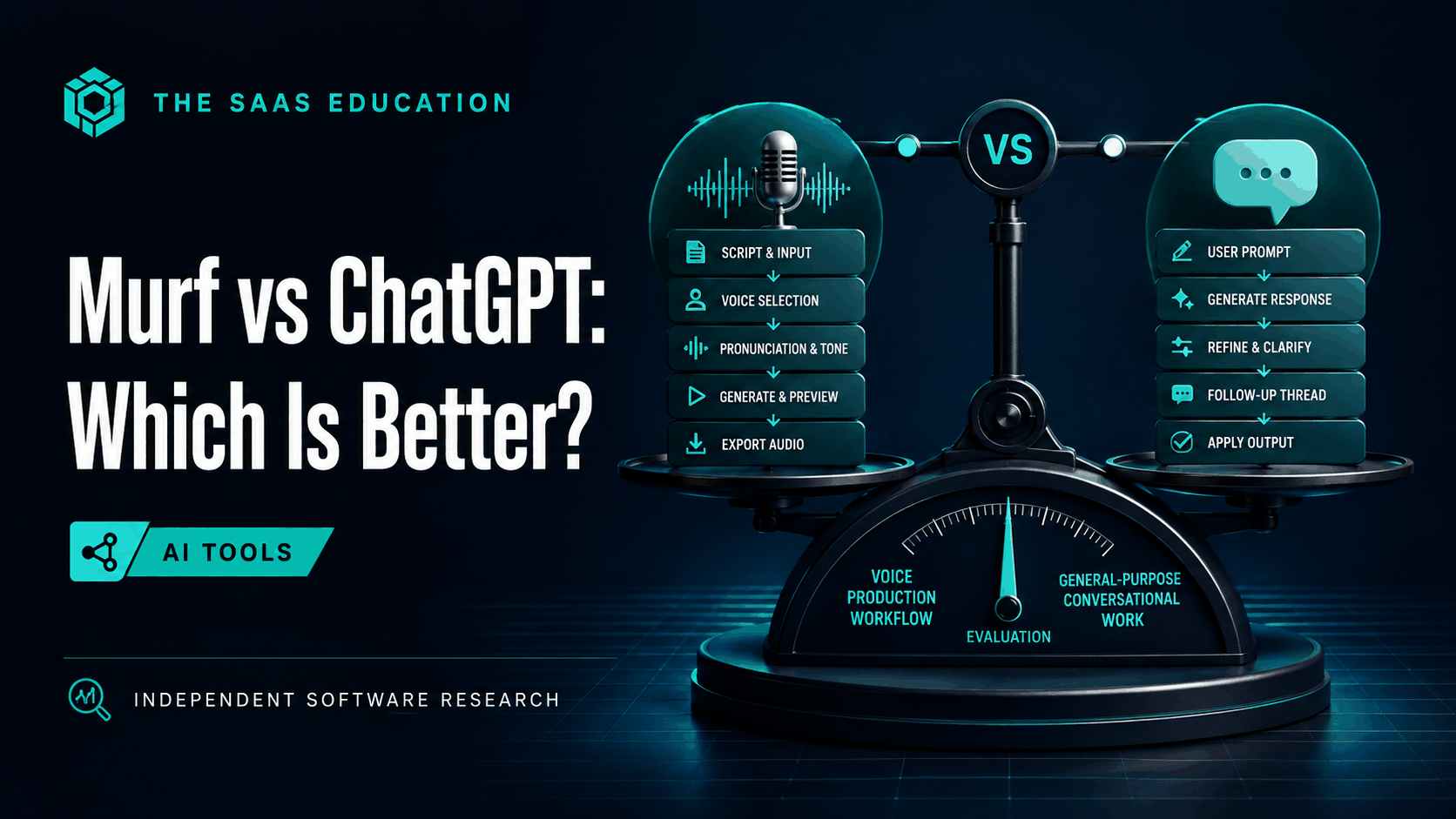
Murf is the better choice when the main job is producing controlled, downloadable AI voiceovers. ChatGPT is the better choice when the main job is research, writing, analysis, planning, files, coding, images, or general conversational assistance. They overlap around speech and content creation, but they are not direct substitutes.
Murf Studio is built around turning scripts into voice content. Its official documentation describes AI voices, language and accent choices, pitch and speed controls, pronunciation editing, emotional delivery, project organization, visuals, music, dubbing, translation, cloning options, and exports depending on plan. ChatGPT is a general AI workspace whose voice mode is one part of a much wider product.
For many content teams, the practical answer is not one or the other. ChatGPT can help research an audience, organize evidence, draft a script, identify unclear passages, and produce alternatives. Murf can then provide the specialist voice-production environment. This division only works when humans approve facts, rights, pronunciation, tone, and the final asset.
Murf vs ChatGPT at a glance
| Decision area | Murf | ChatGPT |
|---|---|---|
| Primary purpose | AI voice production, dubbing, translation, voice agents, and APIs | General conversational and knowledge-work assistant |
| Typical input | Approved script, voice direction, pronunciations, media | Questions, instructions, files, images, data, and conversation |
| Typical output | Rendered voiceover or voice-enabled production | Text, analysis, plans, code, images, research, and voice interaction |
| Voice control | Purpose-built selection and delivery controls | Conversational voice experience; capabilities depend on plan and current product |
| Editing model | Project and timeline-oriented voice production | Iterative conversation and workspace tools |
| Research | Not the core Studio job | Search and Deep Research are documented capabilities |
| Collaboration | Workspace and enterprise capabilities vary by plan | Individual, Business, and Enterprise collaboration and administration vary by plan |
| Best fit | Learning, media, marketing, product demo, localization, and voice teams | Individuals and teams needing one broad AI assistant |
How we compared Murf and ChatGPT
We checked live search results to understand the comparison intent, then used official Murf and OpenAI product, help, pricing, privacy, and security sources for factual claims. We did not run a controlled listening panel, latency test, transcription benchmark, or production project. Therefore, this article does not claim that either service has universally better voice quality, accuracy, emotion, or speed.
The evaluation focuses on six questions:
- What final deliverable must the team produce?
- How much control is required over wording, pronunciation, timing, tone, and export?
- Does the workflow begin with research or with an approved script?
- Which people create, review, approve, publish, and archive the work?
- What data, voice, identity, licensing, and disclosure rules apply?
- What is the total cost per accepted output rather than the advertised monthly fee?
Murf: best for structured AI voice production
Murf’s homepage now presents a wider voice platform spanning content creation, APIs, and conversational agents. Murf Studio remains the relevant surface for teams producing voiceovers from scripts.
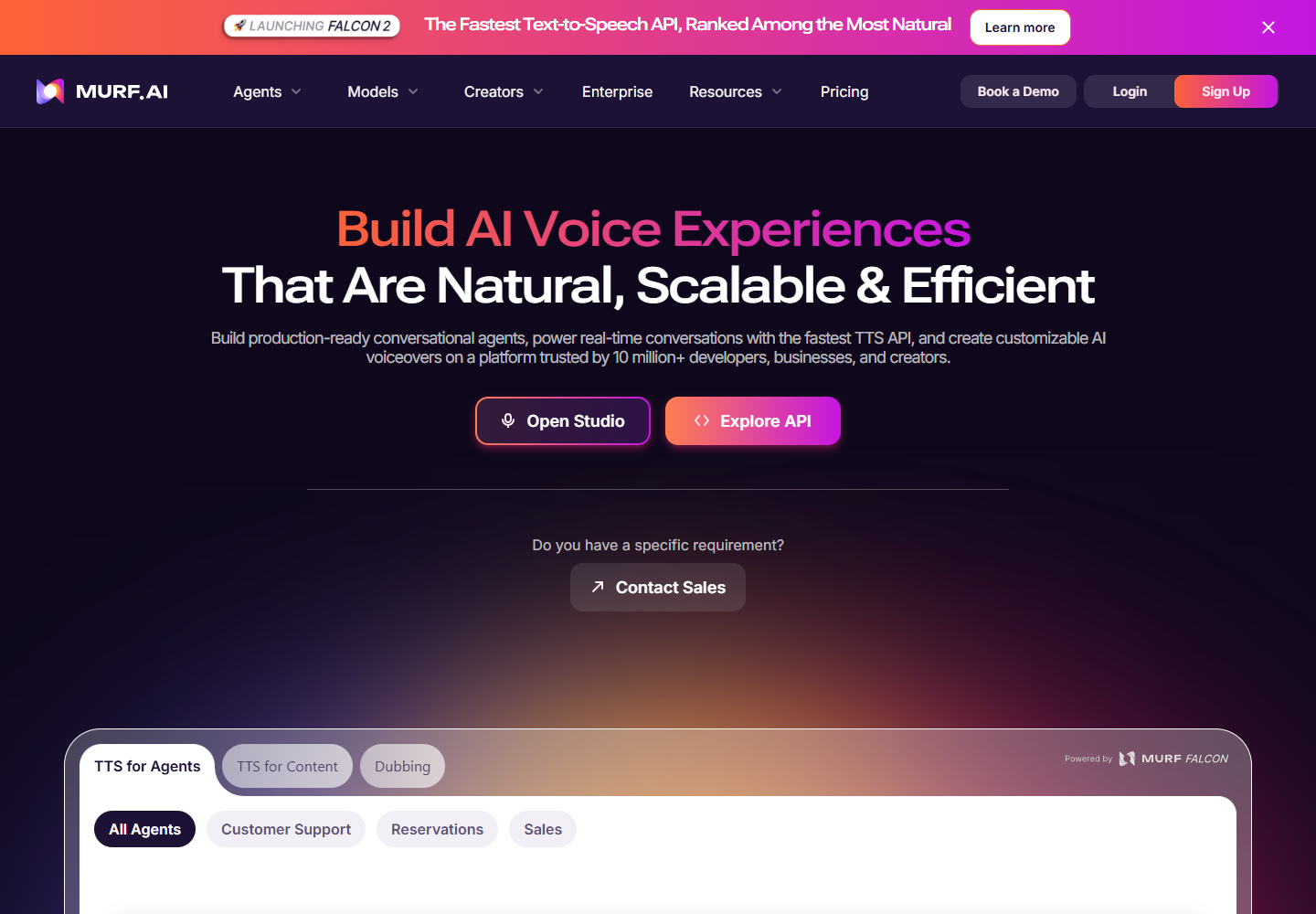
Official Murf documentation describes a cloud studio with hundreds of voices across multiple languages, plus controls for pitch, speed, emphasis, emotional tone, pauses, pronunciations, and sound effects. Projects can combine voice with visuals and background music. Murf also documents dubbing, translation, API access, and voice cloning options outside the simplest voiceover workflow.
Where Murf is stronger
Voice is the primary work object. A producer can begin with an approved script, select a voice, refine delivery, organize the work as a project, and prepare an output. That is more direct than adapting a general chat workspace into a production studio.
Production controls are explicit. Pronunciation, pacing, pauses, emphasis, style, and media synchronization matter when an asset will be published repeatedly or translated. A specialist interface makes these decisions visible to creators and reviewers.
The workflow supports repeatable media operations. Learning modules, product explainers, internal training, marketing videos, podcasts, and localization campaigns often need naming conventions, version review, language variants, and approved exports. Murf’s project and workspace model is oriented toward that kind of work.
Voice products extend beyond a single editor. Teams evaluating an API, dubbing, translation, or conversational agent can remain within the Murf product family, although each surface must be evaluated separately. Do not assume that Studio pricing, rights, limits, or controls automatically apply to every Murf product.
Murf limitations to test
The free experience is primarily a trial. Murf’s official help material states that downloads are unavailable on the free trial, so a buyer cannot judge the complete publishable workflow from feature access alone. Test the paid output format, bitrate, rights, usage limits, pronunciation handling, revisions, and downstream editing.
Plan design matters. Project credits, voice-generation time, editor seats, collaboration, downloads, commercial rights, translation, cloning, security, and support vary. Check the current pricing page and contract rather than relying on an old price quoted in a comparison article.
Voice quality is contextual. A voice that sounds convincing in a short demo may fail on names, acronyms, numbers, technical language, emotional transitions, long passages, or a particular accent. Use representative scripts and native-language reviewers. Record correction time instead of choosing from a polished sample gallery.
ChatGPT: best for broad content and knowledge work
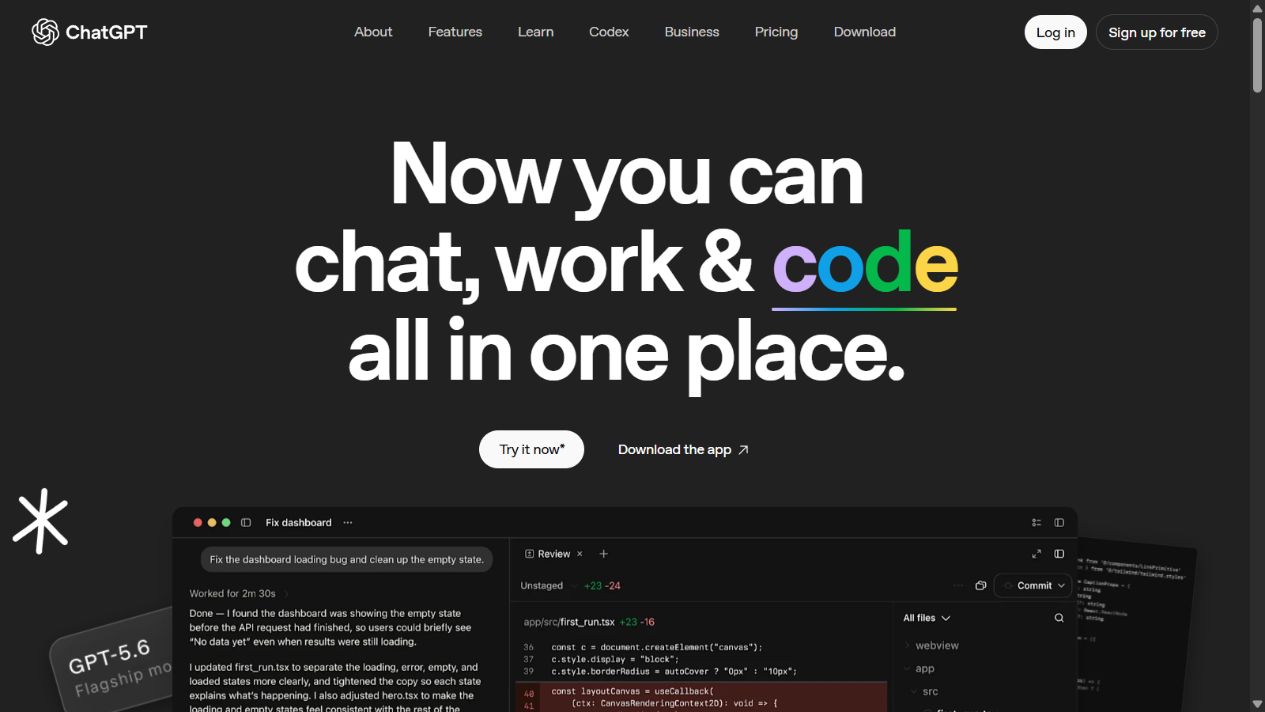
ChatGPT is designed around dialogue and a broad set of tools rather than a voiceover production timeline. Current official product information includes writing, search, Deep Research, files, data analysis, images, voice, projects, memory, Canvas, apps, and coding-related workflows, subject to plan and availability.
Where ChatGPT is stronger
Research can precede the script. A user can explore an audience question, locate current sources with supported research tools, summarize provided files, compare positioning, structure an argument, and draft alternatives. That makes ChatGPT useful before a voice producer receives the final script.
Iteration is conversational. Writers can ask for a clearer opening, shorter sentence, different reading level, alternative explanation, or consistency check. The output still needs factual and editorial review, but the assistant can support many stages around the script.
The workspace serves more departments. The same subscription may support analysis, planning, documentation, data, coding, internal knowledge, and visual ideation. That can make ChatGPT easier to justify as a broad platform, while Murf may be justified by a specialist production workload.
Voice mode supports interaction. Conversational voice can be useful for brainstorming, rehearsal, accessibility, language practice, or hands-free interaction. It should not automatically be treated as equivalent to a production voiceover editor with project, delivery, and export controls.
ChatGPT limitations to test
ChatGPT can produce incorrect or misleading output and may sound confident while doing so. OpenAI explicitly advises users to verify important facts, quotations, data, technical details, and references. Search and Deep Research can improve access to current evidence, but citations still require inspection.
Plan limits and features change. Confirm the exact account’s models, voice availability, files, research, image tools, projects, apps, administration, data controls, and usage limits. API access and consumer or business ChatGPT subscriptions are also different commercial surfaces.
A conversational draft is not a publishable voice asset. The team still needs an approved script, a rights review, pronunciation decisions, disclosure rules, audio quality control, version ownership, and an accessible alternative such as a transcript or captions.
Voice creation versus voice conversation
This is the central distinction. Murf helps produce a voice asset; ChatGPT helps a user converse with an assistant. Both involve generated speech, but the work objects and acceptance criteria differ.
For a course narration, the buyer may need one approved narrator voice, consistent pronunciations across 40 modules, timing against slides, revision tracking, commercial rights, and downloadable files. Murf is designed closer to that requirement.
For a product manager thinking through a launch brief aloud, the buyer may need rapid questions, follow-up reasoning, document context, and a written plan after the conversation. ChatGPT is designed closer to that requirement.
Write the required output on one line before comparing features. If the output is “approved WAV files for 20 lessons,” start with Murf. If it is “a researched and reviewed lesson plan,” start with ChatGPT. If it is both, evaluate the handoff.
Script development and factual accuracy
ChatGPT can accelerate script ideation and editing, but the workflow needs evidence boundaries. Separate sourced facts, expert judgment, creative language, and unverified suggestions. Require links or document references for material claims and open the sources before approval.
Murf should receive approved wording whenever factual risk is meaningful. A voice can make an unsupported statement sound more authoritative, not less. Do not treat natural delivery as evidence of truth. Lock the script before final rendering and require a new approval when wording changes.
Create a pronunciation sheet for company names, products, people, locations, measurements, abbreviations, and specialized terms. Review numbers carefully because a small written ambiguity can become a large spoken error. Native-language reviewers should approve localization rather than relying only on automated conversion.
Editing, collaboration, and approvals
Compare complete roles, not just creator seats. A real process may include a writer, subject expert, legal reviewer, brand owner, voice producer, localization reviewer, accessibility specialist, client approver, and publisher.
Ask whether reviewers can comment without consuming an expensive seat, whether permissions separate clients, whether project ownership transfers during offboarding, and whether approved versions can be exported with their supporting records. Test simultaneous edits, recovery, deletion, archive, and external sharing.
If ChatGPT creates the draft and Murf produces the audio, define the system of record. The approved script might live in a document repository, while Murf owns production files. Link the asset to the script version, sources, approval date, voice settings, license, transcript, and distribution channels.
Pricing and total cost
Murf and ChatGPT price different kinds of capacity. A direct monthly-fee comparison is misleading.
For Murf, model projects, voice-generation time, editor and viewer roles, downloads, languages, translation or dubbing, cloning, revisions, storage, rights, API usage, support, and enterprise controls. A launch month may consume much more capacity than a normal month.
For ChatGPT, model user seats, plan limits, specialist tools, shared workspace requirements, research usage, files, apps, administration, and any separate API consumption. Include the chance that another tool is still required for final audio production.
For both products, measure:
- time from brief to approved deliverable;
- correction and re-render time;
- reviewer minutes and approval rounds;
- rejected or abandoned outputs;
- external editing and localization cost;
- accessibility work;
- governance, training, and administration;
- unused capacity and renewal exposure.
The useful metric is cost per accepted output. Generating more drafts or audio minutes is not value when reviewers reject them or the team cannot publish them.
Rights, privacy, and governance
Review each vendor’s current terms, privacy documentation, security material, subprocessors, retention, training practices, deletion, regions, identity controls, and contract for the proposed plan. Do not move confidential scripts, customer recordings, unreleased products, personal data, or licensed media into either system without approval.
Voice creates additional risks. Obtain appropriate permission for cloning, likeness, and performance use. Define prohibited voices and impersonation scenarios. Document where synthetic voice must be disclosed. Keep a provenance record covering the source script, prompts, uploaded media, selected voice, generated versions, human edits, approvers, rights, and publication history.
Apply least privilege to projects and workspaces. Remove former employees and contractors, review external access, restrict public links, and test data export and deletion. Enterprise labels do not replace configuration or operating discipline.
Which should you choose?
Choose Murf when:
- the accepted deliverable is a voiceover, dubbed asset, or voice-enabled production;
- creators need explicit pronunciation, timing, delivery, and export controls;
- recurring audio or video projects justify a specialist workflow;
- learning, localization, media, or marketing teams own the process;
- a controlled pilot validates the required languages, voices, quality, and rights.
Choose ChatGPT when:
- research, writing, planning, analysis, files, or broad assistance is the primary job;
- users need conversational iteration across many departments;
- voice interaction matters more than producing mastered voiceover files;
- the organization prefers one general AI workspace;
- the team can provide factual review and maintain approved context.
Use both when the handoff is explicit: ChatGPT supports research and script development; a human approves the script; Murf produces and refines the voice asset; reviewers approve audio and accessibility; the publisher archives the evidence and final files.
A six-week pilot
Select three representative projects: a short product explainer, a technical learning module, and a multilingual campaign. Include difficult names, numbers, acronyms, emotional transitions, long passages, and late revisions.
During weeks one and two, establish the existing baseline and configure approved workflows. In weeks three and four, produce assets under normal deadlines. In week five, test revision, collaboration, offboarding, export, and recovery. In week six, review quality, rights, security, accessibility, adoption, and total cost.
Score factual accuracy, pronunciation, naturalness, consistency, editability, synchronization, source traceability, reviewer effort, export quality, and stakeholder acceptance. Do not let vendor specialists complete the decisive work. Ordinary creators and administrators must show that the process remains repeatable after onboarding.
Approve a purchase only if the pilot improves accepted-work time, quality, capacity, accessibility, or another named outcome without creating unacceptable risk. Set a downgrade or exit threshold before signing.
Final verdict
Murf wins for purpose-built AI voice production. ChatGPT wins for broad research, writing, analysis, and conversational knowledge work. The apparent overlap in voice should not obscure their different operating models.
For teams producing published narration at meaningful volume, Murf deserves the first pilot. For teams seeking one assistant across many forms of work, ChatGPT deserves the first pilot. When both stages matter, use a governed two-tool workflow and measure the entire journey from evidence to approved script to published audio.
Sources
Before deciding, produce one complete sample from the same approved script in both workflows. Measure pronunciation corrections, timing, edit effort, factual review, export quality, and total cost. Keep the original script and final approval record so a polished voice output never obscures who verified the message.
- Murf official website
- What is Murf?
- Murf pricing
- Murf free trial features
- Murf workspace documentation
- ChatGPT official website
- ChatGPT pricing
- What is ChatGPT?
- Does ChatGPT tell the truth?
- OpenAI enterprise privacy
Frequently asked questions
Is Murf better than ChatGPT?
Murf is better for producing controlled voiceovers. ChatGPT is better for broad research, writing, analysis, planning, and conversational assistance. Choose according to the accepted deliverable.
Can ChatGPT replace Murf for voiceovers?
Not automatically. ChatGPT can help develop scripts and supports voice experiences, but a production workflow may require Murf’s voice selection, delivery controls, projects, licensing, and export. Test the complete workflow.
Can Murf replace ChatGPT?
Murf can replace the specialist voice-generation stage, not the full range of general ChatGPT work. It is not positioned as a universal research, data, file, image, coding, and planning assistant.
Does Murf have a free plan?
Murf documents free trial access, but downloads are unavailable. Verify current generation time, projects, voices, exports, commercial rights, and paid-plan limits before deciding.
Which tool costs less?
The products price different capacity. Compare cost per accepted script or voice asset, including seats, usage, revisions, reviewer time, external editing, rights, administration, and any second tool still required.
Which tool is safer for company data?
Safety depends on the exact plan, configuration, data, contract, and workflow. Compare data use, retention, deletion, identity, permissions, regions, subprocessors, sharing, and audit requirements.
Is it worthwhile to use Murf and ChatGPT together?
Yes, when ChatGPT measurably improves research or script development and Murf measurably improves voice production. Keep human approval and a traceable handoff between them.
Frequently asked questions
Is Murf better than ChatGPT?
Murf is better for a purpose-built voiceover production workflow with voice selection, delivery controls, project organization, and export. ChatGPT is better for broad conversational work, research, writing, files, analysis, and planning.
Can ChatGPT replace Murf for voiceovers?
ChatGPT can support scripts and voice conversations, but buyers needing repeatable production voiceovers should compare its current output and licensing workflow with Murf Studio. The products are designed around different primary jobs.
Can Murf replace ChatGPT?
Murf can replace the voice-generation stage of a workflow, but it is not positioned as a general replacement for ChatGPT's broad research, analysis, writing, file, image, project, and coding capabilities.
Which tool is better for business teams?
Choose according to the workflow. Learning, localization, marketing, and media teams may prioritize Murf; cross-functional knowledge workers may prioritize ChatGPT. Review the exact plan, permissions, data terms, usage limits, and approval process.
Does Murf have a free plan?
Murf's official material describes free trial access for testing voices and features, but downloads are not included. Verify current projects, generation time, export, and licensing terms on Murf's pricing page.
Which is cheaper, Murf or ChatGPT?
Published prices do not measure the same unit. Murf plans center on voice-production capacity and project rights, while ChatGPT plans center on assistant access and feature limits. Compare cost per accepted deliverable and include review time.
Should a company use Murf and ChatGPT together?
Using both can be sensible when ChatGPT supports research and script development while Murf produces governed voice output. Define which tool owns sources, final wording, pronunciation, rights, approval, and archived assets.