Noisli vs ChatGPT: Which Is Better?
Compare Noisli and ChatGPT for focus, ambient sound, timed work sessions, writing, research, planning, privacy, pricing, and productive workflow design.
Direct answer
Choose Noisli when the problem is environmental distraction and you want ambient sounds, playlists, timed work sessions, and a simple writing space. Choose ChatGPT when the problem is cognitive or informational and you need help researching, explaining, planning, drafting, analyzing, or working with files.
Noisli and ChatGPT are not direct substitutes. Noisli does not generate an answer to a business question, and ChatGPT does not provide Noisli’s dedicated sound-mixing environment. Comparing them as if they were competing chatbots would create a false contest.
The more useful question is: what is preventing the work from moving forward? If interruptions and unpredictable background noise are the main barrier, test Noisli. If the user lacks information, structure, alternatives, or a starting draft, test ChatGPT. If both barriers exist, use the tools in different stages and measure whether the combination actually reduces accepted-work time.
Noisli vs ChatGPT at a glance
| Area | Noisli | ChatGPT |
|---|---|---|
| Primary job | Ambient sound and focus-session environment | General AI assistance for knowledge work |
| Core interaction | Mix sounds, choose playlists, set timer, write in simple editor | Ask, upload, analyze, refine, research, create, and converse |
| Output | Soundscape, timed session, text note | Answers, drafts, plans, analysis, code, images, and voice interactions |
| Research | Not a research tool | Search and Deep Research are available depending on plan and use |
| Writing | Distraction-free Markdown-capable editor | Ideation, outlining, drafting, editing, and critique |
| Team features | Business plan includes team management and centralized billing | Business and Enterprise plans add workspace administration and controls |
| Best fit | Users who want a consistent auditory and timing routine | Users who need active help completing a defined knowledge task |
How we compared the products
We reviewed current search results to understand why someone might compare these products, then checked official Noisli and OpenAI product, feature, pricing, help, and privacy material. We did not conduct a controlled productivity trial or medical assessment.
We evaluated:
- The barrier each product is designed to address.
- The amount of active attention the tool demands.
- Support for focus sessions, writing, research, and planning.
- Data, privacy, and account implications.
- Free and paid plan boundaries.
- Individual and team administration.
- Risk of distraction, dependence, or low-quality output.
- Measurable value in a real work routine.
Noisli: best for a controlled focus environment
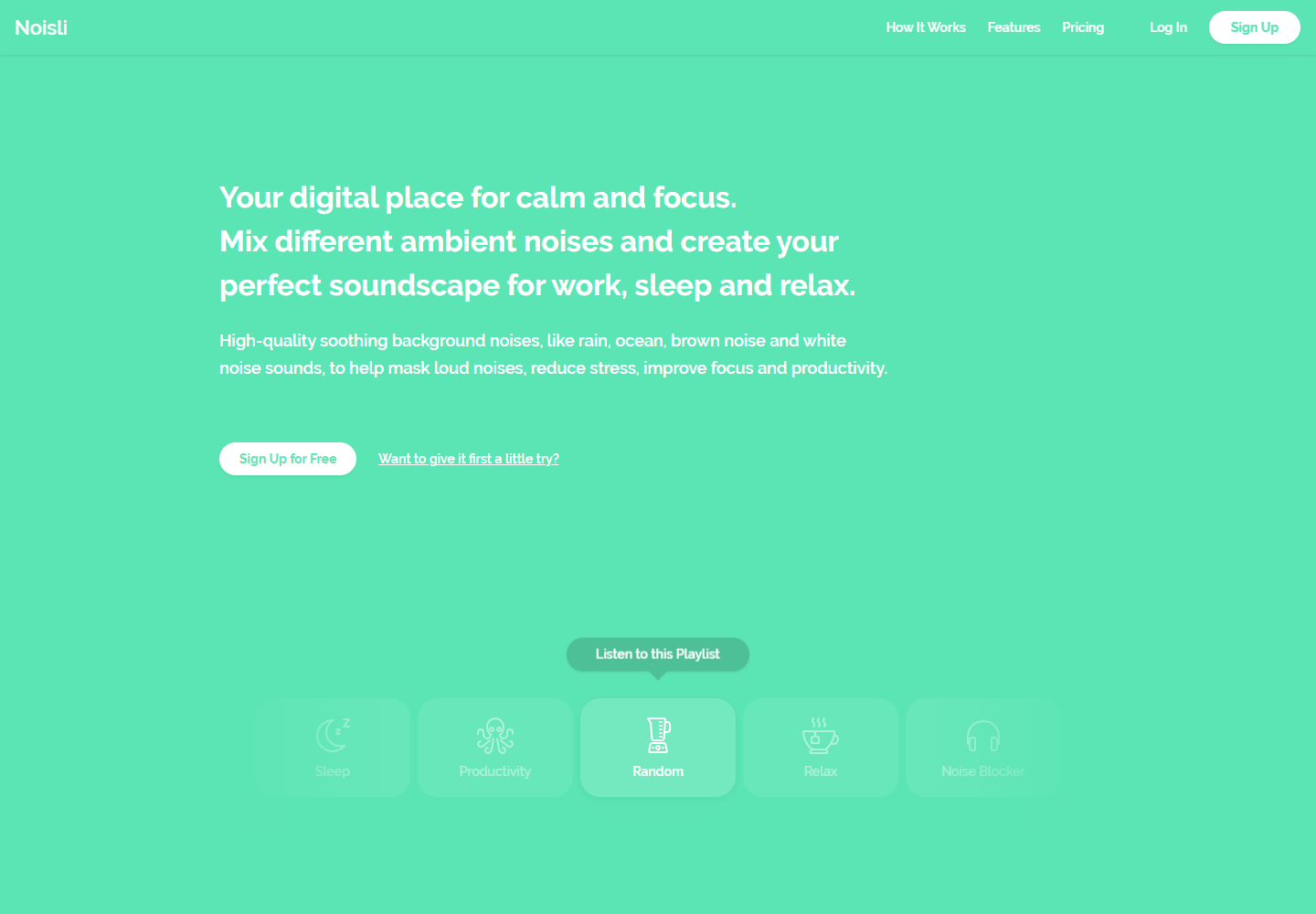
Noisli describes itself as a digital place for calm and focus. Its core experience lets users mix ambient sounds such as rain, ocean, wind, streams, a coffee shop, transit, fans, and several colors of noise.
What Noisli provides
Official feature documentation lists sound mixing, curated playlists, saved combinations, oscillation, shuffle, a timer, session statistics, and a distraction-free text editor. The editor supports Markdown and can export text or connect with supported storage services.
The timer can structure work and breaks. Sounds can stop when the timer ends, and paid capabilities add more session controls and longer statistics. Mobile apps and a browser extension provide access outside the main web experience, although features can vary by platform.
This is intentionally narrow. Noisli does not need the user to compose a detailed instruction or evaluate generated claims. Once a suitable soundscape and timer are configured, it can remain in the background.
Where Noisli is stronger
It asks for little cognitive interaction. A user can choose a sound mix and begin work. That can be useful when another conversational interface would become an additional source of decisions and interruptions.
The environment is repeatable. Saved combinations and playlists can become cues for particular kinds of work: reading, drafting, routine administration, or a short concentration block. The value comes from consistency, not from producing content.
It combines sound and session timing. Users who otherwise keep separate audio, timer, and minimal-editor tabs may prefer one focused surface.
It is easy to test. The free plan provides a limited selection of sounds, streaming time, playlists, favorites, timer, and editor access. That is enough to learn whether the basic experience fits before paying.
Noisli limitations
Noisli cannot research a topic, evaluate evidence, explain a concept, inspect a file, generate a campaign, or solve an analytical problem. It changes the environment around work rather than doing the work.
Sound preferences are individual and task-dependent. A mix that feels comfortable during repetitive work may interfere with reading, language processing, calls, or safety-critical attention. Users with hearing, sensory, sleep, stress, or medical concerns should not treat a software feature as professional advice.
The full web feature set is intended for current desktop browsers. Noisli’s pricing information warns that mobile or unsupported browser experiences may differ. Test the actual devices and operating conditions.
ChatGPT: best for active knowledge-work assistance
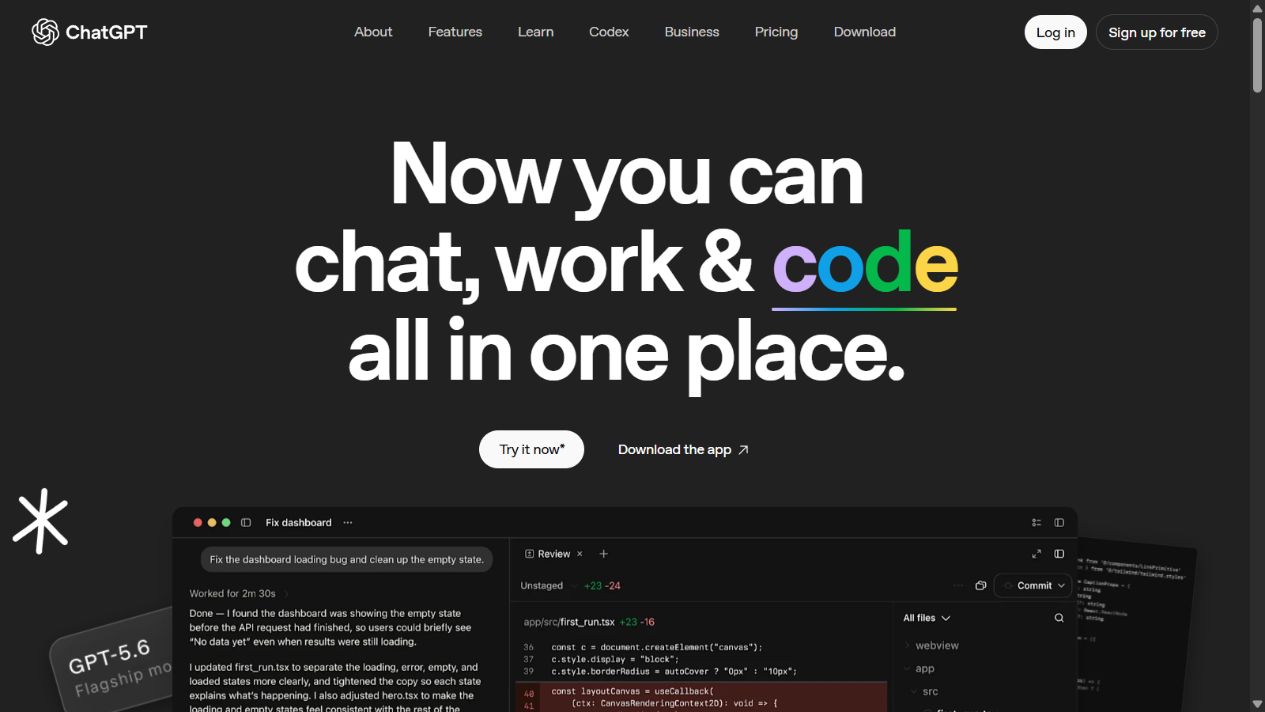
ChatGPT is a general assistant. Official OpenAI material describes conversational help with writing, brainstorming, learning, search, Deep Research, files, data analysis, images, voice, projects, Canvas, and other capabilities depending on plan and current availability.
Where ChatGPT is stronger
It can help define the work. A user can turn an unclear request into requirements, milestones, questions, risks, or a first plan. Noisli assumes the user already knows what to do.
It can transform information. ChatGPT can summarize provided material, compare alternatives, propose structures, explain difficult concepts, and revise drafts. The user must still verify facts and make accountable decisions.
It supports iterative writing. Writers can ask for an outline, challenge weak logic, test clarity for a target reader, generate alternatives, or edit a selected passage. Used carefully, this can reduce blank-page friction.
It covers many work types. The same environment can support documents, data, coding, images, research, and connected applications. This breadth makes it more likely to serve multiple departments.
ChatGPT limitations
ChatGPT can return incorrect or misleading content, including fabricated facts, quotations, studies, or citations. OpenAI’s help guidance explicitly recommends verifying important output. Confidence and fluency do not establish accuracy.
The assistant can also become a source of distraction. Endless prompting, rewriting, and option generation may feel productive while delaying the decision or original work. A user can spend more time managing the tool than completing the task.
Features and limits vary by plan. Verify current access to models, files, search, research, images, voice, projects, apps, memory, data controls, and business administration. A consumer plan should not be assumed to provide the controls required for company information.
Focus environment versus work assistance
The products act at different layers. Noisli changes the sensory and temporal environment. ChatGPT changes the information and production process.
Consider a writer preparing a customer guide. Noisli may provide a stable soundscape and 40-minute work block. ChatGPT may help identify questions, inspect approved source material, challenge the outline, or edit a difficult explanation. The writer remains responsible for evidence, originality, tone, and publication.
Using both continuously is not automatically better. ChatGPT notifications, follow-up ideas, and repeated alternatives can break the focus session that Noisli is meant to support. Create boundaries: use the assistant during planning, close it during independent drafting, and return for a defined review task.
Which is better for writers?
Noisli’s text editor is deliberately simple and supports Markdown. It can reduce interface clutter and keep the timer and ambient environment close to the draft. It is not a publishing, collaboration, citation, or advanced revision system.
ChatGPT is stronger when a writer needs active support. A good workflow supplies the audience, objective, evidence, constraints, and required format. The assistant can then critique structure or propose alternatives without inventing the assignment.
Do not outsource the entire article to an unsupervised prompt. Preserve source notes, verify every material claim, distinguish quotations from paraphrases, and revise for genuine editorial judgment. Avoid entering confidential client material without approved terms and settings.
Which is better for studying and learning?
Noisli can provide a timed environment for reading or practice. ChatGPT can explain a concept, ask questions, generate examples, or help review mistakes. Neither guarantees learning.
Active recall, problem solving, feedback, and spaced practice may matter more than the presence of either tool. Ask ChatGPT to question the learner before revealing an explanation. Use Noisli only if the sound supports rather than competes with the task.
Students must follow institutional rules for AI use, attribution, assessment, and privacy. Generated answers can be wrong, and submitting them without understanding can undermine the purpose of the work.
Team use and administration
Noisli’s Business plan adds team management and centralized billing to its focus tools. This may simplify access for a team that already values the product, but it does not create a project-management or knowledge-governance system.
ChatGPT Business and Enterprise options provide a shared workspace and additional administration, privacy, and security capabilities. Organizations should evaluate identity, permissions, sharing, connected applications, retention, data use, audit, regions, and contractual needs against the exact plan.
Do not mandate one sound environment for everyone. Provide choice and consider accessibility, sensory preferences, calls, collaboration, and workplace safety. Likewise, do not require ChatGPT for every task. Some work is faster and clearer without an assistant.
Pricing and value
Noisli currently lists Free, Pro, and Business options. Plans differ across sound selection, streaming, playlists, favorites, timer controls, statistics, editor features, and team administration. Pricing pages display billing assumptions and taxes that should be checked for the buyer’s region.
ChatGPT offers free and paid individual and organizational plans with different limits and controls. API use is separate. Because the products sell different outcomes, comparing subscription prices alone is not useful.
Measure value through a short baseline:
- completed focus sessions;
- accepted words, analyses, or decisions;
- time to approved output;
- interruptions and context switches;
- factual corrections and rework;
- time spent configuring or prompting;
- adoption and unused subscriptions;
- privacy and administration effort.
Noisli is valuable when it helps a user protect a repeatable work block. ChatGPT is valuable when it helps complete a defined task with less accepted-work time. Neither metric should be “minutes the app stayed open.”
Privacy and responsible use
Review current privacy terms for both services. A Noisli account may store preferences and editor text; do not use a lightweight editor as an unapproved repository for sensitive work. Confirm storage, export, deletion, integrations, and team ownership.
For ChatGPT, classify information before upload. Separate public, internal, confidential, personal, regulated, customer, and prohibited data. Review data controls and business terms, and restrict connected applications to approved sources and permissions.
Verify important AI output against primary evidence. Keep humans accountable for consequential decisions. Search and citations can improve traceability, but a linked source may be outdated, incomplete, or unrelated to the claim.
Which should you choose?
Choose Noisli when:
- unpredictable background sound or a missing work rhythm is the main problem;
- the user wants a passive tool rather than an active assistant;
- sound mixing, playlists, timing, and a simple editor are sufficient;
- a free test shows the environment supports the actual task;
- the organization does not expect the tool to generate or evaluate work.
Choose ChatGPT when:
- the user needs research, explanation, planning, drafting, analysis, or files;
- active conversational iteration supports the workflow;
- evidence and human review can be built into the process;
- the chosen plan provides appropriate limits and data controls;
- one broad assistant can replace several narrow creation tools.
Use both when a clear boundary improves the workflow. For example: define the task with ChatGPT, verify and approve the plan, run a Noisli focus session without prompting, then use ChatGPT for one specified review pass.
A two-week personal pilot
Measure five workdays without changing the routine. Record the task, planned duration, interruptions, start delay, completion, accepted output, and subjective effort. This is the baseline.
In week two, test each tool on appropriate days. Use the same types of tasks and similar time blocks. For Noisli, keep a stable sound and timer configuration. For ChatGPT, predefine allowed uses such as outline review or evidence questions.
Do not change multiple variables at once. New headphones, a different workplace, stricter deadlines, and a new tool make the result impossible to interpret. At the end, compare completed and accepted work rather than enthusiasm.
Teams can extend the pilot but should preserve voluntary participation and privacy. Aggregate useful workflow observations without monitoring personal sound choices or prompts unnecessarily.
Control interruption cost
The best tool can become harmful when it is used at the wrong moment. Noisli should fade into the background after setup. If users repeatedly adjust mixes, browse playlists, or watch the timer, simplify the configuration. ChatGPT should be opened for a named question or transformation, then closed when independent work begins.
Create an interruption rule. During a protected block, capture new questions in a short parking list rather than immediately prompting the assistant. Review that list at the end and decide which questions genuinely require research. This prevents every uncertainty from becoming a context switch.
For collaborative work, agree on response windows. A personal focus tool cannot solve meeting overload, unclear ownership, or urgent-message culture. An AI assistant cannot repair those problems either. Managers should reduce unnecessary requests, clarify priorities, and protect realistic blocks of time before evaluating individual productivity software.
Finally, match sound to the environment. Speakers may disturb colleagues; headphones can reduce awareness; continuous audio may be inappropriate for calls, shared spaces, or safety-sensitive work. Offer a silent option and avoid treating one employee’s preference as a team standard.
Final verdict
Noisli is better for ambient focus and timed work sessions. ChatGPT is better for active assistance with information and creation. Neither is universally more productive because they address different constraints.
If the user knows what to do but struggles to protect attention, test Noisli first. If the user can focus but lacks information, structure, or a useful first step, test ChatGPT first. If both are used, create clear stages so the assistant does not interrupt the focused work it was meant to support.
Sources
- Noisli
- Noisli features
- Noisli pricing
- Noisli apps
- Noisli plan differences
- ChatGPT
- ChatGPT pricing
- What is ChatGPT?
- Does ChatGPT tell the truth?
Frequently asked questions
Is Noisli better than ChatGPT?
Noisli is better for ambient sound and timed focus. ChatGPT is better for broad AI-assisted knowledge work. The answer depends on whether the barrier is the environment or the task itself.
Can Noisli replace ChatGPT?
No. Noisli does not perform general research, analysis, planning, or generation. It may replace the focus-environment layer for users who only need sound, timing, and a simple editor.
Can ChatGPT replace Noisli?
ChatGPT can propose a schedule or focus method, but it is not a dedicated ambient-sound mixer. A user who benefits from controlled background audio may still need Noisli or another sound source.
Does Noisli improve concentration?
Results differ by person, task, and environment. Test it conservatively and do not interpret product positioning as a medical or guaranteed productivity claim.
Which is better for writing?
Noisli supports a distraction-reduced session and simple Markdown editing. ChatGPT supports ideation, structure, critique, and revision. Writers can use either or assign each a separate stage.
Which service costs less?
Both have free and paid options, but their value is not equivalent. Verify current regional pricing and compare completed, accepted work with subscription and operating cost.
Can a business use both safely?
Yes, with approved accounts, data classification, clear workflow boundaries, source verification, and human responsibility. Do not store confidential material or trust generated claims without appropriate controls.
Frequently asked questions
Is Noisli better than ChatGPT?
Noisli is better for creating an ambient soundscape and timed focus routine. ChatGPT is better for research, writing, analysis, planning, files, and broad AI assistance. They solve different problems.
Can Noisli replace ChatGPT?
Noisli cannot replace ChatGPT's general AI capabilities. It can replace the environmental and focus-session layer when a user mainly needs sound masking, playlists, a timer, and a simple editor.
Can ChatGPT replace Noisli?
ChatGPT can help plan a work session, but it is not a dedicated ambient-sound mixer. Users who benefit from controlled background sound may still prefer Noisli alongside ChatGPT.
Does Noisli improve concentration?
No universal improvement should be assumed. Noisli provides ambient sounds and focus tools, but individual preferences, tasks, environments, hearing needs, and health considerations differ. Test it without treating it as medical advice.
Which tool is better for writers?
Noisli supports a distraction-reduced environment and simple Markdown editor. ChatGPT supports ideation, outlining, revision, and research. Many writers can use Noisli for the session environment and ChatGPT selectively for defined tasks.
Which is cheaper, Noisli or ChatGPT?
Both offer free access and paid plans, but they sell different value. Compare whether each tool improves accepted work, not only monthly prices. Verify current regional pricing and limits before subscribing.
Should teams use Noisli and ChatGPT together?
They can work together when Noisli supports a focus routine and ChatGPT handles bounded research or drafting tasks. Teams should still set data, verification, attribution, and interruption rules.