Perplexity vs ChatGPT: Which Is Better?
Compare Perplexity and ChatGPT for search, citations, deep research, writing, analysis, files, coding, privacy, pricing, and team workflows.
Direct answer
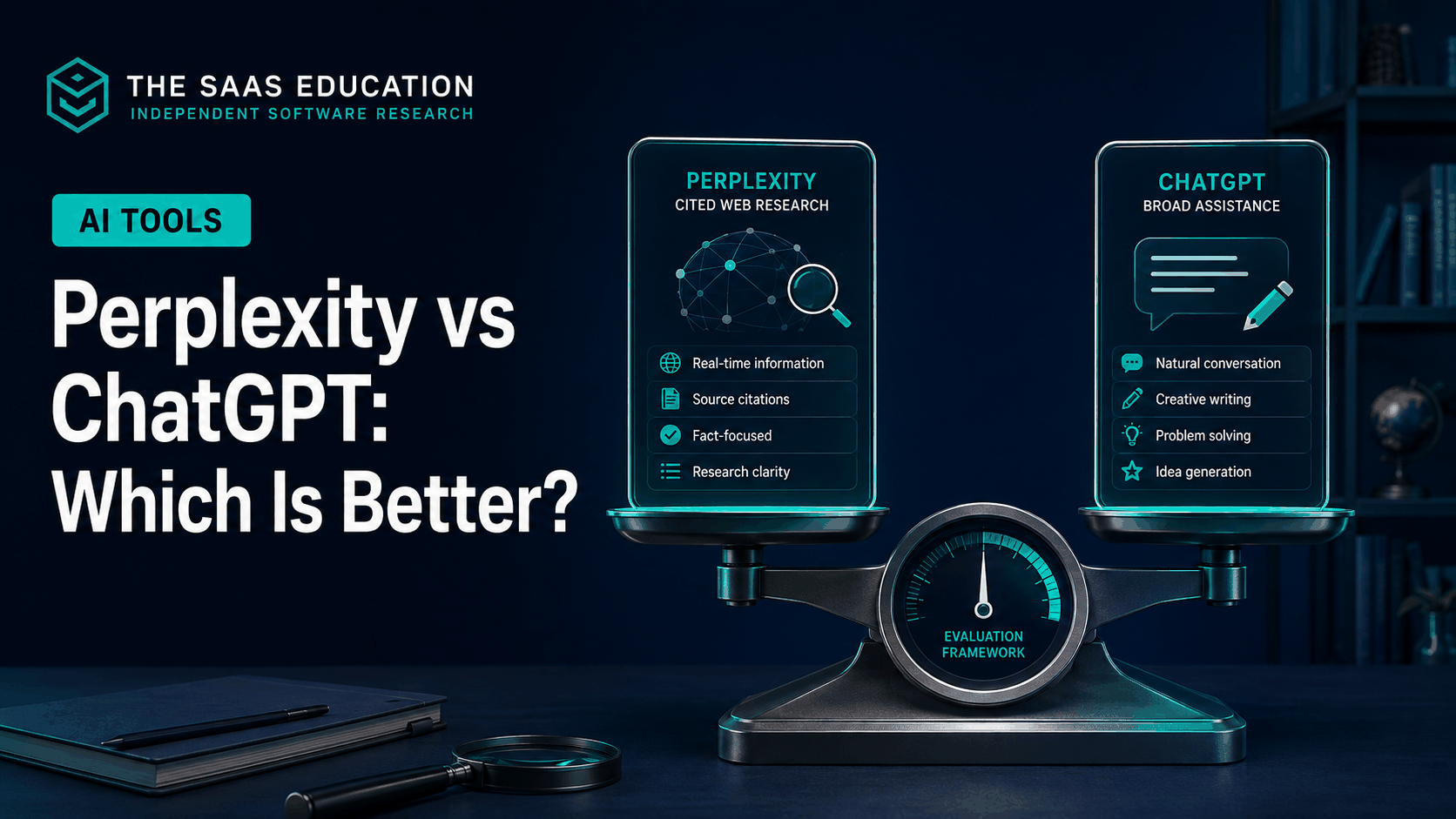
Perplexity is better when the immediate job is to search the web, gather a concise answer, and inspect cited sources. ChatGPT is better when research is one stage in a broader workflow involving analysis, writing, files, data, coding, images, planning, or persistent projects.
The gap is narrower than it once was. ChatGPT includes web search and deep research, while Perplexity has expanded beyond simple answer pages into more capable research and agentic workflows. The decision should therefore be based on the full task, not the outdated idea that one searches and the other never does.
Use Perplexity as a discovery interface when source visibility and fast query iteration are central. Use ChatGPT as a general work environment when the final deliverable matters as much as finding information.
Perplexity vs ChatGPT at a glance
| Area | Perplexity | ChatGPT |
|---|---|---|
| Core orientation | Search-first answer engine and research product | General-purpose AI workspace |
| Best starting point | A current factual or exploratory web query | A task, problem, file set, or deliverable |
| Citations | Prominent in normal answer workflow | Available in search and research workflows |
| Deep research | Research-oriented reports and source exploration | Deep research integrated with broader tools and Projects |
| Writing and production | Useful, but research remains central | Broad drafting, editing, analysis, code, data, image, and project work |
| Model and feature access | Depends on current Perplexity plan and routing | Depends on current ChatGPT plan and model/tool availability |
| Main risk | Citation presence can create false confidence | Broad fluent output can outpace source traceability |
How we compared them
Current search results emphasize research, citations, pricing, privacy, models, and writing. We used that demand to design the questions, then checked material product claims against official Perplexity and OpenAI pages.
The criteria were:
- Search coverage and query iteration.
- Citation visibility and source inspection.
- Deep research and report workflows.
- Files, analysis, writing, coding, and output breadth.
- Persistent context and team collaboration.
- Privacy, data, sharing, connectors, and administration.
- Plan limits, pricing, and total verification effort.
We did not run a controlled factual-accuracy benchmark. Results can vary by query, time, model, index, source availability, personalization, plan, and method.
Where Perplexity is better
Fast cited web discovery
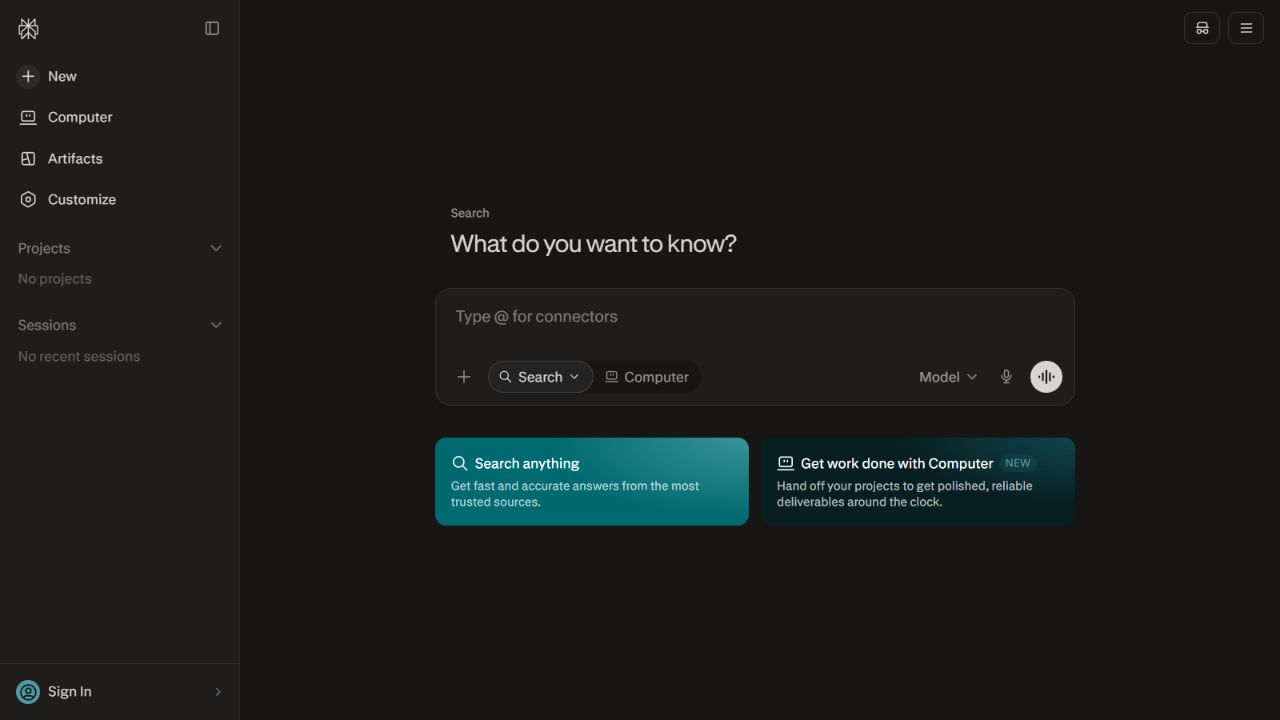
Perplexity’s core experience starts with a question and returns an answer accompanied by sources. That design makes citation inspection part of the normal path rather than an optional research mode.
This is useful for orientation: identifying entities, terminology, recent developments, competing explanations, and primary sources to investigate. Follow-up questions can refine the search without rebuilding the context from scratch.
Source-led query iteration
Good research is iterative. A first query reveals vocabulary; the second adds exclusions; the third searches a primary domain; the fourth challenges the apparent answer. Perplexity’s answer-and-source layout supports that loop efficiently.
Users should still open sources. A citation may support only part of a sentence, point to a secondary summary, omit a decisive qualifier, or be current for one jurisdiction and stale for another.
Search-focused research workflows
Perplexity offers deeper research and plan-dependent capabilities beyond quick answers. It can be a productive environment when most work consists of finding, comparing, and summarizing current external information.
The narrower orientation can be an advantage. A researcher may spend less time choosing between unrelated creative tools and more time inspecting evidence.
Where ChatGPT is better
Moving from research to deliverable
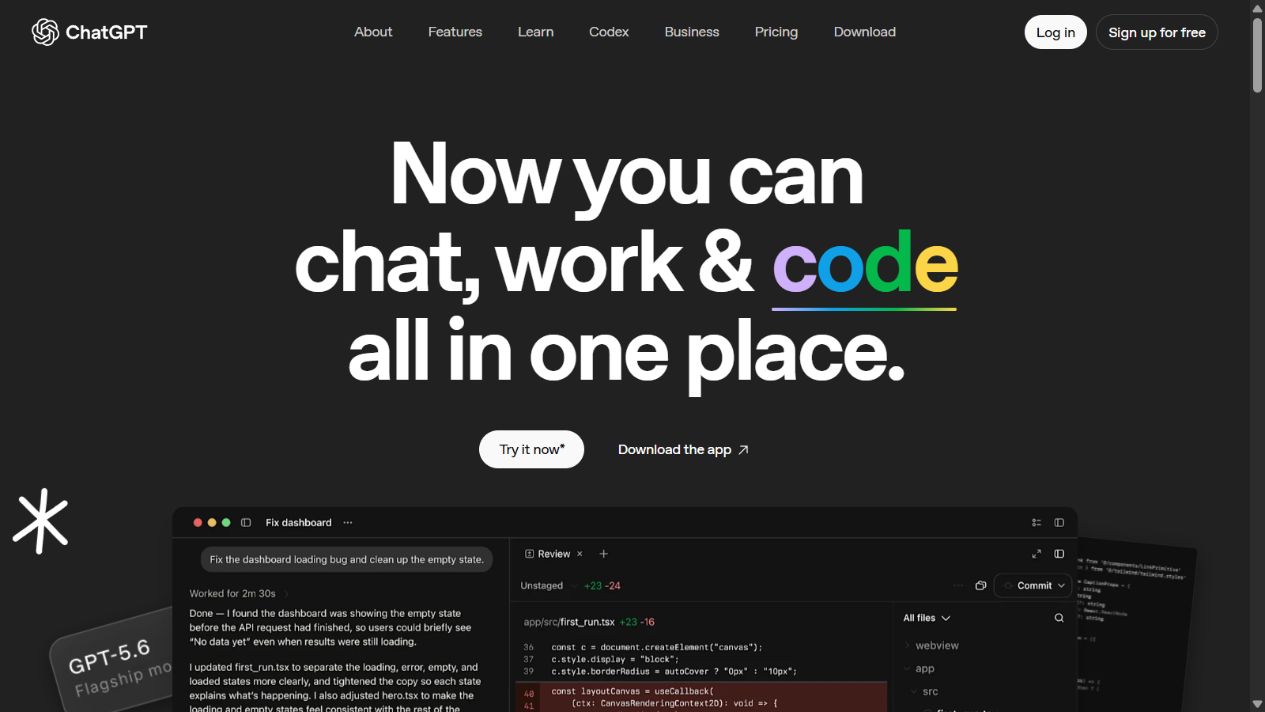
ChatGPT combines search and deep research with files, data analysis, writing, coding, images, Canvas, Projects, memory, and other tools depending on plan. A user can investigate a market, analyze a spreadsheet, draft a memo, create a chart, and revise the output in one workspace.
That continuity matters for professional work. The answer is rarely the final product; it becomes a recommendation, model, campaign, specification, presentation, or implementation plan.
Mixed internal and external context
Projects can organize files, instructions, chats, and recurring work. This is useful when web research must be interpreted alongside internal documents and task-specific rules.
The broader context also creates risk. Users must distinguish authoritative internal records, external sources, model inference, and draft language. A unified interface does not make every input equally reliable.
Coding, data, and creative work
ChatGPT is the stronger general shortlist when work extends into code, calculations, structured data, images, or interactive drafting. Perplexity may assist with research for these tasks, but ChatGPT provides a wider production environment.
Long-running work rather than isolated answers
Persistent Projects and reusable context can support ongoing initiatives. This is valuable for a product launch, research program, editorial workflow, or technical project where sources and deliverables evolve over time.
Citation quality: the decisive nuance
A cited answer is easier to inspect than an uncited one, but the citation icon does not prove the claim. Review citations at four levels:
- Existence: does the link resolve to a real source?
- Authority: is it primary, official, expert, or merely repeated commentary?
- Entailment: does the source actually support the statement?
- Completeness: are material qualifiers, dates, conflicts, and limitations represented?
Both products can fail these tests. The right metric is not the number of citations. It is the proportion of material claims supported by authoritative evidence after review.
For consequential work, maintain a claim ledger with the statement, source, passage, date, jurisdiction, owner, and verification status. Generated prose that changes a claim should return to review.
Which is better for current events?
Perplexity’s search-first design can be efficient for monitoring a developing topic and seeing cited pages quickly. ChatGPT can also search and conduct deeper research, then integrate findings into a broader analysis.
For news, compare publication time with event time, distinguish reporting from opinion, and seek primary announcements or records. A highly cited article can still repeat an early error. Record when the research was checked and update material conclusions as evidence changes.
Which is better for academic research?
Neither product is a substitute for scholarly databases, library resources, systematic search methods, or reading the paper. Perplexity can identify terms and possible sources; ChatGPT can help explain methods, organize notes, analyze supplied files, or challenge a draft.
Do not cite a generated answer. Cite the original work. Confirm authors, title, journal, year, DOI, study design, population, outcome, and limitations. Watch for fabricated or mismatched citations, retracted papers, preprints presented as established evidence, and secondary summaries that overstate findings.
For a defined source corpus, Gemini Notebook may be a better comparison because its notebook workflow is explicitly source-grounded.
Which is better for marketing and SEO?
Perplexity can accelerate market discovery, competitor research, entity mapping, source identification, and monitoring. ChatGPT can take verified research into messaging, briefs, content analysis, code, data, and campaign planning.
Neither should produce publish-ready factual content without editorial review. Search results can contain inaccurate, duplicated, affiliate-driven, or AI-generated material. Use primary sources and add information gain from experience, analysis, original data, or a practical framework.
Which is better for business research?
Use Perplexity when analysts repeatedly ask current external questions and need a fast path to sources. Use ChatGPT when external research must be combined with internal files, calculations, drafting, and implementation.
A governed combined workflow can work:
- Define the decision and evidence standard.
- Use Perplexity to map the topic and locate candidate primary sources.
- Verify and save approved sources outside the chat.
- Use ChatGPT to analyze those sources with authorized internal context.
- Label facts, assumptions, and inference.
- Review the final deliverable against the evidence ledger.
Do not paste sensitive internal information into a consumer research account without approval.
Privacy and organizational controls
Consumer and organizational products can have different data terms, controls, retention, and administration. Verify the actual account, plan, region, and settings.
Review:
- Identity and provisioning.
- Data use and model-training terms.
- Retention, deletion, export, and legal hold.
- Public links, sharing, and collaboration.
- File, browser, and connector permissions.
- Search history and sensitive queries.
- Administrator logs and offboarding.
- Contractual support and incident obligations.
Search queries themselves can reveal confidential strategy, customers, incidents, health information, legal matters, or acquisition plans. Governance must cover prompts as well as uploaded files.
Build a repeatable research protocol
The products become more reliable when the team standardizes the investigation rather than asking one broad prompt. Use this protocol:
- Write the decision question and what would change the answer.
- Define geography, date range, audience, exclusions, and evidence hierarchy.
- Run a broad discovery query to learn entities and vocabulary.
- Search primary domains, official documentation, filings, papers, or datasets directly.
- Ask for contradictory evidence and alternative explanations.
- Save approved sources outside the generated conversation.
- Build a claim ledger linking statements to passages.
- Separate observed fact, source opinion, model inference, and recommendation.
- Have a qualified reviewer challenge the conclusion.
- Record the verification date and refresh trigger.
Perplexity can accelerate steps three through five because sources remain visible during query iteration. ChatGPT can support the full process and may be especially useful for steps seven through nine when files, data, or deliverables are involved. Neither should decide the evidence standard itself.
Search coverage versus answer quality
An answer may be well written but based on a narrow source set. Conversely, a long source list may include duplicated reporting that all traces to one original statement. Evaluate coverage by evidence diversity and authority, not link count.
For product research, require official product, pricing, documentation, security, and legal sources. For company or market claims, prefer filings, regulator records, original data, and direct announcements. For technical questions, use official documentation and primary research. For news, compare event and publication timestamps.
Ask the tool to identify sources it could not access, paywalls, missing jurisdictions, and uncertain dates. This makes the boundary of the answer visible. A useful research assistant should help the reviewer see what remains unknown.
Handle conflicting sources
Do not ask the model to average disagreement into one confident sentence. Create a conflict table with source, date, claim, authority, methodology, and likely reason for difference. Some conflicts come from different definitions; others from an update, geography, sample, commercial incentive, or genuine uncertainty.
Then state which source controls the decision and why. For a software price, the current official pricing page usually controls. For a legal interpretation, primary law and qualified counsel matter. For product performance, a reproducible current benchmark is stronger than vendor marketing.
Both Perplexity and ChatGPT can help organize conflict, but the accountable reviewer must choose the evidence standard.
Team workflow and handoff
Research loses value when citations disappear during editing. Assign a researcher, reviewer, decision owner, and refresh date. Keep source URLs and supporting passages attached to material claims as content moves into a memo, article, presentation, or ticket.
When a second AI tool rewrites the report, mark any changed or newly introduced claim as unverified. Preserve the original research output for comparison, but store the approved decision in the organization’s governed system rather than relying on conversation history.
Measure how often a colleague can reproduce the finding without asking the original researcher. This is a better collaboration metric than the number of reports generated.
Set refresh triggers for volatile conclusions. A product launch, legal change, earnings release, revised dataset, or official correction should reopen the claim. Stable background facts may use a longer review cycle. This avoids both permanent rechecking and false confidence in an old answer.
Record the person who accepted the refreshed conclusion and the evidence they reviewed.
Pricing and total cost
Perplexity and ChatGPT both offer free and paid paths, including individual and organizational products. Published headline prices can look similar while usage, models, tools, research allowances, file limits, support, and controls differ.
Model:
- Required users and account type.
- Search, deep-research, model, and tool limits.
- File, storage, project, and collaboration needs.
- Verification and correction time.
- API or automated usage, which may be separate.
- Connectors, security review, and administration.
- Duplicate research or writing subscriptions.
- Cost of missed evidence or low-quality output.
Buy both only when each owns a recurring workflow with measurable value.
A controlled side-by-side test
Prepare fifteen queries across:
- A current event with a primary announcement.
- A stable technical fact.
- A disputed topic.
- A local or regional query.
- A question with ambiguous terminology.
- A multi-source comparison.
- A supplied internal file plus external research.
- A data-analysis and writing deliverable.
Score source authority, citation entailment, material omissions, freshness, factual corrections, reasoning clarity, output usefulness, time to verify, and total completion time. Run repeated trials because live search and model behavior vary.
Include adversarial checks: a source that repeats an error, an old page with a new date, conflicting primary documents, and a statement whose qualifier changes the conclusion.
Decision guide
Choose Perplexity when:
- Search and source discovery are the main activity.
- Citations should appear in the normal answer interface.
- Users need quick iteration across current external information.
- The final deliverable is usually outside the AI tool.
Choose ChatGPT when:
- Research must flow into writing, coding, data, images, or planning.
- Internal files and persistent project context are important.
- The organization wants one broad AI workspace.
- The output is as important as the search process.
Use both only when source discovery and production are distinct, governed jobs.
Final verdict
Perplexity is the better search-first research interface. ChatGPT is the better general-purpose production workspace. Both can search, cite, and generate polished answers; neither removes the need to inspect evidence.
Choose the product that reduces the entire path from question to verified outcome. If source discovery dominates, begin with Perplexity. If the work continues into analysis and creation, begin with ChatGPT.
Frequently asked questions
Is Perplexity better than ChatGPT?
It is often better for rapid cited discovery. ChatGPT is better for broad research-to-production workflows. Test the complete task rather than one answer.
Is Perplexity more accurate than ChatGPT?
No universal conclusion is reliable without a controlled current benchmark. Prominent citations improve inspectability, not guaranteed accuracy.
Can ChatGPT search the web like Perplexity?
Yes. ChatGPT supports web search and deep research. The products differ in interface, source emphasis, model and tool mix, and downstream workflow.
Which is better for academic research?
Neither replaces scholarly search and source reading. Perplexity can accelerate discovery; ChatGPT can help with synthesis and analysis after sources are verified.
Which is better for writing?
ChatGPT is the broader writing environment. Perplexity is useful when a writing task starts with current external research and source discovery.
Should I pay for both Perplexity and ChatGPT?
Only when measured recurring workflows justify both. Many users can choose one and improve source-verification discipline instead.
Which is better for business teams?
Perplexity fits research-heavy teams; ChatGPT fits mixed knowledge and production work. Organizational controls and data policy should determine the plan.
Sources
Use a source-recall test before choosing. Ask both products a current, disputed question with known primary sources, then record which evidence appears, which is missed, and whether the answer represents each source accurately. Open every citation and separate retrieval quality from writing quality. A readable answer is valuable only when the evidence trail survives review.
Frequently asked questions
Is Perplexity better than ChatGPT?
Perplexity is often the better starting point for search-first questions and rapid cited discovery. ChatGPT is better as a broad workspace for research, writing, files, data, coding, images, and longer production workflows.
Is Perplexity more accurate than ChatGPT?
No universal accuracy claim is justified without a controlled task-specific benchmark. Perplexity makes sources prominent, but citations can still be weak, incomplete, or misinterpreted.
Can ChatGPT search the web like Perplexity?
Yes. ChatGPT supports web search and cited research workflows. The interface, model choices, research process, and integration with other creation tools differ.
Which is better for academic research?
Neither replaces scholarly databases or primary-source review. Perplexity can accelerate discovery; ChatGPT can support synthesis and analysis. Verify every citation and use approved academic sources.
Which is better for writing?
ChatGPT is generally the stronger broad writing workspace because research can flow into drafting, editing, files, Canvas, images, and projects. Perplexity is useful when the writing task begins with current cited discovery.
Should I pay for both Perplexity and ChatGPT?
Only if a pilot shows distinct recurring value. Avoid two overlapping subscriptions when one tool plus disciplined source verification meets the workflow.
Which is better for business teams?
Perplexity suits search-heavy research teams; ChatGPT suits mixed knowledge and production work. Organizational data, identity, permissions, retention, connectors, and review requirements should decide the plan.