Phind vs ChatGPT: Which Is Better?
Compare Phind and ChatGPT for developer research, coding, source verification, workflow breadth, pricing visibility, and current product availability.
Direct answer
ChatGPT is the better choice for almost every buyer evaluating these products today. The reason is more fundamental than a feature score: when checked on September 7, 2026, Phind’s official domain returned 404: NOT_FOUND with the code DEPLOYMENT_NOT_FOUND. We could not verify a functioning product, current pricing, documentation, support, privacy terms, or account workflow. ChatGPT, by contrast, had active official product, pricing, help, search, project, and coding information.
Historically, Phind was described as an AI search experience focused on developers and technical questions. That positioning may still explain why people search for “Phind vs ChatGPT,” but old descriptions cannot establish what a buyer can use now. If Phind’s official service returns, this comparison should be refreshed from scratch.
| Decision | Better choice | Why |
|---|---|---|
| Product to adopt now | ChatGPT | Active, documented, and supported official service |
| Broad knowledge work | ChatGPT | Research, files, data, writing, projects, and coding in one workspace |
| Historically developer-focused search | Phind’s former positioning | Current product behavior could not be verified |
| Current pricing transparency | ChatGPT | Official plan and help pages are available |
| Operational continuity evidence | ChatGPT | Phind’s official web deployment was unavailable during review |
This is an availability-led recommendation, not a claim that ChatGPT would win every coding benchmark against every past Phind version.
Current product status changes the comparison
Many comparison pages follow a familiar template: list features, award points, and declare a winner. That approach is unsafe when one product’s current service cannot be validated. Availability, terms, support, and continuity are part of product quality, especially when a team may upload code or depend on the tool during incidents.
We opened the official Phind domain directly. The page showed a Vercel deployment error rather than a working application or marketing site.
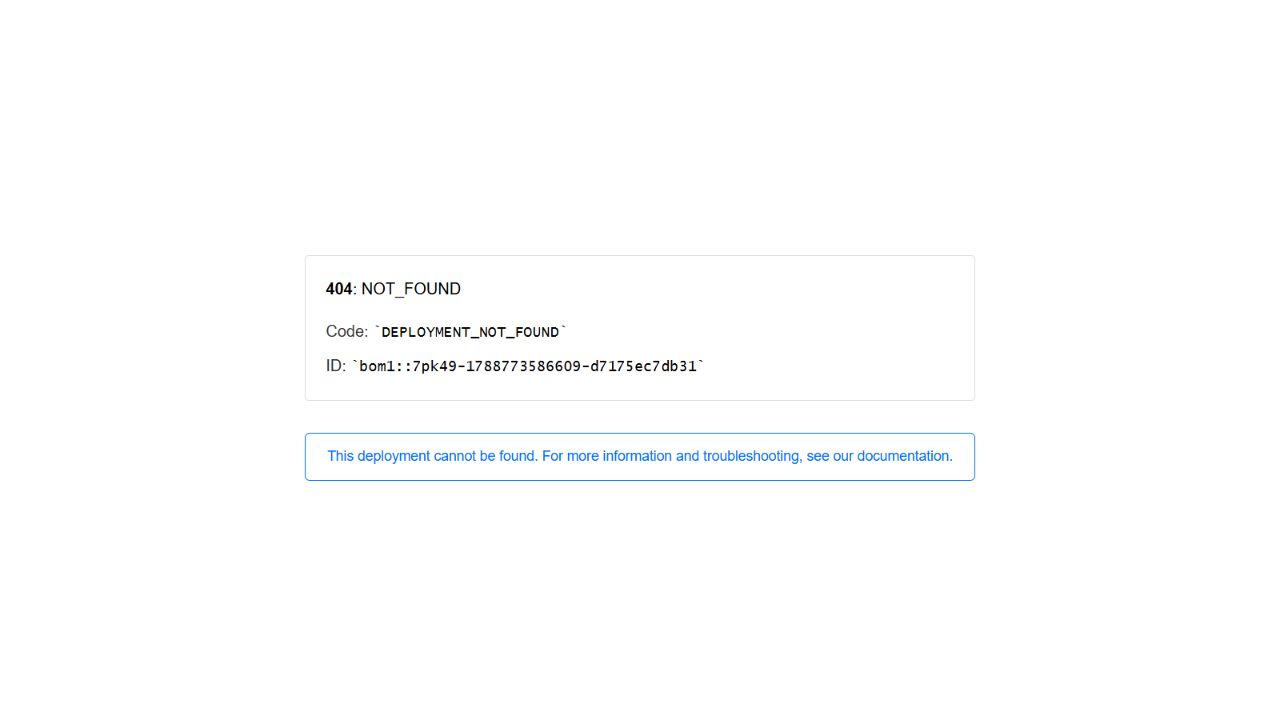
This screenshot establishes only the observed state at the stated time. It does not prove permanent closure. A DNS, deployment, migration, or temporary operational problem could produce a similar result. However, buyers should not infer current features from old reviews while the vendor’s own product surface is unavailable.
What Phind was designed to do
Independent historical reporting described Phind as a conversational AI search service aimed at developers. Users could ask detailed natural-language technical questions and receive readable answers, often with web sources. The appeal was a tighter path from a programming problem to an explained solution than manually opening many search results.
That context is useful for understanding intent, but it has limits. We could not confirm on the current official domain:
- Which models were available.
- Whether web search or citations still worked.
- Whether an editor or repository workflow existed.
- What free or paid limits applied.
- How submitted code was handled.
- Which privacy and retention terms controlled use.
- Whether support or service-level commitments were available.
Accordingly, this article does not repeat old plan prices, model names, usage allowances, or performance claims. Those details are unusually likely to become obsolete even for an active AI product.
What ChatGPT does now
OpenAI describes ChatGPT as a general AI assistant for tasks including writing, planning, studying, math, coding, files, images, and other plan-dependent workflows. Current official documentation also describes web search, Projects, data analysis, Canvas, memory, and organizational options, with access and limits varying by plan and workspace.
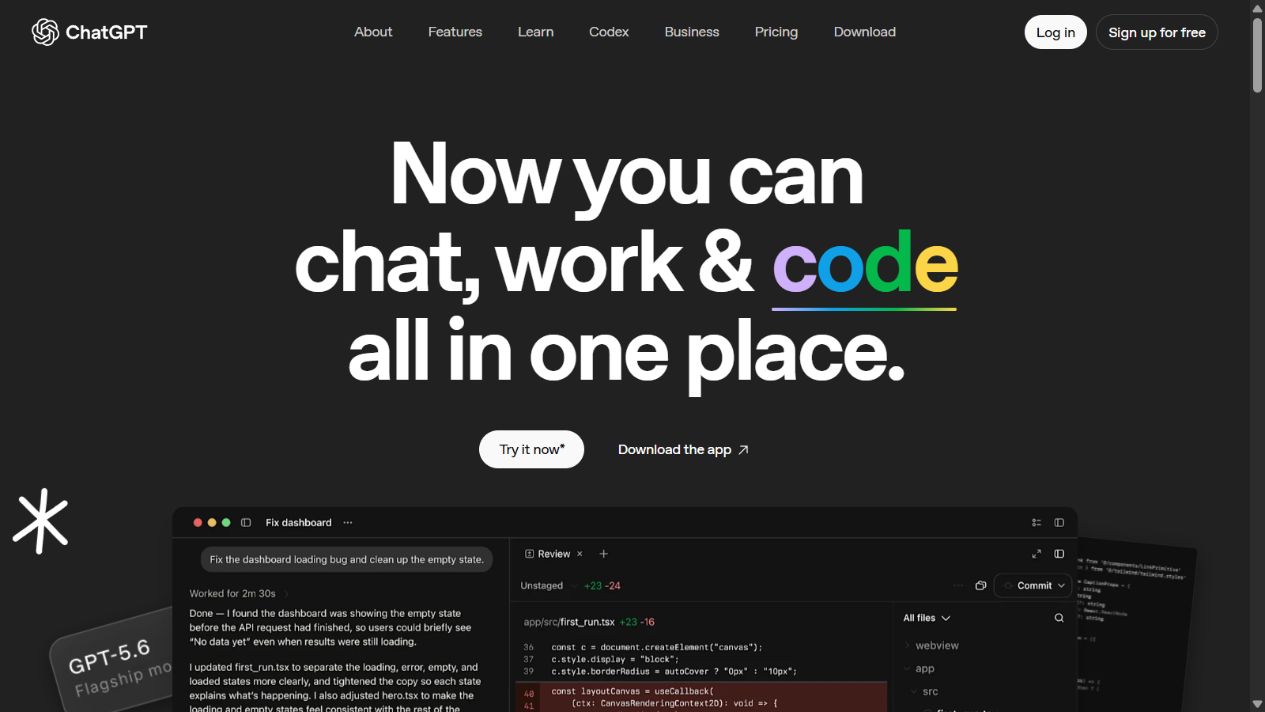
For developers, breadth can be useful. A single workspace can help clarify requirements, inspect an error, explain unfamiliar code, search for current documentation, draft a test, analyze a file, and produce a decision note. That does not make every response correct. It makes the product usable across more stages of the work.
ChatGPT’s active official pages also make due diligence possible. A buyer can review current plan structures, business options, help material, privacy information, and documented capabilities before deciding what data or workflows are appropriate.
Phind vs ChatGPT comparison
| Criterion | Phind | ChatGPT |
|---|---|---|
| Current web availability | Official deployment unavailable during check | Active official application and documentation |
| Primary positioning | Historically developer-oriented AI search | General-purpose AI workspace |
| Technical web research | Historically central, but not currently verifiable | Search and cited answers available, subject to plan and limits |
| Coding assistance | Historical capability not currently verifiable | Explanation, drafting, analysis, and plan-dependent coding workflows |
| Non-coding work | Historical evidence too weak for a current claim | Writing, files, images, data, planning, and research |
| Pricing | Not currently verifiable | Official pricing pages available |
| Team governance | Not currently verifiable | Business and enterprise options documented |
| Adoption risk | High until service and terms return | Normal AI-tool evaluation risk |
The table is intentionally asymmetric. Filling Phind’s column with remembered features would create the appearance of equal evidence where none exists.
Which is better for developer research?
ChatGPT is the better current option because it can be accessed and its search behavior is documented. A developer can ask a question, request current sources, open the citations, and compare the answer with official framework or library documentation.
The quality of technical research still depends on method. Include the exact runtime, framework version, error message, relevant code, operating system, and constraints. Ask the assistant to distinguish documented behavior from a proposed workaround. Prefer primary sources such as official documentation, specifications, changelogs, repositories, and issue trackers.
For example:
Diagnose this error in Node.js 24 with TypeScript and the current package version shown in package-lock.json.
Use official documentation or the upstream repository for version-sensitive claims.
Explain the likely cause, propose the smallest change, and list tests that would disprove your diagnosis.
Do not invent an API that is absent from the cited version.
Search citations are a starting point. A cited page may concern an older version, a different platform, or a related API. Open it and verify applicability.
Which is better for writing and analysis?
ChatGPT wins by default because current Phind capability is unknown. ChatGPT is designed for broad conversational work and can support requirements, architecture notes, incident summaries, documentation, data analysis, and stakeholder communication as well as code.
This matters for software work because coding is rarely isolated. Teams need to convert a business need into acceptance criteria, explain tradeoffs, document decisions, and communicate risk. A specialist search tool could complement those tasks, but an unavailable tool cannot serve as the primary workspace.
Do not use breadth as permission to upload everything. Limit context to what the task requires, use an approved account, redact secrets, and follow organizational data rules.
Which is better for code generation?
ChatGPT is the only product in this comparison whose current code-assistance path could be assessed from official information. It can draft and explain code, but generated code remains untrusted until it passes the same engineering controls as a human contribution.
Evaluate with repository-specific tasks rather than generic coding puzzles:
- Give both the same bounded issue and relevant files.
- Require a short plan before edits.
- Run formatting, type checks, unit tests, integration tests, and security checks.
- Review dependencies, permissions, error paths, and rollback.
- Measure accepted changes and reviewer effort, not generated lines.
No model score can replace tests against the actual system. Research has repeatedly shown that plausible code can fail stronger test suites or hidden edge cases.
Pricing and value
ChatGPT has published consumer and organizational plan paths, although prices, limits, models, credits, and regional availability can change. Check the official pricing page at purchase. API usage is a separate commercial product from a ChatGPT subscription.
Phind’s current price could not be verified because its official deployment and pricing route were unavailable. A cached price from an old article is not a valid buying input.
Value should include more than subscription cost:
- Time saved on accepted work.
- Reviewer and correction effort.
- Integration and migration work.
- Security and procurement review.
- Administration and offboarding.
- Outage and continuity risk.
- Overlap with existing tools.
An inexpensive tool is poor value if the team cannot depend on it or verify its terms.
How we evaluated Phind and ChatGPT
The live search results show that readers still expect a conventional capability comparison. Several ranking pages describe Phind as a developer search engine and compare answer quality, code explanations, sources, models, and price. We used those results to understand the questions people ask, not as proof of current product facts.
Material claims were then checked against first-party surfaces. For ChatGPT, that included the current application, product help, search documentation, Projects documentation, pricing, privacy, and usage policies. For Phind, we checked the official root domain and attempted to find a functioning current product and pricing path. The official deployment error prevented normal verification.
We scored the decision using criteria that matter in an operational development workflow:
- Availability: can a new user access the product now?
- Evidence: can capabilities and commercial terms be verified from current sources?
- Technical research: can the workflow retrieve and expose relevant current documentation?
- Context handling: can users provide errors, files, requirements, and supporting material?
- Implementation support: can the assistant explain, draft, inspect, and revise code?
- Verification: does the workflow make sources, tests, and uncertainty visible?
- Breadth: can it support the non-code work around software delivery?
- Governance: can an organization assess data, access, retention, sharing, and administration?
- Continuity: can the team export its knowledge and continue if the service changes?
- Value: does accepted output justify total cost and review effort?
We did not run a synthetic coding benchmark because an inaccessible product cannot participate in a fair current test. Comparing new ChatGPT output against archived Phind examples would mix dates, models, source freshness, prompts, and environments. That may look quantitative while answering the wrong question.
Real-world workflow scenarios
Finding a version-specific API answer
A developer encounters an error after upgrading a framework. The useful assistant must identify the exact version, find authoritative release notes or documentation, explain the change, and avoid mixing older syntax into the fix.
ChatGPT can support this workflow through web search and conversation, but the developer should require official sources and open them. Phind’s historical developer-search positioning suggests this was a core use case; its current performance cannot be tested while the deployment is unavailable. For work that must proceed today, ChatGPT wins.
Debugging a failing test
The user supplies the failure output, relevant function, test, and runtime constraints. ChatGPT can propose hypotheses, request missing evidence, and suggest the smallest patch. The engineer must still run the test suite and inspect adjacent behavior.
The best response is not necessarily the longest or the one with the most code. It is the response that exposes assumptions, changes the fewest justified lines, adds a regression test, and survives review. No current Phind result was available for comparison.
Designing a new service
Architecture work includes requirements, data boundaries, failure modes, security, observability, deployment, and cost. ChatGPT’s broader workspace is a better fit than a narrow search interaction because the task spans analysis and communication. A specialist research product could still help retrieve documentation, but it should feed an owned design record.
Explaining code to a non-specialist
Product managers, auditors, and support teams may need an explanation without an implementation. ChatGPT can adjust the level of detail, create diagrams in text, identify risks, and produce questions for an engineer. The output must avoid claiming certainty about behavior that depends on omitted code or runtime state.
Responding during an incident
Availability becomes especially important during an incident. A team cannot depend on a troubleshooting assistant whose own service is unreachable. ChatGPT may help summarize logs, draft hypotheses, or organize a timeline, but incident commands and production changes require an authorized human following the runbook. Sensitive logs should be minimized and handled only in an approved environment.
Accuracy and citation quality
Neither fluent prose nor a citation guarantees correctness. A source can be real but irrelevant, outdated, or misread. Generated code can compile while violating a hidden requirement. Evaluate the complete evidence chain:
- Does the cited page exist and come from an appropriate publisher?
- Does it describe the installed version and platform?
- Does the quotation or paraphrase match the source?
- Does the proposed code implement the documented behavior?
- Do tests cover the original failure and important edge cases?
- Are uncertainty and conflicting sources disclosed?
ChatGPT search can make source discovery faster, but the user remains responsible for opening and assessing sources. Phind was historically praised for source-led technical answers; that historical reputation is insufficient to establish current citation quality.
Reliability and vendor continuity
AI products change quickly. Models, limits, interfaces, pricing, and even product availability can shift. Teams should design for portability regardless of which assistant they choose.
Keep prompts, specifications, source links, decisions, code, and tests in systems the organization controls. Do not leave essential operational knowledge only inside chat history. Document which product and model supported consequential work, especially where reproducibility matters. Maintain a fallback workflow for research and coding when a service is unavailable.
Phind’s observed deployment error makes continuity risk visible, but the principle also applies to ChatGPT. An active service today can change tomorrow. ChatGPT’s current documentation and organizational offerings make assessment possible; they do not remove the need for an exit plan.
Switching from Phind to ChatGPT
If a team previously used Phind, migration does not need to reproduce the interface exactly. First identify the jobs it performed: documentation search, error explanation, code generation, architectural research, or general question answering. Map each job to a current workflow.
For ChatGPT:
- Create approved prompt templates for recurring technical questions.
- Require version, environment, and source constraints in each brief.
- Store durable outcomes in the repository or documentation system.
- Use Projects only for context that should persist and is approved to upload.
- Define when web search is required and which sources are acceptable.
- Apply normal code review, tests, and security checks.
- Track accepted output, correction time, and failure patterns during the pilot.
Do not import old conversation content blindly. It may contain secrets, obsolete assumptions, or unverified answers. Migrate reusable methods and owned artifacts, not accumulated chat history by default.
A practical buyer checklist
Before choosing any developer AI tool, ask:
- Is the official service available in every required region?
- Are product, pricing, privacy, and support terms current and accessible?
- Does it work with the team’s languages, frameworks, and repositories?
- Can it cite authoritative, version-relevant sources?
- Can administrators control identity, sharing, connectors, and offboarding?
- What code or data may users submit?
- How are generated changes tested and approved?
- Can durable work be exported to owned systems?
- What happens during an outage or product change?
- Does measured accepted work justify total cost?
Phind currently fails the first two checks because its official product surface could not be accessed. ChatGPT still requires evaluation on the remaining questions for the exact plan and organization.
Privacy, security, and governance
For ChatGPT, evaluate the exact personal or organizational plan. Review current data controls, retention, sharing, connectors, identity, administration, and contractual terms. Restrict secrets and regulated data according to policy, not according to what the interface technically accepts.
For Phind, the unavailable official surface prevents a current governance assessment. Until official terms and controls can be reviewed, do not approve it for company code or confidential data based on historical reviews.
Both products should be treated as external processors when business information is submitted. Teams need an owner, allowed-use policy, data classification rules, access reviews, output verification, incident handling, and an exit plan.
When Phind might be worth reevaluating
Revisit Phind if the official service returns with current product documentation, pricing, privacy terms, and support information. Then test the feature that historically differentiated it: fast, source-aware answers to developer questions.
Use a controlled pilot covering:
- Version-sensitive documentation research.
- Debugging with incomplete evidence.
- Explanation of unfamiliar code.
- Proposed patches and tests.
- Citation accuracy and source quality.
- Response latency and service reliability.
- Data handling and administrative controls.
Compare it with ChatGPT using identical tasks and independent scoring. Do not restore it merely because an old workflow was familiar.
Better alternatives by workflow
If the goal is broad coding and knowledge work, start with ChatGPT. For IDE-centered completion and repository assistance, evaluate a currently supported coding product such as GitHub Copilot. For citation-led general web research, Perplexity may be closer to the search experience users associated with Phind. For long-form technical reasoning, Claude may deserve a separate evaluation.
These are not interchangeable. An IDE assistant, web research engine, general chat workspace, and autonomous coding agent create different risks and handoffs. Select the job first, then the product.
Final verdict
Choose ChatGPT today. It is active, broadly capable, and supported by current official product, pricing, and help information. Phind’s historical developer-search focus remains interesting, but its official deployment was unavailable during verification, making current feature-by-feature or price comparisons unreliable.
If Phind returns, reevaluate it with current official evidence and real development tasks. Until then, preserve portable prompts, source notes, tests, and code in your own systems rather than depending on an inaccessible vendor workspace.
Sources
Frequently asked questions
Is Phind better than ChatGPT?
No for a buyer choosing today. Phind's official web deployment was unavailable when checked on September 7, 2026, while ChatGPT had active official product, pricing, and support pages. Recheck Phind before relying on this conclusion.
Is Phind still available?
The official phind.com root domain returned a Vercel 404 DEPLOYMENT_NOT_FOUND response during our latest check. That proves the web deployment was unavailable at that moment, not necessarily that the company or product is permanently discontinued.
Which is better for coding, Phind or ChatGPT?
ChatGPT is the practical current choice because its coding and broader workspace capabilities are available and documented. Historical descriptions positioned Phind around developer search, but its current coding experience could not be verified.
Does ChatGPT provide sources for coding answers?
ChatGPT can search the web and provide citations when search is used, but citations do not prove generated code is correct. Open the sources, inspect version applicability, and run the code and tests yourself.
Can I trust AI-generated code?
Treat generated code as an unreviewed contribution. Check requirements, security, dependencies, tests, edge cases, performance, licensing, and repository conventions before merging or deploying it.
What is the best Phind alternative?
ChatGPT is the broadest direct alternative for conversational research and coding. GitHub Copilot may fit IDE-centered implementation, while Perplexity may fit citation-led web research. Choose by workflow rather than interface similarity.
Should teams wait for Phind to return?
Do not block active work on an unavailable service. Use a currently supported tool and preserve portable prompts, source notes, tests, and code so Phind can be reevaluated if its official service returns.