Synthesia vs ChatGPT: Which Is Better?
Compare Synthesia vs ChatGPT by video delivery, script preparation, revision effort, account access and practical acceptance tests.
Synthesia is the more direct candidate for producing presenter-led business video; ChatGPT is the broader candidate for researching, developing and revising the material around that video. The right choice depends on whether your immediate requirement is an approved audiovisual asset or a flexible workspace for thinking and writing. They can occupy different stages of the same process.
Research scope and limitations
- Research type
- Official-source documentation review and editorial analysis
- Hands-on tested
- No
- Last verified
- November 3, 2026
- Limitations
- No paid-account test, performance benchmark or account-entitlement audit. Examples and acceptance exercises are editorial proposals; current terms require verification.
Table of contents
Synthesia vs ChatGPT: choose the required deliverable
Synthesia is the more direct candidate for producing presenter-led business video; ChatGPT is the broader candidate for researching, developing and revising the material around that video. The right choice depends on whether your immediate requirement is an approved audiovisual asset or a flexible workspace for thinking and writing. They can occupy different stages of the same process.
Synthesia’s official platform page describes script-based avatar video and translation. The ChatGPT feature documentation describes projects, conversations, files and a wider set of tools. A feature appearing in one platform does not establish equivalent output, editing controls or delivery permissions in the other.
This comparison was checked November 3, 2026. It is based on official documentation and our editorial workflow analysis. We did not generate test videos, evaluate avatar realism, benchmark writing quality or inspect paid accounts. The exercises below are proposed buyer tests, not measured results. Current account access and commercial terms still need confirmation.
Synthesia vs ChatGPT at a glance
| Decision | Synthesia | ChatGPT |
|---|---|---|
| Main scope in this review | Business video production | General conversational knowledge work |
| First useful artifact | A presenter-led video assembled from an approved script | A reviewed brief, script or explanation |
| Main acceptance check | Correct content, usable media and appropriate delivery | Accurate reasoning, source fidelity and a useful draft |
| Context to prepare | Approved script, visual assets and pronunciation requirements | Source documents, audience, constraints and task instructions |
| Cost questions | Credits, generation, revisions and distribution needs | Plan availability, usage, review effort and relevant tools |
| Main risk | Treating a polished video as proof of accurate instruction | Treating a good script as a finished production asset |
The table summarizes documented product categories and editorial acceptance criteria. It is not a head-to-head performance score. For a general selection framework beyond these products, use our AI Tools evaluation guide .
What Synthesia is being evaluated for
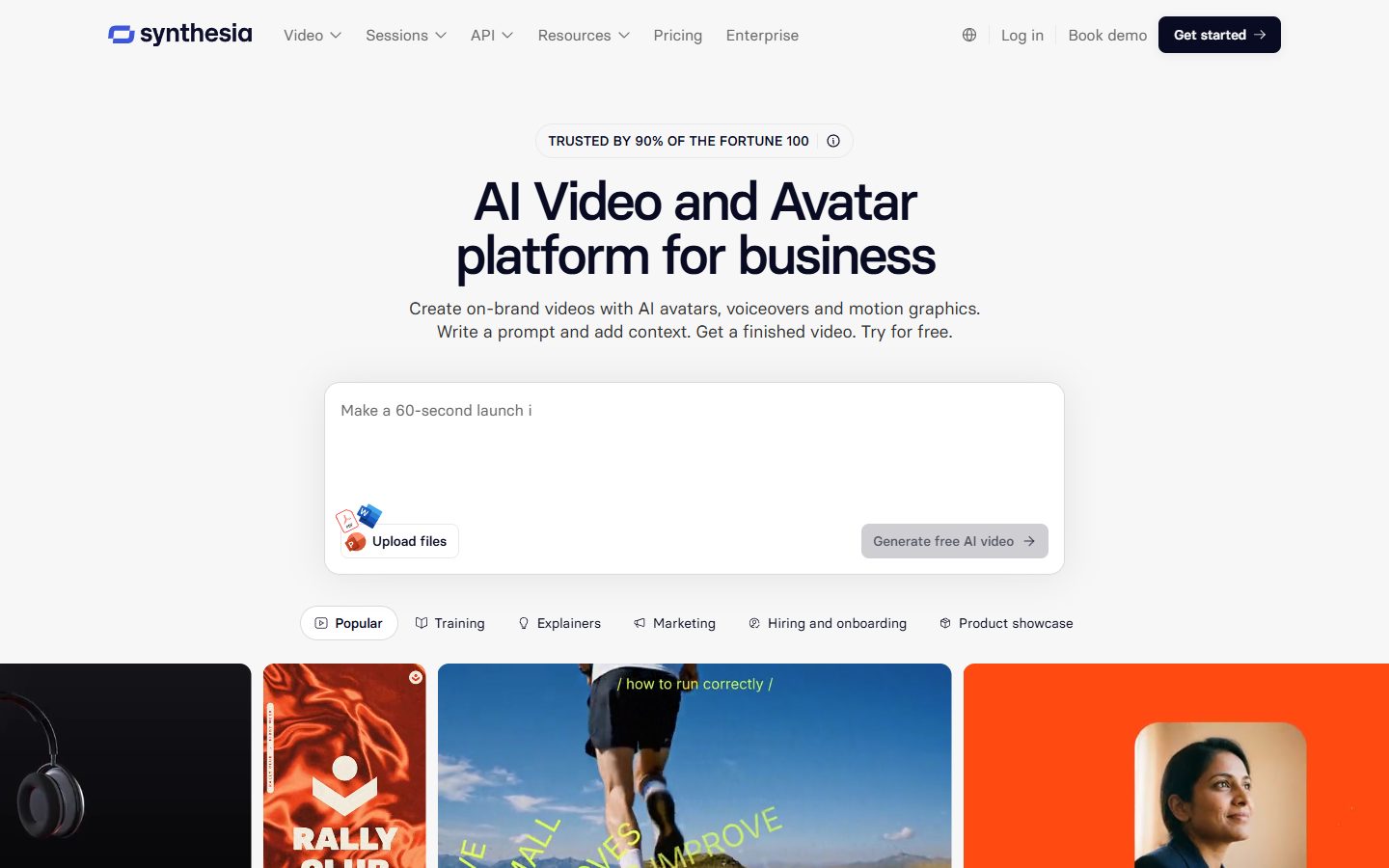
Synthesia presents a video platform with avatars, generation and translation capabilities. That places it close to the production stage of a training, enablement or explanatory video project. The relevant question is whether the resulting media can satisfy a defined communication task, rather than whether it can generate something visually impressive.
Consider a proposed employee onboarding video explaining how to request equipment. The production brief needs the correct process, a clear sequence and an appropriate presenter style. The final video also needs readable on-screen information and understandable narration. A missing approval step in the source remains missing even if an avatar delivers the script convincingly.
Our recommendation is to evaluate one short, representative asset before planning a library. Include a term that must be pronounced correctly, a screen or graphic that carries essential meaning and a section likely to change later. Those conditions reveal more about your production requirements than a generic introductory message.
Confirm the account’s actual offer before starting. The Synthesia pricing page distinguishes a free Basic plan from paid plans and separates capabilities such as downloading content and removing the logo. This article deliberately avoids numeric subscription prices and unqualified minute allowances because a usable comparison requires the exact billing basis and current account terms.
What ChatGPT is being evaluated for
ChatGPT provides a broader conversational setting for exploring ideas and working with context. Its official projects documentation describes keeping chats, files and instructions together, subject to availability and workspace settings. That can support recurring preparation work such as maintaining an approved training brief.
For the equipment-request example, a useful task is to turn approved policy notes into a concise script, identify unclear steps and produce a review checklist. Ask for questions where the source is incomplete. An assistant should not fill a missing policy decision with a plausible instruction merely because the script needs a smooth ending.
This review does not assume that a particular ChatGPT account provides a video production or export feature equivalent to Synthesia. Check the tools actually available in the account and the media requirements you intend to meet. Broad multimodal capability is not evidence that every specialized production requirement is covered.
See our ChatGPT review for a wider assessment and guide to using ChatGPT for preparation techniques. Here, the narrower question is how conversational work relates to an accepted business video.
Define the job before comparing subscriptions
Write the requested output as a sentence containing an audience, a task and an acceptance condition. For example: “Produce a short onboarding video that lets a new employee identify the correct equipment-request route and the person approving it.” That gives reviewers something more useful than a target number of generated minutes.
Next, identify who supplies the facts. A policy owner should resolve the procedure before production. A communications reviewer can improve clarity but should not silently become the authority on eligibility or exceptions. If the underlying process has no agreed owner, selecting an AI product will not settle that uncertainty.
Finally, state where the asset will be used. An internal learning portal, a public product page and a sales presentation can have different approval, accessibility and distribution requirements. These are project requirements to verify, not entitlements we claim every platform or plan includes.
Compare the script-to-video handoff
The handoff between approved words and produced media is a frequent source of rework. A script may mention a button that does not exist, refer to a screenshot that has changed or assume a viewer knows an internal term. Those problems should be resolved while the text is still easy to inspect.
Maintain a script with three columns: narration, visual intention and source reference. The source reference may be an approved policy section or a verified product instruction. A separate reviewer can then identify whether a problem concerns factual content, visual explanation or timing. The structure is our proposed production method; it is not a claim about a particular product interface.
ChatGPT may be evaluated for preparing that record. Synthesia may be evaluated for producing the corresponding video. If the same person handles both, preserve the distinction between an exploratory draft and an approved script. Otherwise a late brainstorming change can accidentally reach a production asset.
Run a paired pilot with different acceptance tests
Give each tool an appropriate part of the same brief. For ChatGPT, ask for a draft script and a list of unresolved questions based only on supplied policy facts. Review whether the draft preserves exceptions, avoids invented benefits and explains the next action clearly. Record the corrections needed.
For Synthesia, begin with the reviewed script. Assess whether the produced asset communicates the intended sequence, whether important names and terms are understandable and whether the selected account can deliver the required output. Review the actual artifact in its destination environment rather than only inside an editor preview.
Do not compare the time to produce text with the time to produce video and call the faster tool the winner. They have different finish lines. Compare each stage against your present method and then assess the complete process: preparation, production, review, correction and release.
Test revisions, not just the first version
A training asset rarely stays unchanged forever. Add a second pilot task in which one policy detail changes after approval. For example, the equipment request may move from a shared mailbox to a named intake form. The exercise is hypothetical, but the maintenance question is real: can the team update the affected material without reconstructing the entire project?
Record the source revision, the script change, the production change and the review required. Keep the unchanged sections visible so the reviewer can focus on what matters. A workflow that makes the first version easy but every update confusing can become expensive as the library grows.
Also check the cost treatment of regeneration and revisions in the current account offer. Avoid assuming that a subscription includes unlimited corrections or that previewing and generating are charged identically. Use the vendor’s current billing explanation and a small account-level test before extrapolating a production budget.
Localization needs a content owner
Synthesia documents video translation as part of its platform. That establishes a capability to investigate, not a guarantee that every localized version correctly conveys your business process. A translation can be fluent while retaining a policy that applies only to the original country or employment arrangement.
For a proposed localization test, give a qualified reviewer the source script, translated narration and relevant local process. Ask them to check meaning, terminology and exceptions. A visual comparison alone cannot establish whether an instruction remains appropriate for its audience.
ChatGPT can be evaluated for preparatory language work or identifying ambiguous wording, depending on available tools. It should not be treated as independent confirmation of a translation it helped produce. Assign responsibility for final acceptance to someone able to judge the language and the underlying subject matter.
Accessibility and comprehension checks
Create an acceptance checklist that considers the viewer’s actual situation. Can someone understand the instruction without background knowledge? Does essential information appear only in a tiny visual? Are captions or a transcript needed for the destination? Confirm the platform and plan’s support for the required delivery format rather than inferring it from a marketing label.
Use a colleague unfamiliar with the workflow for a comprehension exercise. Ask them to explain what they would do next after watching. If they cannot identify the action, improve the explanation before changing decorative elements. This is a suggested review method, not a claim that we measured either product’s learning outcomes.
An avatar’s presence is only one part of communication. The clarity of the source, pacing, visual relevance and accessibility of the final asset can matter more to the viewer than how the asset was generated. Keep those criteria in the purchase decision.
Privacy, source rights and presenter permission
Use only information and media you are authorized to provide. A training script can reveal internal procedures; a customer example can contain personal data; a presenter image or voice can require specific permission. Review the intended use and the current platform terms before uploading sensitive or identifiable material.
For the pilot, fictional or approved public material is often sufficient. You can test the production workflow without exposing employee records or confidential customer notes. If a later project requires private material, review access, retention, sharing and contractual controls for the actual workspace.
Do not infer permission from technical capability. Being able to upload a file or create a likeness does not settle whether the organization has the right to use it. The same principle applies to scripts generated from supplied reference material: source rights and factual authority remain separate checks.
Compare total production cost
Budget for accepted assets, not merely generated minutes. Include source preparation, script review, production work, revisions, localization review and release checks. Add subscription and metered charges using current terms. A cheaper first generation can still create more expense if reviewers must repeatedly correct the same source problem.
For a hypothetical comparison, imagine two processes that each produce a three-minute video. One uses a carefully approved script and requires a small timing correction. The other starts with uncertain policy notes and needs a complete factual rewrite. The finished lengths match, but the operating effort does not. That difference should not be attributed entirely to the production software.
Keep the evaluation small enough to measure honestly. One recurring onboarding format can provide a useful baseline. Expanding into every video type at once makes it difficult to identify whether a benefit came from better preparation, a better production tool or simply more reviewer attention.
Plan release ownership and retirement
Assign an owner for the released asset, not only for its creation. The person responsible should know which script version was approved, where the final video is distributed and what event would make it obsolete. That record prevents an old onboarding explanation from remaining available after the underlying process changes.
During the pilot, ask a colleague to locate the current approved version without help from its creator. Give them a simple question: which file should a new employee watch today? If several similar exports exist and nobody can answer confidently, the release process needs improvement before the library expands.
Also decide how an outdated asset will be withdrawn or replaced at its destination. A corrected source file does not necessarily update a downloaded copy, an embedded video or a presentation stored elsewhere. Keep distribution locations with the approval record so the owner can identify affected material.
These responsibilities apply regardless of the tools used. They are especially valuable when conversational preparation and video production happen in different systems. The purchase should support a maintainable communication process, not create an attractive first version that nobody can confidently update or retire.
Who should choose which approach?
Evaluate Synthesia first when the next required deliverable is presenter-led business video and you can supply an approved script. Focus on production controls, account access, permitted output and the cost of maintaining the asset. Do not buy merely because an avatar demonstration looks polished.
Evaluate ChatGPT first when the bottleneck is turning approved material into a clear explanation, exploring an audience’s questions or organizing recurring preparation. Focus on source fidelity, useful revisions and review effort. Do not count a script as a finished video when the project requires an audiovisual asset.
Use both only if the handoff earns its complexity. A two-tool process should have a clear source of truth and a named approval point. Our AI workflow automation guide explains how to define those boundaries before connecting more steps.
Keep capability and availability separate
Product names and feature lists change. A page describing a capability is useful evidence about scope, but the current account determines what you can actually do. Check the offer, billing period, output permissions and workspace configuration before committing a deadline or promising a client a deliverable.
That is also why older comparisons deserve caution. Our Sora versus ChatGPT comparison illustrates how availability can change the meaning of a seemingly straightforward choice. For Synthesia vs ChatGPT, begin with the current task and the accessible tools, then validate the result you need.
Frequently asked questions
Is Synthesia a replacement for ChatGPT?
Not for every task. Synthesia’s reviewed scope is business video production, while ChatGPT supports broader conversational work. Choose by the required output and verify current account capabilities rather than treating the brands as interchangeable.
Can ChatGPT write a script for a Synthesia project?
You can evaluate it for drafting from approved source material. A subject owner should review the script before production. This article does not claim a built-in integration or that a generated script is accurate without checking.
Can I download a video from every Synthesia plan?
Do not assume that. The current pricing page distinguishes sharing, downloading and branding across its offers. Confirm the exact account’s terms before treating a free creation allowance as a deliverable download entitlement.
Which tool produces better training results?
This review did not measure learning outcomes. Evaluate whether viewers understand the required action and whether the final material is accurate, accessible and maintainable. Text and video need different acceptance tests.
Should I pay for both products?
Only if the combined workflow improves accepted work enough to justify its total cost. Test the preparation-to-production handoff, include review and revision effort, and retain a clear source of truth for approved content.